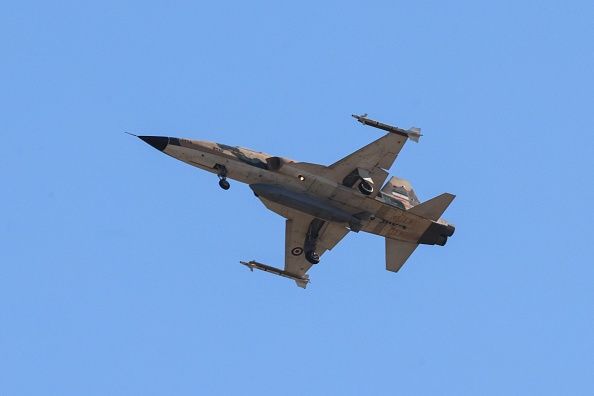
Tehran has intensified its diplomatic complaints against Qatar and Kuwait over the disappearance of Iranian military personnel, accusing both Gulf states of withholding information and obstructing investigations into their whereabouts. Mohammad Baqerzadeh, who heads Iran's Armed Forces General Staff committee investigating missing persons, publicly challenged Qatar's account of events surrounding a March incident involving Iranian aircraft, demanding that Doha grant entry to a team of Iranian experts tasked with determining what happened to the pilots involved.
The dispute centres on conflicting narratives about an airspace violation over Qatari territory earlier this year. Qatar's official position, stated on Saturday, holds that Iranian military aircraft entered its airspace without authorisation and failed to respond to repeated radio contact attempts. According to Doha's account, Qatari search and rescue personnel subsequently located the remains of one pilot following the incident. The Gulf state claims it attempted to coordinate the handover of these remains to Iran and invited Tehran to scrutinise the details of its search operations, only to receive silence in response.
Iran's version of events paints a starkly different picture. Rather than accepting Qatar's characterisation of the incident as a tragic accident resulting from communication failure, Tehran asserts that Qatari forces actively captured the pilots involved. This fundamental disagreement on the basic facts explains the current impasse. Baqerzadeh's public statement, carried by the semi-official Tasnim news agency, suggests that Iranian officials have been attempting to send an investigative delegation to Qatar for several months without success, and that Qatari officials have repeatedly delayed or rejected these requests.
The timing and rhetoric of Iran's escalation carry broader significance for Gulf geopolitics. By invoking the International Committee of the Red Cross and demanding external oversight, Iran is attempting to internationalise a dispute that might otherwise remain confined to bilateral channels. This strategy signals Tehran's determination to keep diplomatic pressure on both Qatar and Kuwait while appealing to international humanitarian mechanisms. For Malaysia and other Southeast Asian nations with commercial and diplomatic ties across the Gulf, such disputes underscore the complex and occasionally volatile relationships between regional players.
The situation regarding Kuwait adds another layer to regional tensions. Iran has separately accused Kuwait of indefinitely detaining four Iranians whom Tehran identifies as Revolutionary Guards personnel. According to Iran's account, these individuals were conducting a routine maritime patrol when a navigation malfunction caused them to inadvertently enter Kuwaiti territorial waters. Kuwait contests this narrative entirely, characterising the four as suspected operatives planning hostile actions against the emirate. The divergence between these accounts reflects deeper mutual suspicions between Iran and its Arab neighbours across the Persian Gulf.
The distinction between how each side characterises the detained individuals reveals the political dimensions underlying the dispute. Iran insists they were engaged in legitimate military activities when circumstances beyond their control led to the territorial breach. Kuwait frames the same incident as evidence of intentional infiltration by individuals with malicious intent. Such fundamental disagreements about motive and legality make resolution through standard diplomatic channels considerably more difficult, as neither party can credibly acknowledge the other's version without implicitly accepting culpability or conceding sovereignty concerns.
Baqerzadeh's insistence that the International Committee of the Red Cross urgently engage in the matter represents an attempt to bypass what Iran perceives as obstructionism at the bilateral level. The ICRC, as a neutral humanitarian organisation recognised internationally, could theoretically provide independent verification of conditions and fates of detained personnel. However, such oversight only functions if all parties voluntarily cooperate. Qatar and Kuwait's apparent refusal to grant Iranian investigators access suggests they may be equally reluctant to accept international scrutiny, viewing such scrutiny as potentially validating Iran's claims or undermining their own security narratives.
For regional stability, these competing claims over missing military personnel carry implications beyond the immediate humanitarian concerns. They reflect and reinforce mutual distrust between Iran and the Arab Gulf states, complicating efforts at dialogue or conflict resolution. The months-long standoff indicates that neither side has found sufficient incentive to compromise or clarify positions, suggesting both believe their current stance—whether defensive or demanding—serves their strategic interests.
Malaysia and other Southeast Asian nations observing this dispute should note how unresolved military incidents can harden into protracted diplomatic crises when fundamental narratives diverge. The incident also illustrates how accusations of territorial violation, whether genuine or contested, can become vehicles for broader expressions of regional rivalry. As Southeast Asia manages its own maritime boundaries and air corridors, understanding how neighbouring countries handle such incidents offers cautionary lessons about the importance of transparent communication mechanisms and clear protocols for responding to incursions or accidents.
The involvement of Iran's Revolutionary Guards in the Kuwait incident adds complexity, as this military entity operates with considerable autonomy and sometimes pursues objectives independently of formal diplomatic channels. This structural reality complicates Kuwait's position—even if Kuwait's suspicions are accurate, engaging directly with Iran on the matter remains difficult given the Revolutionary Guards' semi-independent status within Iran's security apparatus. Iran's official insistence that the detained individuals were on routine patrol may reflect a genuine knowledge gap about Revolutionary Guards operations, or it may represent political convenience in denying operational complexity.
Moving forward, resolution appears contingent on whether external pressure—whether from the ICRC, regional mediators, or international bodies—can persuade all parties toward greater transparency. Absent such intervention, the cases risk becoming entrenched examples of unresolved Gulf disputes, periodically resurging in diplomatic rhetoric but rarely advancing toward closure. For countries in Southeast Asia seeking stable commercial relationships with all Gulf parties, such unresolved tensions underscore the persistent volatility characterising regional relationships despite improved surface-level diplomatic engagement in recent years.

