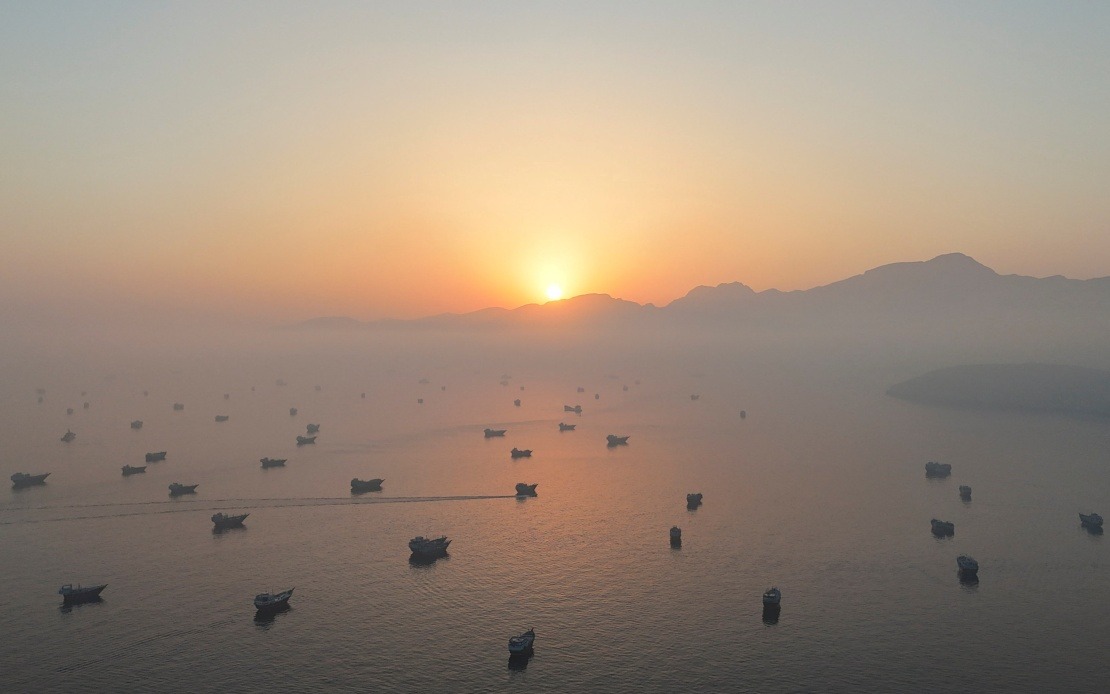
Iran's Foreign Minister Abbas Araghchi announced in Baghdad on June 28 that his country will exercise exclusive authority over the Strait of Hormuz for the next 30 days, signalling a dramatic escalation in regional tensions as the fragile ceasefire between Tehran and Washington disintegrates under mounting military pressure. The declaration comes after a series of attacks between the two nations that have essentially voided the recent diplomatic agreement, leaving the world's most critical oil transit route hanging in the balance once more.
The Strait of Hormuz remains indispensable to global commerce, with approximately one-third of the world's seaborne oil passing through its narrow channels daily. Iran's assertion of sole control represents a significant reversal from recent diplomatic efforts and carries profound implications for energy prices, shipping insurance, and economic stability across Southeast Asia and beyond. Araghchi's comments during a press conference in the Iraqi capital made clear that Tehran views any external presence or competing authority in the waterway as fundamentally destabilizing and counterproductive to resolving the underlying conflict.
Iran's insistence that "responsibility for the strait lies solely with Iran" reflects a broader strategic position that excludes alternative management structures or international oversight mechanisms. The Foreign Minister specifically warned that "any interference or attempt to create parallel structures would further complicate the situation, generate additional tensions, and delay the reopening of this strategically vital waterway." This language suggests Tehran anticipates potential resistance from Western powers or other regional actors seeking to maintain the status quo or establish independent monitoring systems.
The current crisis represents a dramatic reversal from February, when initial Israeli and American military operations against Iran prompted Tehran to weaponize the Strait of Hormuz as a negotiating tool. During that period, Iran effectively disrupted shipping traffic through threats and attacks, demonstrating its capability to substantially impede global commerce. This precedent suggests that any Iranian reassertion of control could trigger similar disruptions, with consequences reverberating through Malaysian ports and affecting regional trade patterns that depend on stable transit through this critical waterway.
The recent agreement between the United States and Iran, which temporarily stabilized the situation, explicitly contained provisions designed to keep the strait open for commerce. The accord prohibits Iran from levying passage fees on vessels during the initial 60-day negotiation period, a constraint intended to maintain economic incentives for compliance. However, the rapid deterioration of this understanding indicates that neither party has sufficient confidence in the other to maintain these restrictions, suggesting that fees and commercial restrictions may return once the negotiation window closes.
Iran's planned consultations with Oman regarding future maritime administration highlight the importance of regional diplomatic channels, yet also underscore the complexity of resolving shipping disputes in the Gulf. Oman's historical role as a neutral mediator between Iran and Western powers makes it a natural interlocutor, though analysts question whether Omani involvement can forge genuinely acceptable frameworks that satisfy both Iranian sovereignty demands and international legal obligations regarding freedom of navigation. The emphasis on coordinating with neighbouring states suggests Iran seeks regional legitimacy for its actions rather than unilateral control.
Potential disputes over passage fees represent a looming flashpoint in future negotiations. International maritime law grants certain coastal state rights but also establishes principles of freedom of navigation that may conflict with Iranian revenue-raising objectives. Malaysia and other Southeast Asian nations with significant stake in Gulf trade have compelling reasons to monitor these negotiations closely, as unilateral fee structures could disproportionately impact regional economies dependent on affordable energy imports. The legal ambiguities surrounding Iran's authority to charge fees remain unresolved and could become a central bargaining point.
For Malaysian stakeholders, including shipping companies, energy importers, and port operators, Iran's reassertion of Hormuz control creates immediate uncertainty. The Malaysian economy's substantial exposure to oil price volatility and supply disruptions makes developments in the Strait critically important. Previous Iranian disruptions caused insurance premiums for vessels transiting the waterway to spike dramatically, effectively imposing a tax on commerce. A renewed period of Iranian control could trigger similar cost increases, further pressuring regional logistics and energy prices.
The collapse of the ceasefire also raises broader questions about whether any sustainable framework can be established to manage this critical waterway. The speed with which the agreement deteriorated suggests underlying issues remain unresolved, and short-term de-escalation mechanisms prove insufficient without addressing fundamental security concerns. Iran's willingness to threaten Hormuz commerce demonstrates that Tehran views control over this chokepoint as a strategic asset not easily surrendered, even under diplomatic pressure.
Regional powers and global maritime interests now face a precarious situation where the world's most important oil transit route may fall under the exclusive control of a nation willing to use shipping disruptions as a political weapon. The 30-day timeline mentioned by Araghchi provides a window for renewed diplomatic efforts, yet the inflammatory rhetoric suggests both sides remain far from genuine accord. For Southeast Asia, closely watching these developments and coordinating responses through regional organizations represents a pragmatic approach to protecting critical economic interests.

