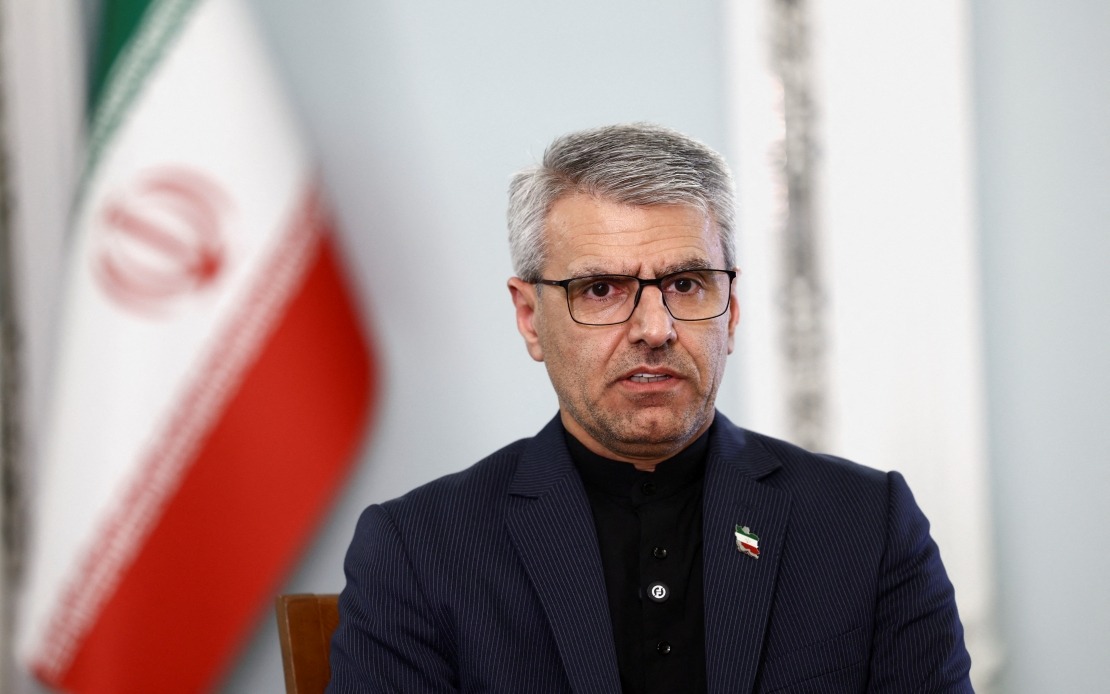
Iranian officials emerged from high-level talks in Burgenstock, Switzerland on Monday projecting cautious optimism about prospects for a final nuclear agreement with the United States. Foreign Ministry spokesman Esmaeil Baghaei told reporters that negotiators had reached consensus on what he termed "important steps" designed to create the foundation for substantive negotiations on a comprehensive settlement. His remarks came after four-party discussions involving major mediators, signalling that both Tehran and Washington may be edging closer to resolving one of the most fraught diplomatic standoffs in recent international relations.
While Baghaei's characterisation of the talks as productive reflected Iran's public position, his carefully worded statement also betrayed lingering scepticism about American commitment. He pointedly expressed hope that implementation would demonstrate "seriousness from the other side," a formulation that underscores Tehran's historical distrust of US follow-through on negotiated agreements. This nuanced language suggests Iran views the current momentum as fragile and contingent upon demonstrable American willingness to translate tentative understandings into concrete policy shifts.
Among the most significant outcomes was an agreement to establish what negotiators termed a "deconfliction cell," a novel monitoring apparatus designed to oversee compliance with ceasefire commitments and prevent renewed hostilities. The mechanism would operate with participation from mediating nations, creating a structured framework for ongoing communication between parties even amid broader tensions. Particular emphasis fell on maintaining stability in Lebanon, a region where proxy conflicts and historical antagonisms between Iran-aligned forces and Western-backed actors have frequently threatened escalation into direct confrontation.
Discussions also centred on the mechanics of sanctions relief and asset access, two issues that have long formed the crux of negotiations. Both delegations reportedly exchanged substantive proposals regarding the licensing procedures necessary for Iran to resume crude oil sales and the mechanisms for unfreezing billions in Iranian assets held or restricted in foreign jurisdictions. That both parties acknowledged making headway on these economically consequential matters suggests movement on issues that directly impact Iran's international financial standing and petroleum export revenues, matters of paramount importance to Tehran's domestic economic stability.
The talks addressed another dimension critical to regional security and international commerce: freedom of navigation through the Strait of Hormuz. This strategic chokepoint, through which roughly one-fifth of global seaborne oil passes, has repeatedly become a flashpoint for tension. The agreement in principle to establish maritime security mechanisms reflects recognition that both powers have vested interests in preventing disruption to shipping lanes and maintaining predictable commercial flows. For Southeast Asian energy importers, including Malaysia, any stabilisation of Persian Gulf transit corridors carries significant implications for energy security and fuel pricing.
Baghaei indicated that technical working groups would continue detailed discussions on the matters outlined, as well as additional issues required for effective implementation of the broader memorandum of understanding that appears to be taking shape. This suggests that what has been achieved represents a general framework rather than final settlement, with substantial work remaining on specifics. The compartmentalisation of negotiations into technical streams allows for parallel progress across multiple domains whilst preventing any single disagreement from derailing the entire process.
Mediating powers Qatar and Pakistan issued a joint statement highlighting what they characterised as significant progress from the inaugural round of high-level negotiations held at the Lake Lucerne Summit. The two nations announced that delegations had agreed upon a roadmap targeting completion of final peace arrangements within 60 days, a compressed timeline suggesting mutual pressure to achieve resolution. Their joint communiqué came in reference to a memorandum of understanding signed the previous week that nominally concluded a wider conflict that commenced on February 28.
The involvement of Qatar and Pakistan as formalised mediators reflects broader regional dynamics and diplomatic alignments within the Islamic world and South Asia. Qatar's role particularly underscores the small Gulf nation's outsized diplomatic influence, whilst Pakistan's participation speaks to its historical interests in broader Muslim-majority state relations and its own nuclear status. For Malaysian policymakers, the visible engagement of these intermediaries signals that major Muslim-majority nations view the outcome as consequential for regional and religious solidarity.
The 60-day timeline represents an ambitious but achievable target if good-faith negotiations continue and neither party introduces new preconditions. However, achieving consensus on intricate technical details—ranging from inspection protocols to sanctions sequencing to asset valuation—typically requires considerably more time than headline timelines suggest. Scepticism rooted in previous negotiating experiences, particularly regarding the 2015 Joint Comprehensive Plan of Action and its subsequent collapse, counsels against viewing these developments as indicating imminent breakthrough.
For Malaysia and other Southeast Asian nations dependent upon stable Middle Eastern energy supplies and concerned about regional security, these negotiations carry practical significance beyond abstract geopolitical interest. Any renewal of major power confrontation in the Persian Gulf could disrupt energy markets, elevate shipping risks, and complicate ASEAN's efforts to maintain strategic neutrality. Conversely, successful negotiation could reduce tensions, stabilise oil prices, and diminish the risk of miscalculation that could draw wider powers into regional conflicts.
The establishment of monitoring mechanisms and deconfliction frameworks represents an attempt to institutionalise communication channels that might prevent escalation during future disagreements. This reflects lessons learned from past crises where ambiguity about intentions and miscalculation of red lines contributed to uncontrolled escalation. Whether such mechanisms prove durable will depend substantially on whether underlying strategic incentives for both parties converge toward stability or continue to diverge along competitive lines.