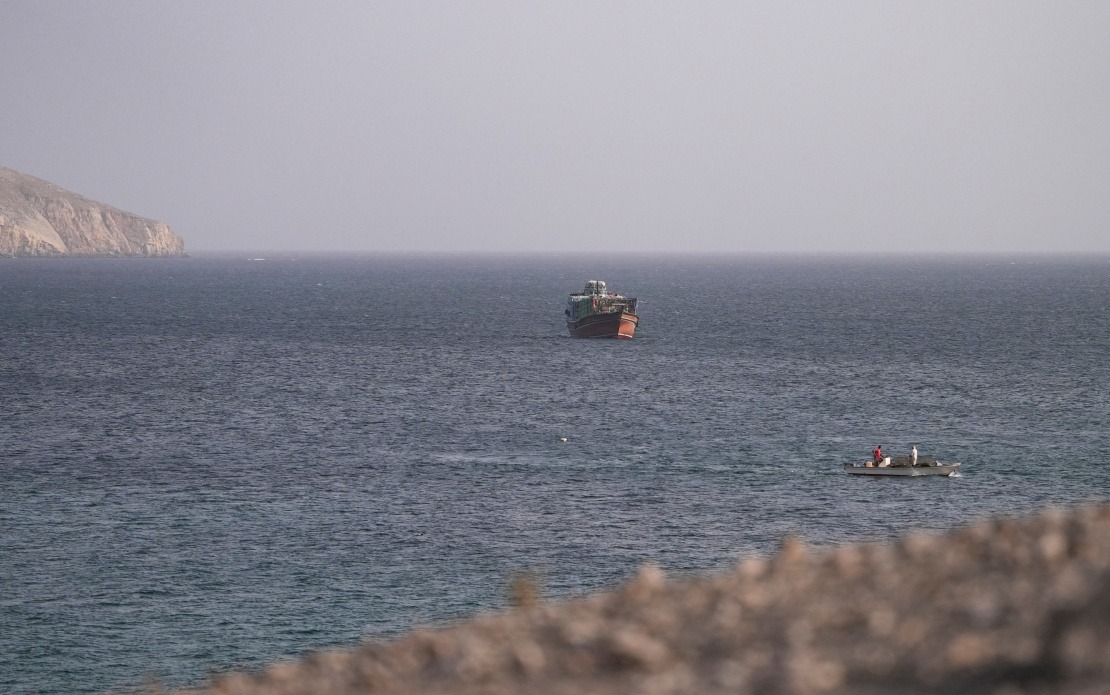
Iranian Foreign Ministry Spokesperson Esmaeil Baqaei has declared that the Strait of Hormuz will undergo permanent changes and will not revert to its operational status before the conflict, marking a significant statement about post-war regional maritime arrangements. Speaking during a televised interview, Baqaei emphasised that any understanding reached with Oman does not constitute a simple reopening of the strategic waterway but rather signals a comprehensive restructuring of how shipping flows through the critical chokepoint.
The Iranian position reflects months of diplomatic engagement between Tehran and Muscat following a ceasefire that took effect on April 8. According to Baqaei, substantive discussions began immediately after hostilities ceased, with multiple rounds of talks already completed. The bilateral dialogue gained prominence when Iran's Foreign Minister Abbas Araghchi made Oman his first overseas visit after the conflict, underscoring the importance Tehran attaches to coordinating with its southern neighbour on maritime security questions.
Central to the emerging framework is a memorandum of understanding that explicitly addresses the Strait of Hormuz's future governance. Under the agreement's fifth clause, Iran's management of the waterway must occur in consultation with Oman and through dialogue with other regional stakeholders. This provision appears designed to formalize a consultative mechanism rather than unilateral Iranian control, acknowledging Oman's status as a co-coastal state and the international dimensions of one of the world's most vital shipping lanes.
The Iranian spokesperson revealed that during the initial implementation phase of the ceasefire, the northern route of the Strait operated securely and accommodated normal maritime traffic for approximately 22 to 23 days. However, he suggested that attempts to restore completely pre-war traffic patterns within the envisioned 30-day period were interrupted by what he characterised as an act of aggression against Iran, implying that the security situation deteriorated before full normalisation could occur.
Most intriguingly, Baqaei disclosed that the agreed maritime corridor emerging from Iran-Oman negotiations will be distinct from both existing northern and southern routes. Instead, the two countries are designing an entirely new passage through the Strait, to be determined via bilateral agreement. This revelation suggests far more ambitious restructuring than merely reopening existing channels and raises questions about how such a rerouted corridor would function operationally and whether it would significantly alter traditional shipping patterns for international commerce.
The Iranian diplomat stressed that maritime security mechanisms must fully respect Iran's sovereign rights and prevent hostile actors from misusing the waterway. Baqaei's language suggests Tehran views the new arrangement as an opportunity to establish protective measures against perceived threats, implying that safeguards preventing hostile military or commercial activities would form part of the framework. For Malaysia and other Southeast Asian maritime trading nations dependent on Hormuz passage, such security assertions warrant close monitoring, as they could influence shipping insurance costs, transit times, and overall supply chain resilience.
Regarding external pressures, Baqaei dismissed threats from United States officials as ineffectual and historically unfounded. He contended that Iran has endured multiple high-intensity military aggressions and that psychological and media pressure, particularly through social media, represent tactics that have consistently failed to alter Tehran's strategic calculations. The spokesperson's defiant posture suggests that any diplomatic or economic pressure intended to influence Iran's Hormuz positioning is unlikely to prove decisive in reshaping its approach.
Baqaei also referenced recent diplomatic contacts from Bulgaria, the United Kingdom, and Ukraine, positioning these communications within Tehran's broader assessment of international responses to regional developments. He reiterated that Iran's decisions stem solely from national interest and security considerations, establishing a principled framework that purports to insulate Iranian policy from external coercion. This declaration effectively signals to international observers that Iran views its Hormuz arrangements as non-negotiable elements of its security doctrine.
The Iranian official articulated a clear warning directed at countries potentially cooperating with parties he described as aggressors against Iran, stating that any nation providing military bases, facilities, or logistical support would assume responsibility for consequences. While not naming specific countries, this language carries implications for regional allies of the United States and potentially affects considerations by countries evaluating their own military and diplomatic positioning in the Persian Gulf region.
For Malaysian policymakers and business stakeholders, Iran's evolving Hormuz framework presents complex considerations. Approximately one-third of global maritime trade passes through the Strait, and Malaysia's economy depends significantly on stable transit arrangements. The emergence of a new, Iran-Oman negotiated corridor could either stabilise shipping through improved security arrangements or introduce operational uncertainties if implementation proves cumbersome or controversial among international users.
The distinction Baqaei drew between reopening the Strait and implementing a new management framework suggests that international access may continue facing constraints reflecting Iran's security preferences. This nuance carries implications beyond shipping logistics, affecting energy prices globally and influencing broader geopolitical calculations about regional influence and power projection in the Gulf.
Ultimately, Baqaei's statements reflect Iran's determination to convert post-war conditions into arrangements advantageous to its strategic interests. The emphasis on consultation with Oman rather than unilateral control suggests some international acceptance of the ceasefire framework, yet the insistence on Iran's sovereign rights protection indicates that Tehran retains assertive posturing about the waterway's future. Regional observers and maritime stakeholders must continue monitoring implementation of the emerging Iran-Oman maritime corridor to assess whether the new arrangements stabilise or further complicate one of the world's most strategically consequential shipping routes.

