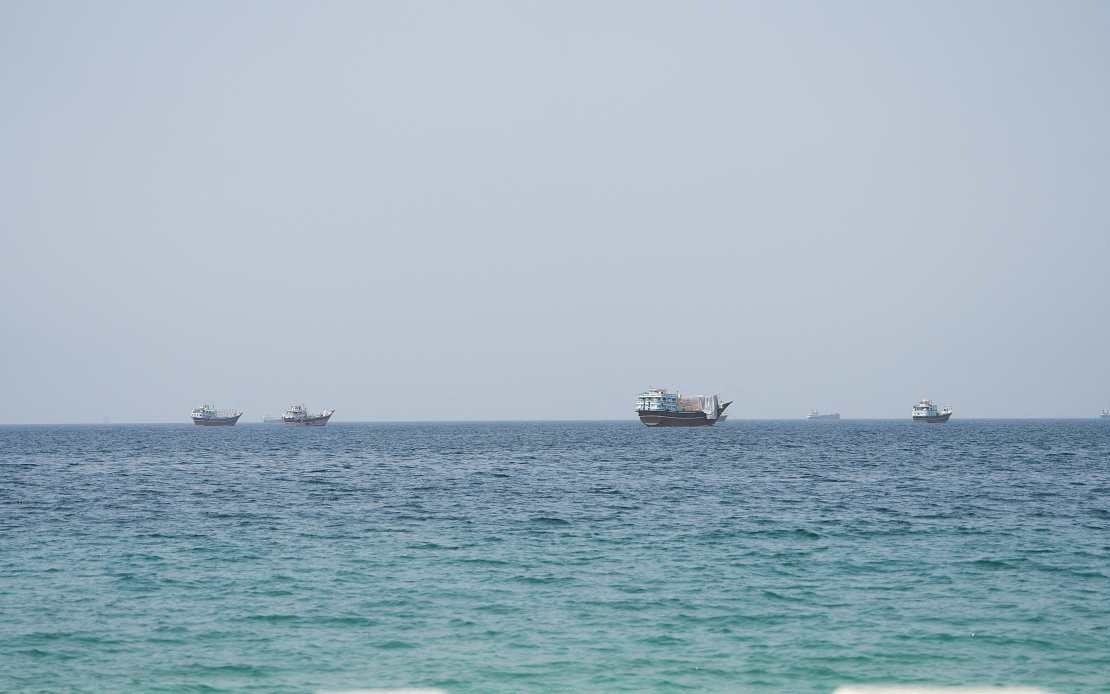
Iran has signalled progress in its ongoing discussions with Oman regarding safe passage through the Strait of Hormuz, one of the world's most strategically vital waterways. At a weekly news briefing, Foreign Ministry spokesman Esmaeil Baqaei told reporters that bilateral negotiations are moving forward in a "smooth and constructive" manner, marking a potential breakthrough in efforts to restore stability to a corridor through which roughly one-third of global seaborne oil transits. The talks represent a critical development for maritime security across the region and hold significant implications for energy markets worldwide, including for economies throughout Southeast Asia dependent on uninterrupted Gulf oil supplies.
Baqaei outlined specific areas of agreement emerging from the discussions, noting that negotiators have already established consensus on the mapping of shipping traffic corridors. However, he acknowledged that technical refinements remain necessary before both nations can finalise the language of a comprehensive joint statement formalising their understanding. This measured approach suggests Tehran and Muscat are pursuing a methodical path to creating a durable framework rather than rushing toward a hasty resolution that might unravel under implementation pressures. The spokesman indicated that future institutional mechanisms will be constructed to monitor and safeguard maritime traffic flows, protect marine ecosystems from pollution, and combat maritime criminal activities including piracy and illegal arms smuggling.
The economic dimensions of these negotiations extend beyond Iran and Oman themselves. For Malaysia and other Southeast Asian nations, the Strait of Hormuz's security status directly affects shipping costs, insurance premiums, and energy availability. Sustained tensions in the waterway can force vessels to take longer, more expensive routes, ultimately driving up prices for oil imports across the region. Baqaei's emphasis on establishing mechanisms for maritime service provision, including standardised fee structures, suggests both parties recognise the need for transparency and predictability that would benefit international commerce. By codifying cost procedures in advance, Iran and Oman may be attempting to build confidence among international shipping operators hesitant to venture through contested waters.
The bilateral nature of these negotiations warrants careful examination. Baqaei explicitly characterised the talks as a two-country process focused narrowly on determining safe shipping corridors, deliberately distancing the discussions from broader Middle Eastern geopolitical conflicts. This framing appears designed to insulate the Hormuz negotiations from the region's numerous flashpoints, presenting the talks instead as technical maritime discussions rather than manifestations of deeper political antagonisms. However, sceptics may question whether such compartmentalisation can hold when the Strait's security remains inextricably linked to international power dynamics and competing strategic interests.
Iran's Foreign Ministry spokesman also took the opportunity to restate Tehran's conditions for any comprehensive resolution of Hormuz access issues. Baqaei declared that the waterway will not fully reopen until the United States ends what Iran characterises as a naval blockade of Iranian ports. This hardline position reflects Tehran's perception that American military presence in the Persian Gulf operates as an economic stranglehold, restricting Iranian commerce and generating leverage over the Islamic Republic. For regional observers, this statement underscores the reality that despite progress in bilateral talks, the broader geopolitical stalemate between Washington and Tehran continues to constrain solutions.
The backdrop to current negotiations involves a tentative June agreement between Iran and the United States, mediated through Pakistani and Qatari diplomatic channels. That memorandum of understanding terminated active military hostilities and initiated formal negotiations toward a more expansive settlement governing navigation through the Strait. The agreement envisaged incremental restoration of commercial shipping, suggesting a phased approach that would gradually rebuild confidence as both sides demonstrated commitment to their obligations. Nevertheless, implementation proved problematic when Tehran and Washington traded accusations of breaching the memorandum's terms, illustrating how fragile such understandings remain when deep mistrust persists.
The stalled implementation of the June accord reflects persistent suspicions on both sides. Each party claims the other has violated agreed-upon terms, though the specific allegations remain opaque in public statements. This pattern of charge and counter-charge has become familiar in Middle Eastern diplomacy, where enforcement mechanisms often lack credibility and verification procedures remain contested. For Malaysian policymakers monitoring these developments, the takeaway is that formal agreements between hostile parties can collapse rapidly if confidence-building measures fail to materialise in practice. The Oman-Iran talks may partly represent an attempt to salvage progress by focusing on achievable bilateral objectives while broader international negotiations remain stalled.
Oman's role as mediator and negotiating partner reflects the sultanate's distinctive position in Gulf geopolitics. Historically, Oman has maintained pragmatic relations across the region's dividing lines, avoiding alignment with either Iranian or Saudi-led camps. This equidistance has granted Muscat credibility with multiple stakeholders, enabling it to serve as a bridge-builder when tensions escalate. Baqaei's comments acknowledging Oman as a bilateral partner on shipping matters implicitly recognises Muscat's diplomatic utility. For the Strait's ultimate security, a successful Oman-Iran arrangement could establish a template for similar bilateral understandings with other Gulf states or international actors concerned with maritime freedom.
The emphasis on environmental protection within the negotiations signals recognition that maritime incidents in the Strait carry ecological consequences extending beyond immediate economic impacts. Repeated military incidents, accidents, or deliberate pollution could devastate the Persian Gulf's fragile marine environment, affecting fisheries and desalination infrastructure relied upon by Gulf populations. By incorporating environmental safeguards into negotiations, Iran and Oman acknowledge that sustainable solutions must address ecological sustainability alongside security and commerce. This reflects evolving international consciousness about linking maritime security to environmental stewardship, a principle increasingly relevant as climate change stresses global shipping patterns.
Baqaei's reference to Malaysia's audience lies implicitly in his discussion of maritime crime prevention. Piracy, arms smuggling, and illicit drug trafficking through the Strait have historically affected vessels throughout Southeast Asia. Malaysian shipping companies and naval forces have encountered Hormuz-adjacent security challenges, including Somali piracy and weapons trafficking networks connected to regional instability. Should Iran and Oman establish effective mechanisms to combat such maritime crimes, benefits would ripple across Indian Ocean shipping lanes, improving security for Malaysian-registered vessels and regional commerce more broadly.
Looking ahead, Baqaei indicated that Iran's participation in September's UN General Assembly meeting remains undecided regarding delegation composition and seniority level. This apparent flexibility suggests Tehran may be calibrating its diplomatic posture based on developments in both the Oman talks and international negotiations more broadly. A robust Iranian delegation at the General Assembly could signal confidence in an emerging settlement, whereas a minimal presence might indicate pessimism. Malaysian observers should monitor such signalling, as it provides windows into Tehran's strategic calculations.
The broader significance of Iran-Oman progress extends to questions about whether regional actors can achieve modus vivendi independently of great power involvement. If Tehran and Muscat successfully establish functioning maritime protocols, they would demonstrate that Middle Eastern stability need not depend entirely on American or Chinese guarantees. For Malaysia and ASEAN, such models matter considerably, as Southeast Asia similarly seeks regional solutions to transnational challenges while maintaining relations with major powers. The Hormuz experience offers lessons, both positive and cautionary, about whether neighbouring states can construct durable frameworks when underlying political tensions persist.

