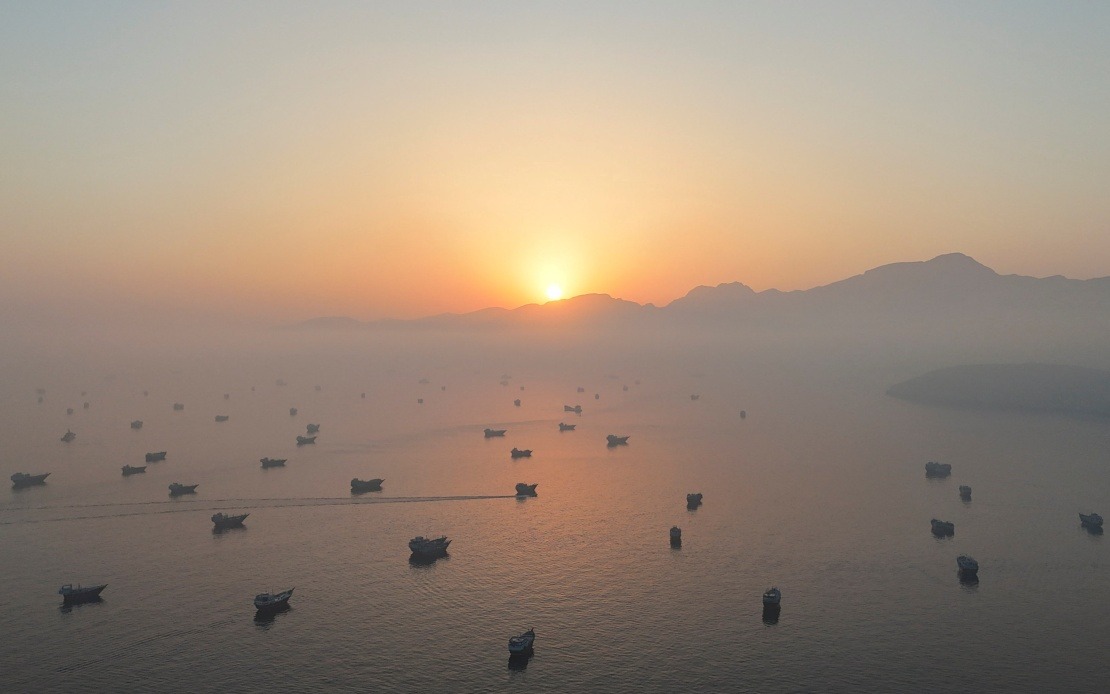
Iran's military has dramatically escalated its control over one of the world's most critical shipping corridors, announcing that henceforth no energy or commodity shipments will be permitted through the Strait of Hormuz without direct Iranian authorisation. The declaration came from the Islamic Revolutionary Guard Corps (IRGC) on Sunday following what Iranian officials characterised as violations by multiple commercial vessels attempting to navigate the waterway through what the military deemed unsafe routes.
According to IRGC statements, four vessels backed by the United States attempted passage through the strait after deactivating their navigation tracking systems, a move the Iranian military interpreted as deliberately evasive conduct. The incidents resulted in two vessels being forced to halt their transit, while two others reversed course entirely. The pattern suggested a coordinated strategy to probe Iranian enforcement capabilities, though official Western sources have not publicly confirmed this characterisation of events.
The IRGC's announcement represents a significant hardening of Iran's maritime posture in the region. Iranian military leadership asserted categorical control over the Strait of Hormuz and unilaterally designated specific shipping lanes that it considers safe for passage. The implication is unmistakable: Iran now effectively claims authority to regulate all traffic through waters that have historically been treated as international shipping lanes under standards established by maritime law and global shipping organisations.
For regional economies including Malaysia, which depends substantially on Persian Gulf energy supplies, this development carries serious implications. The Strait of Hormuz serves as the gateway for roughly one-third of globally traded seaborne oil and a significant portion of liquefied natural gas shipments. Any sustained disruption or even the perception of increased risk fundamentally affects energy prices across Asia-Pacific markets and threatens the economic stability of energy-importing nations throughout the region.
The current escalation must be understood within the broader context of deteriorating US-Iran military relations. Since July 8, the United States has conducted multiple rounds of military strikes against Iranian targets, which American Central Command justified as responses to Iranian attacks on commercial shipping in the waterway. Iranian forces have retaliated by striking American military installations positioned across several countries in West Asia, creating a cycle of military action and counter-action that shows no immediate signs of de-escalation.
Iran's insistence that any transit requires explicit permission represents a fundamental challenge to the international law of the sea and standard maritime conventions. The United Nations Convention on the Law of the Sea, to which most nations including Malaysia are signatories, establishes that ships of all nations possess the right of innocent passage through international straits. Iran's declaration effectively nullifies this established principle within the Hormuz corridor, substituting instead a unilateral permit system that grants Tehran veto power over global energy flows.
The practical consequences of this policy could prove substantial. Shipping insurers already charge elevated premiums for Hormuz transits due to the heightened risk environment. A formal Iranian permit requirement would introduce additional bureaucratic delays and unpredictability into shipping schedules, inevitably raising the cost of energy imports for Asian consumers. Malaysian power generation facilities and petrochemical industries that depend on regular Gulf supplies would face either supply uncertainty or sharply increased procurement expenses.
Iran's emphasis that "not even a drop of oil, gas or fertiliser" will transit without permission extends the restriction beyond energy products to include agricultural inputs essential for global food security. This broader assertion of control suggests Iranian officials view the permit system as a lever affecting multiple dimensions of international commerce, not merely energy markets. The rhetorical absoluteness of the statement indicates Iranian leadership intends to use maritime control as a bargaining tool in broader geopolitical negotiations.
The escalating military confrontation reflects deepening strategic competition in the Persian Gulf. The United States maintains substantial naval presence in the region through bases in several Gulf states and a permanent carrier task force deployment. Iran, lacking conventional naval superiority, has developed asymmetrical strategies including drone and missile capabilities that target shipping and military installations. The current cycle of incidents and military responses carries the risk of unwanted escalation if miscalculation or accident triggers a disproportionate response from either side.
Malaysia and other Southeast Asian nations have maintained carefully calibrated relationships with both the United States and Iran, seeking to benefit from economic engagement with both powers while avoiding entanglement in their confrontation. The Strait of Hormuz crisis threatens to force uncomfortable choices on regional governments. Energy-dependent nations cannot afford prolonged supply disruptions, yet publicly supporting American positions risks antagonising Iran and its regional allies. Malaysia's diplomatic strategy must balance these competing pressures while protecting its economic interests in reliable energy access.
The sustainability of Iran's permit system remains uncertain. If rigorously enforced, the policy would trigger international pushback from trading nations and shipping interests with economic stakes in Gulf commerce. However, the escalating military dynamics suggest neither Washington nor Tehran is presently focused on diplomatic resolution. The international maritime community faces a period of heightened uncertainty, with energy prices potentially volatile and shipping costs elevated until clearer diplomatic pathways emerge or military circumstances fundamentally shift.
Regional observers are watching closely to determine whether Iran will enforce its permit requirement against major shipping lines or whether the announcement functions primarily as a deterrent against further American-sponsored provocations. The answer will significantly shape energy security considerations across Asia-Pacific for the foreseeable future, making this maritime dispute far more than a technical shipping matter.

