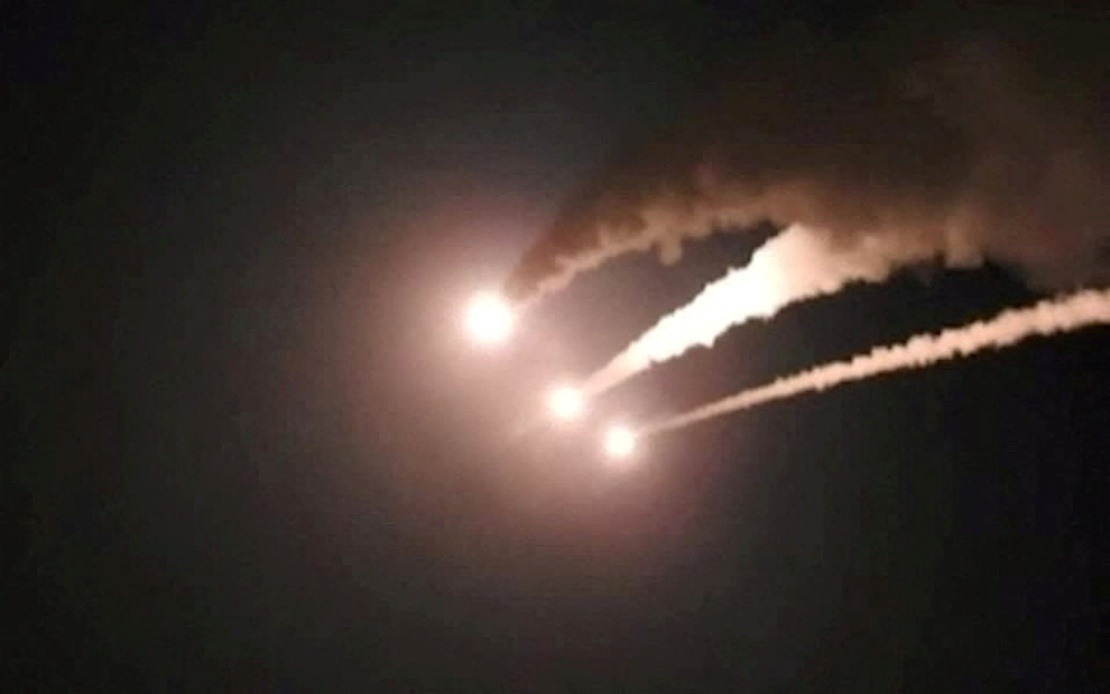
Tensions in the Middle East have taken a dangerous turn as Iran's armed forces issued a stark warning on Wednesday that American military installations throughout the region face potential drone attacks if ceasefire violations persist. The threat comes amid reports of Iranian strikes against multiple US positions, including the strategically vital Sheikh Isa Air Base in Bahrain, which Iran's military claimed housed concentrations of American troops. This tit-for-tat cycle of military operations signals a widening breach in diplomatic efforts to stabilise one of the world's most volatile regions, with implications that extend far beyond the immediate combatants.
The Iranian military's formal statement, distributed through state broadcaster IRIB, framed its recent drone and missile operations as a proportionate response to what it characterises as continuous American aggression targeting both military and civilian infrastructure across Iran's southern territories. Tehran specifically cited repeated breaches of a fourteen-point ceasefire framework, suggesting that diplomatic channels have fractured almost entirely. The rhetoric deployed by Tehran's defence establishment reflects mounting frustration with what Iranian officials perceive as systematic American non-compliance with agreed terms, though details of the original ceasefire agreement remain opaque to international observers.
Perhaps more concerning than the rhetoric itself are the concrete military actions underpinning these threats. Iran's Islamic Revolutionary Guard Corps, according to the semi-official Tasnim news agency, executed a coordinated assault involving both missiles and unmanned aircraft that targeted over eighty distinct American military locations. The strike package included the sprawling Salman Port facility and the headquarters of the US Navy's Fifth Fleet stationed in Bahrain, along with Ali Al-Salem Air Base in Kuwait. Such a comprehensive target list suggests months of preparation and detailed intelligence gathering, indicating this was not an impulsive reaction but rather a calculated operation reflecting deep strategic planning.
The operational scope of Iran's attack underscores the genuine military capacity now on display. Rather than isolated incidents, these strikes demonstrate Tehran's ability to coordinate multi-domain operations across multiple countries simultaneously, striking at infrastructure vital to American power projection in the Persian Gulf. For Malaysian policymakers and business leaders, this matters considerably, given the nation's dependence on uninterrupted maritime trade through the Strait of Hormuz, through which roughly one-third of the world's seaborne petroleum traffic flows. Any sustained conflict in the region directly threatens Malaysia's energy security and export logistics.
The American response has been swift and of comparable magnitude. The US Central Command disclosed that it had launched its own round of strikes against Iranian targets, hitting more than eighty facilities in what officials describe as an immediate countermeasure to Iranian attacks on merchant vessels transiting the Strait of Hormuz. This claim that Iranian operations specifically targeted commercial shipping elevates the crisis beyond bilateral military posturing into a matter directly affecting international commerce and freedom of navigation. Multiple nations, including Malaysia, depend on the security of these sea lanes, and any disruption carries profound economic consequences.
Defence systems across the Gulf region activated during the exchanges, with Kuwait reporting successful interception of incoming missiles and unmanned systems, while air raid sirens blared across Bahrain as Iranian ordnance approached. These defensive operations, though apparently effective, highlight the vulnerability of civilian populations and critical infrastructure to aerial assault. The fact that multiple countries' air defence networks were simultaneously engaged demonstrates the scale and speed of the contemporary threat environment. For smaller regional powers lacking comparable defensive apparatus, such developments are deeply unsettling.
The specificity of the stated ceasefire framework—with fourteen enumerated articles—suggests previous negotiations had achieved substantive agreement on rules of engagement and acceptable conduct. That both sides now accuse the other of systematic violations indicates either profound misunderstandings about what was agreed or deliberate misinterpretation for political advantage. The breakdown of such frameworks traditionally precedes wider conflict, as parties lose confidence in negotiated solutions and resort increasingly to military measures.
From a Malaysian perspective, the deterioration in the Gulf poses multiple challenges. Beyond the immediate threat to shipping through the Strait of Hormuz, regional instability tends to elevate energy prices globally, inflating costs for manufacturing and transportation. Malaysia's position as a major exporter of electronics, petrochemicals, and agricultural products means sustained energy price increases directly erode competitiveness. Additionally, instability in the Middle East historically correlates with broader regional security complications, affecting maritime routes and creating secondary pressures on Southeast Asian stability.
The rhetoric emanating from Tehran must also be understood within Iran's broader strategic calculation. By publicly designating all American bases as legitimate military targets, Iran may be attempting to establish deterrence through explicit threat, hoping to convince Washington that further escalation risks unacceptable consequences. Conversely, such declarations constrain Iran's own strategic flexibility, as failing to follow through would undermine credibility. This dynamic creates precisely the conditions in which accidents or miscalculations become dangerously consequential.
The involvement of Kuwait and Bahrain adds complexity, as these are US-aligned states that host American forces at Kuwaiti invitation and maintain close defence relationships with Washington. Iranian strikes on their territory, or near their civilian populations, effectively extend the conflict's footprint and create pressure on these smaller states to escalate responses. Kuwait and Bahrain face genuine dilemmas, as they depend on American security guarantees but also maintain extensive trade relationships and diplomatic channels with Iran that they understandably wish to preserve.
Within Malaysia's broader strategic context, these escalations underscore the vulnerability of Southeast Asia to external shocks in the Middle East. Malaysia's careful balancing act between Western strategic partnerships and Middle Eastern economic relationships becomes more precarious as polarisation increases. The nation's substantial Muslim population and historical connections to Middle Eastern affairs mean that conflicts in the region carry domestic political dimensions beyond pure security considerations.
Looking ahead, whether this cycle of strikes and counter-strikes stabilises into a new equilibrium of mutual deterrence or spirals into wider conflict remains uncertain. International mediation efforts, if they exist beyond public view, face enormous obstacles given the apparent breakdown of good faith between the parties. For Malaysia and other nations dependent on Gulf stability, the coming weeks will require careful monitoring and contingency planning for scenarios involving further escalation or, conversely, unexpected diplomatic breakthroughs that could rapidly transform the situation.

