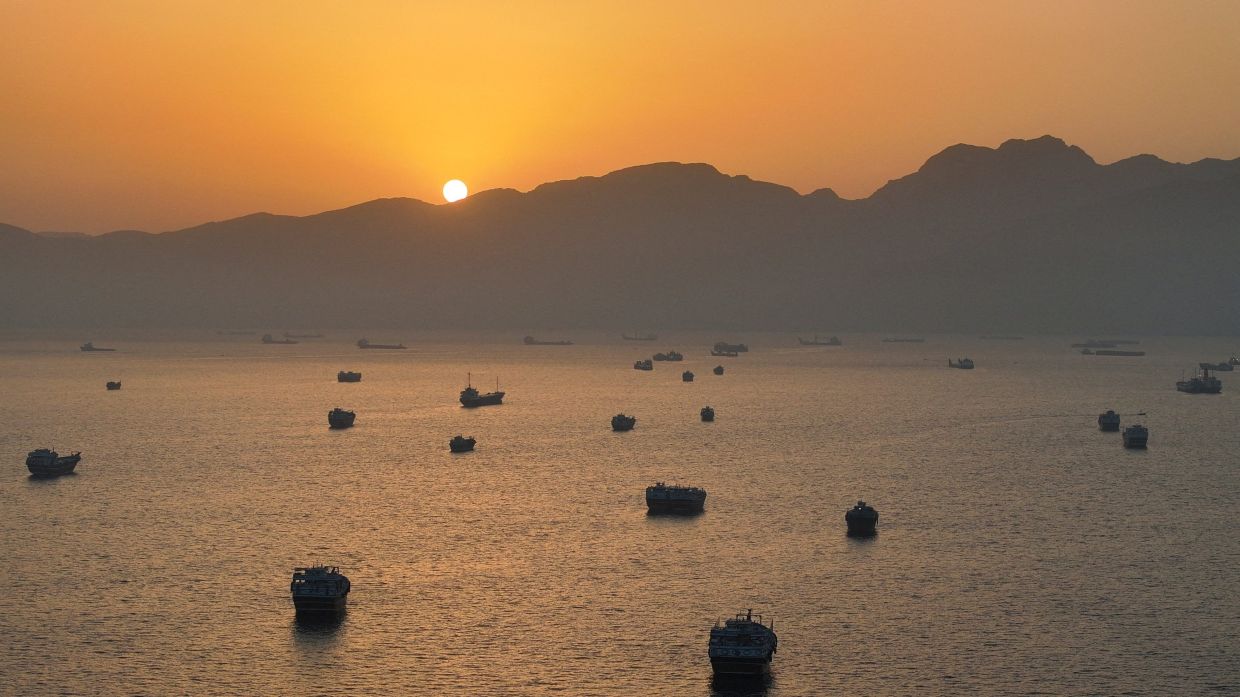
The geopolitical freeze affecting Middle Eastern oil supplies is beginning to crack. Three substantial cargo vessels carrying approximately 5 million barrels of crude are now transiting out of the Strait of Hormuz following a preliminary understanding between Iran and the United States, preliminary shipping data indicates. The development brings tangible relief to energy markets that have faced severe supply constraints since regional hostilities escalated, with the movement of stranded cargo potentially contributing to a moderation in global crude prices.
The South Korean-flagged VL Breeze, a super-large vessel classified as a Very Large Crude Carrier with a capacity of 2 million barrels, has successfully navigated through the strait carrying a mixed cargo of Qatari condensate and crude sourced from Abu Dhabi. The ship, chartered by South Korean refiner Hyundai Oilbank, is now bound for Daesan in South Korea. Simultaneously, the Plata Carrier, sailing under Liberian registry and contracted by Indian Oil Corp, has departed with 2 million barrels of Saudi Arabian crude, while the Prudent Warrior, a smaller Suezmax-class tanker flagged to Liberia, has begun its journey to Sohar in Oman carrying 1 million barrels of Iraqi Basrah crude.
The scale of the logjam that has accumulated in the Persian Gulf underscores the severity of trade disruptions caused by the broader regional conflict. According to recent analysis from shipping data providers Kpler and Vortexa, nearly 90 million barrels of crude oil have accumulated within Gulf waters, unable to proceed to global markets. This represents a critical constraint on international supply at a time when energy markets remain sensitive to any disruptions. The sudden departure of these three vessels, whilst symbolically significant, represents merely a fraction of the blockaded inventory, suggesting that months of restoration may be required before normal supply flows resume entirely.
South Korea's maritime ministry confirmed that four vessels operated by South Korean shipping interests have now cleared the strategic waterway, though only one is destined for domestic ports while the remainder are heading to unspecified third-country destinations. However, the situation remains precarious: eighteen of the twenty-six vessels originally stranded since the commencement of Middle Eastern hostilities remain trapped within Gulf territories. This figure illustrates the gradual, incremental nature of the resolution, with shipping companies adopting a cautious approach to resuming normal operations through what remains a volatile passage.
Oman has played a pivotal diplomatic role in facilitating this recovery, establishing temporary maritime corridors in coordination with the International Maritime Organization to enable safer passage of departing vessels. The sultanate has made a strategic commitment to maintain open navigation through the Strait of Hormuz without imposing any transit fees, a significant gesture that underscores regional cooperation in restoring commercial stability. Two designated alternative routes—positioned north and south of the conventional shipping lane—have been created to reduce congestion and lower the risk profile for transiting vessels during this sensitive transition period.
The implications for liquefied natural gas markets are equally notable. Two empty LNG carriers—the Shandong Redwood and Milaha Qatar—have recently passed westward through the strait to position themselves for loading operations at Qatari export terminals. This movement brings the total number of empty LNG vessels now transiting the Hormuz passage for Qatar loading operations to nine, marking the highest concentration of such traffic since regional conflict commenced. This surge in LNG vessel activity signals growing confidence among shipping operators and energy companies that the temporary arrangement between Washington and Tehran will hold, permitting the resumption of normal energy commerce.
Qatar itself has signalled optimistic prospects for its energy sector. According to reporting from the Financial Times, Qatar's Prime Minister Sheikh Mohammed bin Abdulrahman al-Thani has publicly stated that the nation's liquefied natural gas production capacity is expected to return to full normal operations within the coming weeks. This timeline, if achieved, would represent a substantial restoration of global LNG supply, particularly significant for Asian markets heavily dependent on Qatar's exports, including Japan, South Korea, Taiwan, and increasingly, China. The importance of this recovery cannot be overstated, as LNG price volatility has been a major concern for utility companies and industrial consumers across the region.
For Malaysian and Southeast Asian energy consumers, these developments carry direct implications. The region remains substantially dependent on Middle Eastern crude oil and liquefied natural gas for electricity generation, petrochemical production, and energy-intensive manufacturing. The accumulation of 90 million barrels represented an effective supply reduction that was contributing to elevated global crude prices, with downstream consequences for fuel costs, electricity tariffs, and industrial competitiveness throughout Southeast Asia. The resumption of tanker movements through Hormuz offers the prospect of price moderation that could filter through to regional economies.
However, the complexity of the current situation warrants caution against premature optimism. The interim nature of the Iran-US agreement means that political negotiations remain fragile and subject to unexpected reversals. Shipping companies continue to operate with heightened risk assessments, as evidenced by the deliberate, measured pace of vessel departures rather than a sudden rush to resume normal traffic patterns. The eighteen vessels remaining trapped in the Gulf represent a substantial cautionary indicator that the passage toward complete normalization will likely be measured and conditional upon sustained diplomatic progress.
The broader context of global energy markets adds another layer to this situation. Crude oil prices have been supported by supply concerns extending beyond the Hormuz situation, including seasonal demand patterns, production decisions by OPEC members, and ongoing geopolitical tensions. The release of stranded Gulf crude, whilst meaningful, represents merely one factor among many influencing global energy price trajectories. Nevertheless, the symbolic and practical significance of these first departures cannot be dismissed, as they represent a tangible shift from stasis toward resumption of commercial normalcy.