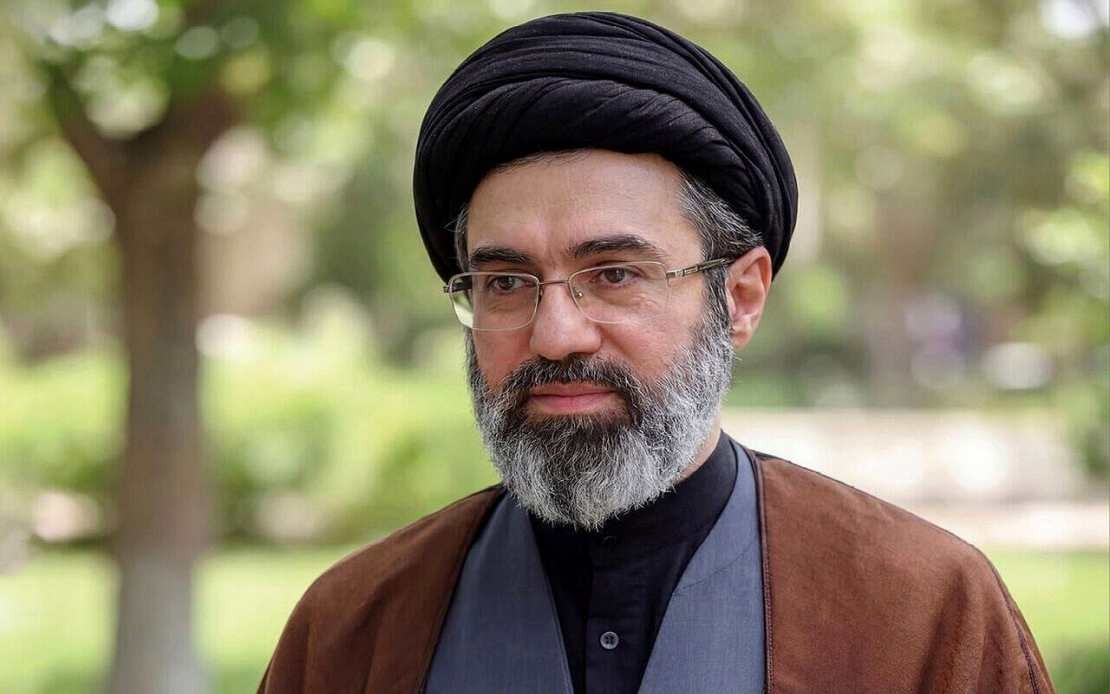
Iranian President Masoud Pezeshkian moved to dispel concerns about the health of Supreme Leader Mojtaba Khamenei on Monday, declaring during a state television interview that the country's top leader is in perfect condition. The reassurance comes as Iran navigates one of the most significant political transitions in decades, with relatively little public visibility from the new supreme leader since his appointment.
The president made his remarks while discussing a lengthy private meeting with Khamenei, describing the seven-hour encounter as productive and emphasizing the broad range of governance issues covered. Pezeshkian characterised the discussion as "very good," signalling alignment between the presidency and supreme leader's office on the direction of the Islamic Republic. The extended duration of their talks suggests substantive engagement on matters extending well beyond ceremonial protocol.
According to Iranian media reporting from Sunday, the meeting marked a significant moment in Pezeshkian's tenure, occurring as he entered his third year as president. The timing underscores the importance Tehran places on demonstrating continuity and cohesion at the highest levels of government, particularly during a transitional period that has generated international scrutiny and domestic uncertainty about institutional stability.
The supreme leader's emphasis on national unity emerged as the central theme of their discussions, Pezeshkian indicated. This focus reflects deep concerns within Iran's leadership about maintaining cohesion across fractious political factions and broader society at a moment when the nation faces multiple external and internal pressures. By highlighting unity as a paramount concern, the supreme leader appears intent on signalling that internal divisions must be subordinated to collective national interests.
Practical governance challenges dominated much of the substantive agenda during their talks. Pezeshkian identified people's livelihood, employment generation, and housing availability as priority topics requiring immediate attention and coordinated action. These issues strike at the heart of citizen welfare and touch directly on public frustration with economic stagnation—a persistent vulnerability for the Islamic Republic across different administrations. The inclusion of these bread-and-butter concerns in discussions at the highest level suggests recognition that economic performance remains central to regime legitimacy.
The impact of international sanctions on Iran's economy also featured prominently in their deliberations, Pezeshkian noted. This acknowledgment reflects the sustained economic strain imposed by multiple rounds of Western restrictions, which have constrained Iran's oil export capacity, limited access to global financial systems, and disrupted normal commercial relationships. The prominence given to sanctions-related discussions indicates that managing their economic consequences remains a central preoccupation for both the presidency and supreme leader's office.
The public confirmation of Khamenei's health status carries considerable political weight in Iran's unique system of governance. The Supreme Leader holds constitutional authority over the military, judiciary, and state media, making his fitness to lead a matter of genuine institutional consequence. Transparency about his physical condition addresses speculation that may have circulated about whether the transition occurred smoothly or whether unforeseen complications might destabilise the power structure.
Mojtaba Khamenei assumed the supreme leader position following his father Ali Khamenei's death in joint military strikes by the United States and Israel on February 28. The selection of Mojtaba as successor occurred through formal process when Iran's Assembly of Experts convened in March to designate the new supreme leader. The succession was constitutionally orderly, yet the dramatic circumstances of the elder Khamenei's death created unusual conditions for the transition and elevated international interest in how the new leader would consolidate authority.
A notable aspect of Mojtaba Khamenei's tenure thus far is his absence from public view since assuming office. Unlike previous supreme leaders who maintained a deliberate public profile through carefully choreographed appearances, speeches, and media engagement, the new supreme leader has remained largely invisible to the Iranian public and international observers. This departure from customary practice has generated speculation about his approach to leadership, his physical condition, or strategic calculations about maintaining distance from day-to-day political controversy. The presidential statement about perfect health may be intended partly to counter narratives suggesting the new supreme leader is somehow incapacitated or reluctant to govern.
The significance of this leadership transition extends beyond Iran's borders, carrying implications for regional stability and international relations. The manner in which Mojtaba Khamenei consolidates authority will influence Iran's foreign policy direction, its approach to nuclear negotiations, its support for regional militias and proxies, and its posture toward the United States and Israel. For neighbouring countries and global powers monitoring Iran, clear evidence of stable, functional leadership at the highest level reduces uncertainty about how the regime will respond to external pressures and opportunities.
For Malaysia and other Southeast Asian nations, Iran's internal political stability matters primarily through the lens of global oil markets and maritime security. As a major crude oil producer, Iranian policy choices affect global energy pricing and availability. Additionally, Iranian-linked activities in Southeast Asian waters and ports require monitoring given the region's complex security environment and the importance of unimpeded maritime commerce through critical chokepoints.
The president's public health assurance also serves a domestic audience within Iran itself. Pezeshkian's statement may be calibrated to reassure Iranians that governance remains stable and that coordination between the presidency and supreme leader's office is functioning normally. By demonstrating regular, substantive communication with Khamenei and characterising their interactions positively, Pezeshkian positions himself as a capable executive working constructively within Iran's constitutional framework rather than as a figurehead sidelined by a remote supreme leader.
As Iran continues adapting to its new leadership structure, the balance between the presidency and supreme leader's office will evolve over coming months and years. The meeting between Pezeshkian and Khamenei, and the public reporting of their discussions, represents an early indicator that both institutions are working toward coordinated governance rather than entering into paralysis or conflict. The coming period will reveal whether this initial demonstration of unity proves sustainable as the new supreme leader's leadership style becomes clearer and inevitable policy disagreements between different power centres emerge.

