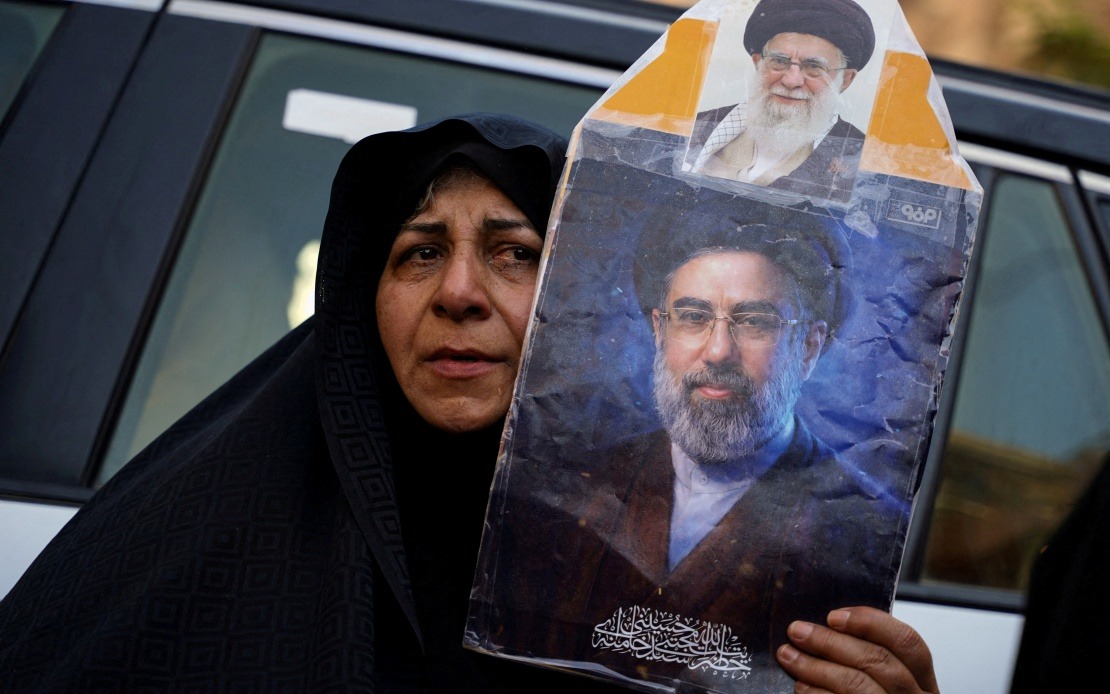
The Iranian Supreme Leader has launched a scathing attack on the credibility of US President Donald Trump, accusing him of reneging on commitments made under a peace memorandum of understanding inked between Tehran and Washington just weeks earlier. In a statement released on Saturday and disseminated through state media, Khamenei characterised the alleged American violations as confirmation of what he portrayed as a longstanding pattern of American deception and untrustworthiness in international affairs.
The MoU in question was signed on June 18 between Iranian President Masoud Pezeshkian and Trump, establishing a framework for direct negotiations aimed at reaching a comprehensive settlement within a 60-day window. The agreement represented a significant diplomatic overture in a relationship defined by decades of mistrust, sanctions, and military confrontation. However, the intervening weeks have seen a sharp deterioration in implementation, with both sides now accusing the other of bad faith.
Khamenei's rebuke struck at the fundamental nature of international commitment-making, arguing that the violations demonstrated the futility of relying on American promises. His language was unsparing, describing Washington as having "revealed its true and unmasked face" and characterising past and present US conduct as a manifestation of dishonesty, illogical reasoning, and what he termed evil intent. This rhetorical escalation suggests deep frustration within Tehran's leadership about the trajectory of negotiations that had been heralded as a potential breakthrough.
The deterioration on the ground has been unmistakable. Recent days have witnessed multiple rounds of American military strikes targeting Iranian interests, whilst Tehran has responded with retaliatory attacks against US military installations and assets scattered throughout the Middle East. This cycle of tit-for-tat operations represents precisely the kind of escalatory spiral the June memorandum was intended to prevent, and its rapid unravelling underscores the fragility of the agreement even at its inception.
Threatening a more ominous turn, Khamenei issued a stark warning to Washington, promising that if the United States persisted in what he described as warmongering and sought to inflict greater damage on Iran and its regional allies, it would face consequences he characterised as "unforgettable lessons." The invocation of the "resistance front" terminology references Iran's network of non-state actors and allied militias throughout Iraq, Syria, Lebanon, and Gaza, suggesting that Iranian retaliation could extend beyond state-to-state military action.
The Supreme Leader's statement appeared designed to address multiple audiences simultaneously. Domestically, it reassures Iranian citizens that leadership will not tolerate American aggression without response, a crucial consideration in a nation where public sentiment remains deeply shaped by historical grievances with the United States. Regionally, it signals to allied governments and armed groups that Iran will not passively accept further violations. And internationally, it stakes out a position that places responsibility for the agreement's failure entirely on Washington's shoulders.
Paralleling these high-level political statements, Iran's Deputy Foreign Minister for Legal and International Affairs Kazem Gharibabadi took the unprecedented step of announcing that Tehran has suspended its obligations under the memorandum, directly mirroring American violations with Iranian non-compliance. This dual-track messaging—combining inflammatory rhetoric with formal suspension of treaty obligations—indicates a coordinated approach to signalling Iranian displeasure whilst preserving the possibility of future negotiations should circumstances change.
For Southeast Asian observers, these developments carry significant implications. Malaysia and other regional nations maintain complex balancing acts between Western powers and Iran, with strategic interests spanning energy security, trade relationships, and maritime safety. The breakdown of even a nascent diplomatic framework in the Middle East increases the risk of broader regional instability that could affect shipping lanes vital to Malaysian commerce, as well as complicate ASEAN's efforts to maintain constructive engagement with both Western and non-aligned powers.
The episode also raises broader questions about the sustainability of international agreements in an era of heightened great power competition and domestic political instability. The June memorandum fell victim to implementation challenges even before Trump's return to office fundamentally altered American Middle East policy priorities. The rapidity with which the agreement unravelled suggests that both sides may have engaged in optimistic assumptions about their counterpart's willingness to honour commitments, or alternatively, that neither party entered the negotiations with genuine intent to implement the agreement long-term.
Historically, American presidents' signatures on major international agreements have proven vulnerable to subsequent reversals by successors or even the same administration when political winds shift. Iran's leadership has experienced this phenomenon directly, most notably with the 2015 nuclear deal from which Trump withdrew in 2018, only for his successor to pursue re-engagement. This history of volatility makes current Iranian scepticism about American reliability not merely rhetorical posturing but grounded in concrete historical experience.
The immediate trajectory remains concerning. Without either side demonstrating willingness to de-escalate, the 60-day negotiation window established in the June memorandum faces becoming obsolete before substantive diplomatic progress can accumulate. Regional proxy forces controlled or influenced by Iran have already begun repositioning in response to American military action, whilst Washington has signalled its intention to maintain military pressure. The question now is whether sufficient common ground exists to salvage even a minimal framework for direct talks, or whether the relationship has entered another prolonged period of confrontation.

