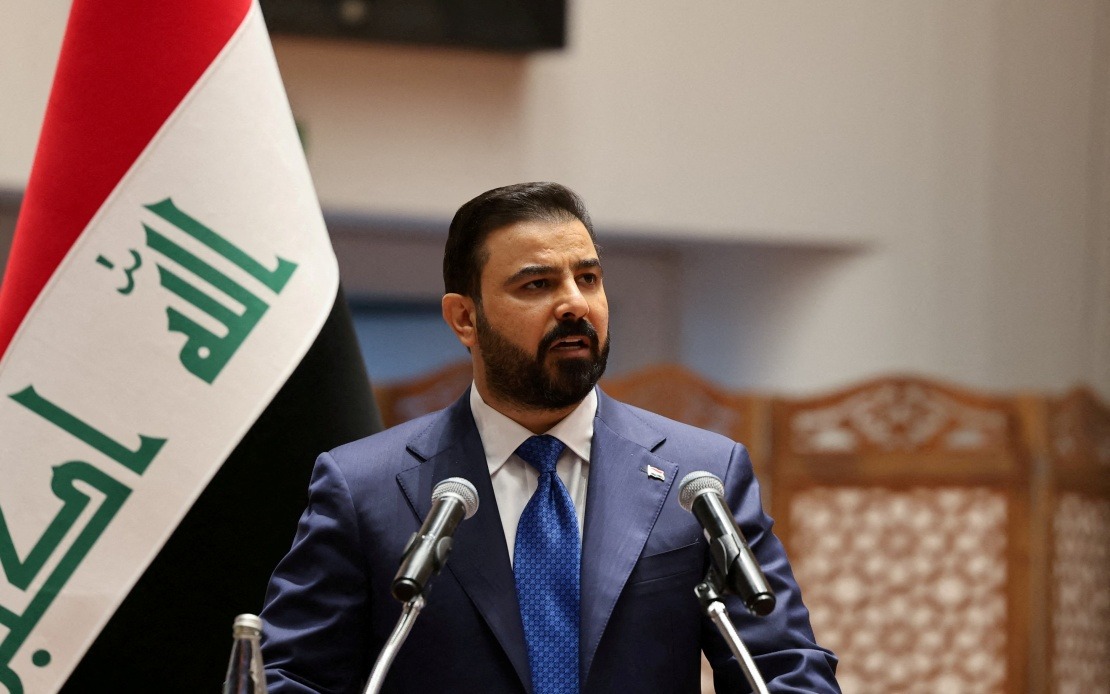
Iraq has made clear its intention to remain a committed member of the Organization of the Petroleum Exporting Countries (OPEC), with Prime Minister Ali Al-Zaidi declaring on Thursday that Baghdad will not abandon the cartel despite ongoing tensions over production allocations. Speaking to the Al-Hadath broadcaster in Moscow, Al-Zaidi stressed that Iraq's focus is instead on securing what it considers a fair production quota within the organization's framework, a statement that carries significance given Iraq's complex relationship with OPEC management in recent years.
The reaffirmation comes amid active discussions about Iraq's petroleum output capacity and how that should translate into formal quota assignments. OPEC+ representatives have been conducting comprehensive assessments of Iraq's ability to sustain and increase oil production, signalling a broader recalibration of the cartel's production levels across member states. These evaluations are crucial for Iraq, which as a major oil exporter holds substantial leverage within OPEC but has long complained that its quotas do not reflect either its geological potential or its economic needs.
In June, OPEC announced adjustments to production allowances for several member states, reflecting the organization's ongoing efforts to balance market supply with global demand fluctuations. Kuwait received authorization to boost its August output by 16,000 barrels per day, reaching a total of 2.66 million barrels daily. Oman, a smaller producer, was permitted to increase production by 5,000 barrels per day to reach 836,000 barrels daily. Iraq, meanwhile, was allocated an increase of 26,000 barrels per day, permitting the country to raise its production ceiling to 4.405 million barrels per day.
While the allocation granted to Iraq exceeded those of both Kuwait and Oman in absolute terms, Baghdad's position within OPEC's hierarchy and its stated ambitions suggest the government views its quota as insufficient relative to its production infrastructure and economic requirements. Iraq possesses vast proven oil reserves and has made substantial investments in developing its downstream and upstream petroleum sectors, particularly following the defeat of ISIS and the stabilization of oil-producing regions that had been under militant control.
Iraqi Oil Ministry spokesman Salim Al-Ruqabi had previously indicated that OPEC+ was undertaking detailed technical assessments of the country's oil production capacities to inform future quota decisions. These evaluations represent a methodical approach to determining whether Iraq's assigned limits accurately reflect what the country can sustainably produce, a process that typically involves examining existing infrastructure, planned expansions, and long-term development scenarios. For Iraq, demonstrating increased production potential could strengthen its negotiating position in future OPEC+ discussions.
The timing of Al-Zaidi's remarks reflects broader geopolitical and economic considerations within the Middle East. Iraq's oil revenues form the backbone of government finances, making petroleum policy a matter of national importance. The country depends heavily on oil exports to fund reconstruction efforts, public sector employment, and essential services following years of conflict and instability. A production quota perceived as inadequate could constrain Baghdad's fiscal capacity and influence its ability to implement development programmes.
OPEC's internal dynamics have grown more complex in recent years, with members balancing competing interests between maintaining cartel unity and pursuing individual national economic objectives. Iraq's situation exemplifies these tensions, as the country seeks greater recognition of its productive capacity while the organization as a whole attempts to manage global oil prices through coordinated production strategies. The cartel's ability to accommodate reasonable demands from member states like Iraq is essential for preserving cohesion.
For Southeast Asian energy markets and policy makers, Iraq's stance carries implications for global oil supply stability and pricing. The region's energy-dependent economies, including Malaysia, Thailand, and Indonesia, maintain keen interest in OPEC production decisions given their exposure to crude oil price volatility. A more harmonious resolution of quota disputes within OPEC could contribute to greater market predictability, benefiting net-importing nations across Asia that rely on stable energy costs for economic competitiveness.
The emphasis Al-Zaidi placed on Iraq's continued OPEC membership also signals confidence in the organization's relevance and utility at a time when some analysts question OPEC's future effectiveness amid the global energy transition and rising non-traditional energy sources. By affirming loyalty while advocating for fair treatment, Iraq seeks to position itself as a constructive partner willing to work within established frameworks rather than pursuing unilateral action that could destabilize the cartel.
Moving forward, the success of Iraq's quota negotiations will depend on transparent dialogue with OPEC leadership and acceptance of technical assessments that substantiate Baghdad's production claims. The organization has demonstrated flexibility in recent years by accommodating member state concerns through graduated adjustments rather than sudden policy shifts. Iraq's measured approach, emphasizing commitment alongside reasonable demands for equity, may prove effective in achieving adjustments that better reflect the country's petroleum potential and economic circumstances while maintaining broader OPEC cohesion and market stability.

