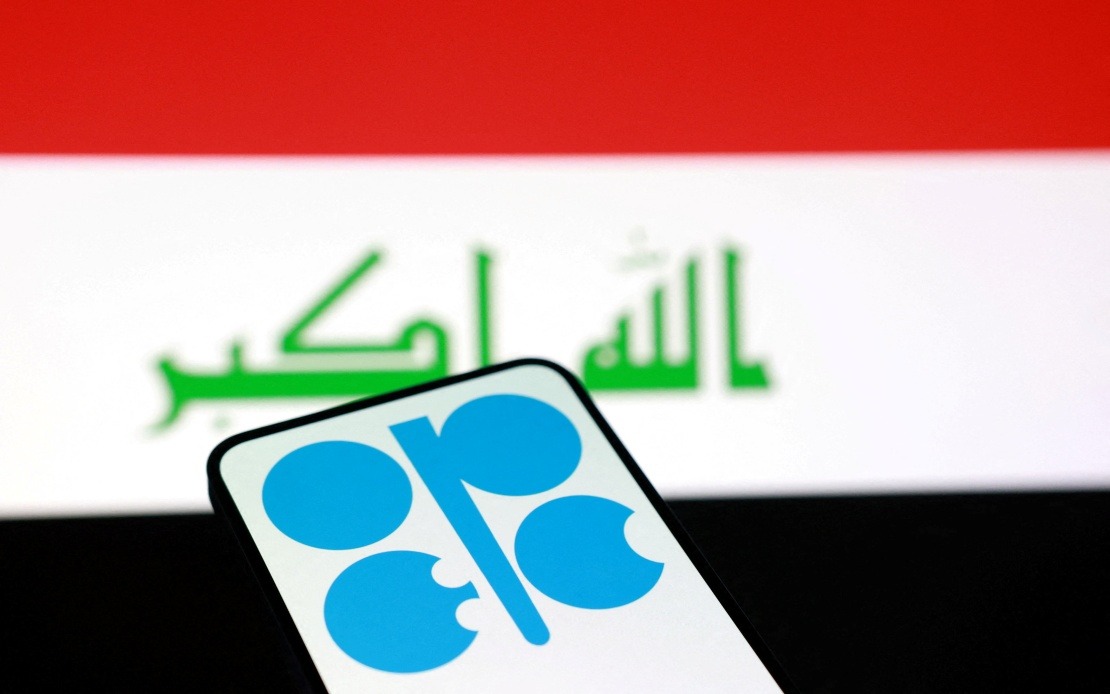
Iraq's Oil Ministry has moved swiftly to quash reports suggesting Baghdad might abandon its OPEC membership, issuing a formal statement on Thursday that reframed the country's position as one of continued commitment to the cartel rather than confrontation. The denial came after Bloomberg reported that Iraq could reconsider its OPEC standing if member states refused to raise its production quota, prompting officials in Baghdad to clarify that neither Prime Minister Mohammed Shia al-Sudani nor the broader government apparatus has entertained any discussion of withdrawal.
The clarification illustrates a subtle but significant distinction in how Iraq is approaching its relationship with OPEC and fellow members. Rather than threatening to abandon the organization entirely, Iraq's leadership is pursuing what officials characterize as a technical and transparent reassessment of production ceilings across all member states. This distinction reflects Baghdad's desire to maintain diplomatic relationships while simultaneously pushing for recognition of its specific capacity and circumstances. Oil Ministry spokesman Salim Al-Rikabi underscored that Iraq harbours no current intention of departing OPEC and remains steadfastly committed to the group's established frameworks and collaborative mechanisms.
Baghdad's core grievance centres on the belief that its existing production quota fails to reflect genuine technical capacity or the nation's broader economic and security context. Iraq maintains that production ceilings should be recalibrated in alignment with what each member state can realistically and sustainably extract, taking into account individual national circumstances that may have constrained output in the past. For Iraq specifically, officials argue that decades of conflict, international sanctions, and infrastructure damage inflicted by terrorist organizations have artificially depressed production levels, leaving the quota system misaligned with actual capacity.
To address these concerns, OPEC and its allied producers have already initiated a comprehensive review mechanism designed to reassess maximum sustainable production capacity across the membership. This process, overseen in coordination with an independent international consulting firm and involving Iraq's active technical participation, reflects an attempt to establish objective, science-based benchmarks rather than relying on historical or politically negotiated figures. The involvement of external expertise is intended to depoliticize what has traditionally been a contentious issue within the cartel, providing member states with defensible data to justify their positions during quota negotiations.
The broader OPEC+ framework is simultaneously entering a period of gradual production restoration following years of voluntary output cuts implemented to stabilize global markets during periods of oversupply and price weakness. These reductions, agreed upon by member states including Iraq, were designed to support crude prices by managing market supply. As OPEC+ commences the phased elimination of these restrictions, production levels across the membership are expected to rise incrementally. For Iraq, this gradual restoration process could provide a pathway to securing a materially higher baseline production allowance without the political friction of demanding an outright quota increase.
Iraq's historical significance within OPEC underscores the stakes in this negotiation. The country once functioned as the organization's second-largest crude producer after Saudi Arabia, a position it lost due to decades of regional instability, war with Iran, the 1990 invasion of Kuwait, comprehensive international sanctions, and subsequently the rise of the Islamic State and years of conflict against terrorist insurgencies. Production facilities have suffered repeated sabotage attacks even in recent years, constraining output below technical potential. Iraqi officials argue that enabling the nation to restore output to fair and sustainable levels represents not merely an economic issue but a geopolitical imperative for a country working to rebuild its economy and regional standing.
From a Malaysian and Southeast Asian perspective, Iraq's positioning within OPEC carries meaningful implications for regional energy security and crude import costs. As a major crude importer dependent on OPEC supply decisions, Malaysia and neighbouring economies have a vested interest in OPEC production levels and the stability of its membership. An Iraqi exit from OPEC, were it ever to materialize, would fundamentally alter the cartel's internal dynamics and potentially reduce its collective bargaining power on global markets. Conversely, if Iraq successfully secures a higher production quota, additional Iraqi crude could flow to Asian markets, potentially moderating price pressures and diversifying import sources away from heavier reliance on Middle Eastern suppliers.
The technical review of sustainable production capacity, with results anticipated ahead of 2027 output target negotiations, represents a critical juncture for OPEC's future direction. If the independent assessment validates Iraqi claims that the country possesses substantially greater pumping capacity than its current quota permits, pressure will mount for significant upward adjustments. Such adjustments could trigger comparable demands from other member states feeling constrained, potentially fragmenting the cartel's consensus-building approach. Alternatively, if the assessment validates current quotas, Iraq will face the politically difficult choice of accepting existing constraints or pursuing the confrontational path of withdrawal.
Iraq's emphasis on member states' demonstrated understanding of its "special situation" reflects a diplomatic appeal to OPEC's solidarity mechanisms and recognition of historical circumstance. The Oil Ministry's citation of over 40 years of cumulative damage from interstate warfare, sanctions regimes, and terrorist attacks attempts to situate Iraq's claims within a framework of fairness and reparation rather than mere self-interest. This positioning acknowledges that OPEC member relationships are not purely transactional but involve broader considerations of equity, burden-sharing, and collective interest in the organization's survival.
Looking forward, the trajectory of Iraq-OPEC relations will likely remain a barometer of the cartel's ability to accommodate member grievances through technical and consensus-based processes rather than confrontation and exit threats. Baghdad's careful framing of its position as one of continued commitment, coupled with its participation in objective capacity assessments, suggests a preference for working within institutional channels. However, if technical reviews validate Iraqi capacity claims yet OPEC member states resist upward quota adjustments for geopolitical or market management reasons, the foundations for future friction will be laid. The outcome could ultimately determine whether OPEC's newer models of flexible, data-driven quota allocation prove capable of maintaining member unity or whether traditional power struggles resurface.

