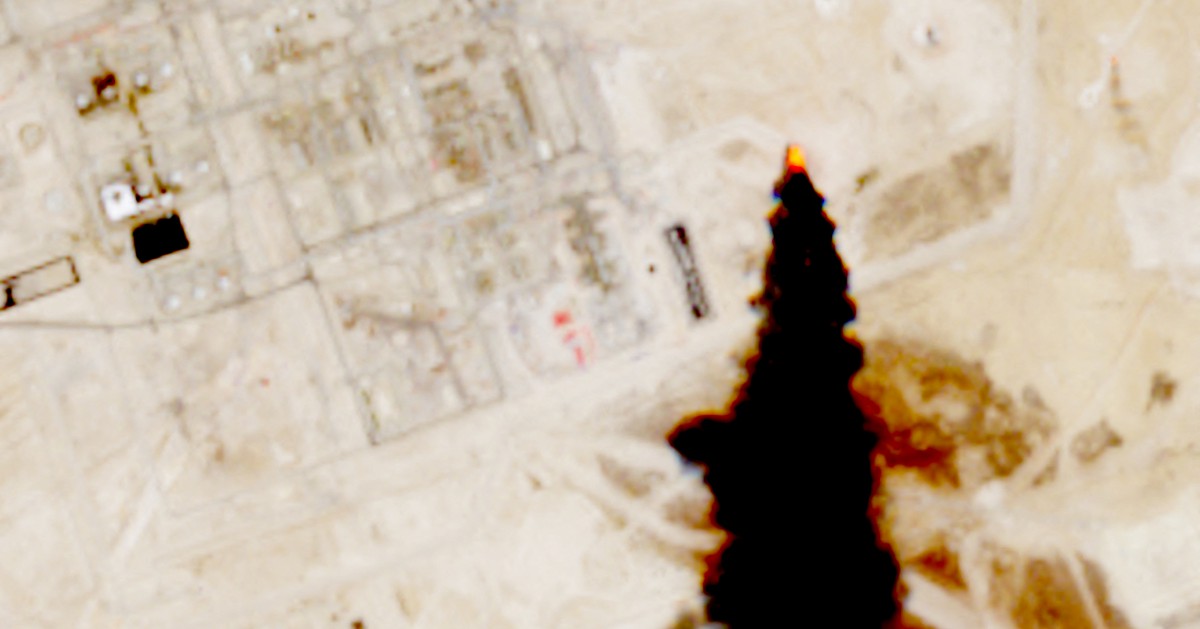
Iraq's government has opened a formal inquiry into allegations by Saudi Arabia that unmanned aerial vehicles targeting the kingdom were launched by Tehran-aligned militias based on Iraqi soil, according to a statement from Prime Minister Ali al-Zaidi's office released Monday. The move reflects Baghdad's effort to manage escalating tensions between its two powerful neighbours while asserting its sovereignty over militant groups operating within its borders.
Saudi Arabia has repeatedly attributed drone and missile attacks to Iranian proxies, a charge that carries significant implications for regional stability. The kingdom views these incidents as part of a broader pattern of Iranian aggression throughout the Middle East. From Riyadh's perspective, allowing such operations to emanate from Iraqi territory would represent a breach of international norms and a challenge to the security arrangements that underpin the Arabian Peninsula's stability.
Al-Zaidi's decision to investigate demonstrates Baghdad's complicated position as a nation caught between two regional powers with conflicting interests. Iraq has long struggled to rein in the various armed factions that emerged during the fight against ISIS and subsequently consolidated power in the security establishment. Many of these groups maintain close ties with Tehran and operate with varying degrees of autonomy from the central government, complicating any effort by Baghdad to establish full control over its territory.
The timing of this probe is significant given the broader context of Middle Eastern volatility. Saudi Arabia and Iran remain locked in a competition for regional influence spanning Yemen, Syria, Lebanon, and Iraq itself. These drone attacks, whether confirmed or attributed, serve as flashpoints that can rapidly escalate tensions between the rival powers and destabilize the fragile security architecture that has emerged in Iraq since the defeat of ISIS.
For Malaysia and Southeast Asia, developments in Iraq carry implications beyond regional borders. Disruptions to Middle Eastern stability affect global oil markets, in which ASEAN nations have substantial economic stakes. Price volatility resulting from geopolitical tensions can impact energy costs across the region and influence manufacturing and transportation expenses. Additionally, extremist ideologies and transnational militant networks originating in unstable zones can eventually reach Southeast Asian shores, making the region's security a matter of indirect concern for Malaysian policymakers.
Baghdad's investigation must walk a fine line between satisfying Saudi concerns and avoiding actions that could alienate the Iranian-backed militias that form a significant portion of Iraq's irregular security forces. These groups, collectively known as the Popular Mobilization Forces, have become deeply embedded in Iraq's institutional landscape following their decisive role in combating ISIS. Dismantling or significantly constraining their capabilities would require a delicate political calculation that risks domestic instability.
The investigation also reflects Iraq's international obligations as a state signatory to conventions governing the use of force and cross-border military operations. Should the inquiry confirm that Iraqi-based groups were indeed responsible for attacks on Saudi territory, the government would face diplomatic pressure to take corrective measures. Conversely, if the probe concludes that the allegations lack foundation, Baghdad could use the results to rebut Saudi claims and reassert its commitment to preventing its territory from being weaponized against neighbours.
The underlying challenge extends beyond merely investigating specific incidents. Iraq must develop institutional capacity to monitor, track, and ultimately control the diverse armed groups operating within its territory. This capacity-building effort requires resources, political will, and coordination among security agencies that have historically operated with varying degrees of autonomy and competing loyalties. International assistance in intelligence gathering and border security could strengthen Baghdad's investigative capabilities.
Saudi Arabia's allegations must also be examined within the context of how regional powers use claims of Iranian proxy activity to shape international opinion and justify their own military and diplomatic strategies. Intelligence regarding cross-border attacks is inherently difficult to verify independently, and assessments often reflect geopolitical interests as much as objective evidence. Iraq's willingness to conduct a transparent investigation could serve as a counterweight to unverified accusations and contribute to regional dialogue.
The investigation's outcome will likely influence the trajectory of Iraq-Saudi relations and potentially affect broader Gulf security arrangements. Should Baghdad successfully demonstrate its commitment to preventing Iranian-affiliated groups from launching attacks across its borders, it could enhance its standing in Riyadh and among other Gulf states. Conversely, perceived inaction or inadequate findings could deepen Saudi distrust of Iraqi governmental competence and resolve.
Moving forward, Iraq faces the challenge of strengthening state institutions and security apparatus to match the capabilities of the various militias it must manage. Without sustained investment in border control, intelligence capabilities, and civilian oversight of armed groups, the conditions that enable cross-border operations will persist. International engagement, including through United Nations mechanisms and bilateral partnerships, may prove essential to supporting Baghdad's efforts to establish effective state control over its territory while maintaining internal stability.

