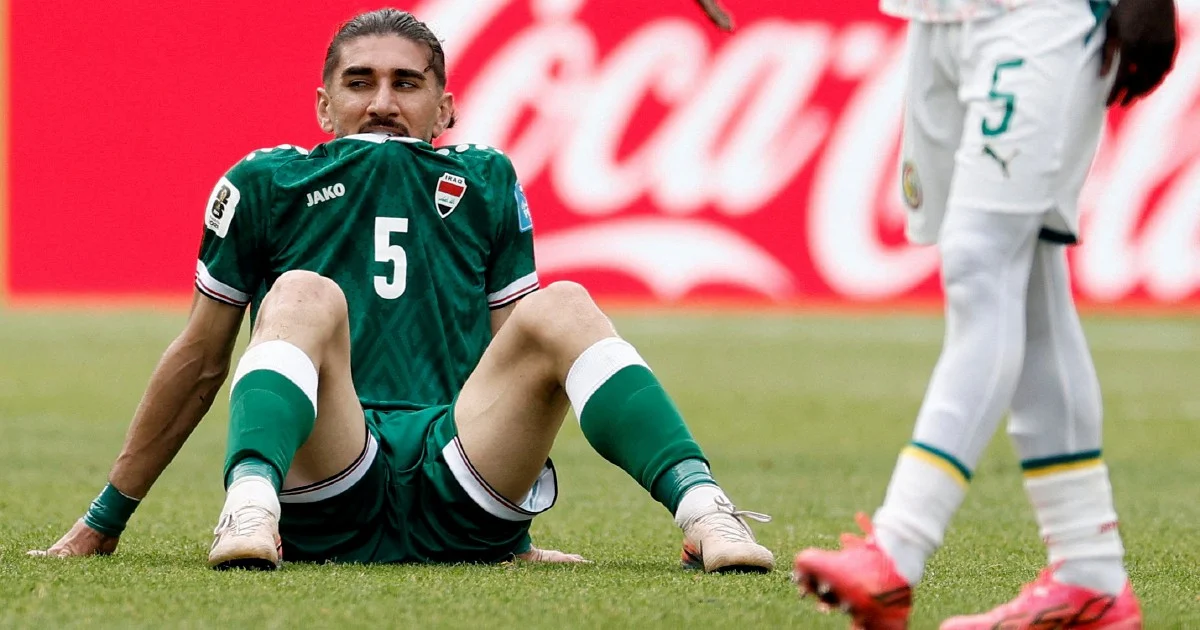
Iraq's Olympic Committee announced on Monday that it will undertake a comprehensive investigation into the national football team's underwhelming performance at the most recent World Cup competition, signalling institutional concern about the squad's inability to advance through the tournament stages. The inquiry represents a formal acknowledgment that the team's showing fell significantly short of expectations and public aspirations for the programme.
The decision to probe the campaign reflects wider frustrations within Iraqi sports governance over the team's results. World Cup appearances carry considerable weight in Middle Eastern football contexts, where national pride and expectations around major international tournaments often run high. Iraq's failure to progress as hoped has prompted questions about tactical preparation, player selection, and overall squad management during the qualifying rounds and group stages.
Beyond the investigative process, the Olympic Committee has committed to mapping out a comprehensive overhaul of structures and processes governing the national team. This forward-looking element of the announcement suggests officials recognise that simply understanding what went wrong will be insufficient without concrete operational changes. The proposed reforms indicate ambitions to address systemic weaknesses that may have contributed to the tournament exit.
The investigation will likely examine multiple dimensions of the campaign, from coaching staff decisions to fitness and conditioning protocols, competitive preparation strategies, and the selection methodology used to assemble the squad. Iraqi football has historically faced challenges balancing the demands of domestic league competition with the rigorous preparation cycles required for World Cup tournaments. Regional security considerations have also occasionally complicated training camps and squad cohesion efforts.
For Malaysia and other Southeast Asian nations, Iraq's approach offers instructive parallels. Many regional football federations face similar pressures to succeed at World Cups whilst managing domestic league development and player welfare. The willingness to conduct transparent post-mortems and implement structural changes represents a model that some struggling programmes might adopt, though each nation's specific challenges demand contextualised responses.
The broader significance of Iraq's initiative extends to how developing football nations approach major tournament participation. Rather than accepting underperformance as inevitable given resource constraints or regional circumstances, the decision to launch a formal inquiry and implement reforms demonstrates commitment to continuous improvement. This institutional approach can gradually shift football culture and competitive standards across multiple seasons.
Reform measures might encompass enhanced coaching education, improved facilities investment, more rigorous player development pathways, and stronger coordination between domestic and international football structures. Iraqi club football has shown flashes of competitiveness regionally, suggesting talent exists within the player pool. The challenge centres on how systematically that talent can be identified, developed, and integrated into competitive international squads.
The timing of such reforms matters significantly. World Cup cycles operate on four-year schedules, meaning Iraq's structural changes now will primarily benefit the next qualifying campaign and tournament cycle. Officials therefore face pressure to identify high-impact improvements that can yield results within that timeframe without implementing changes so radical they destabilise ongoing development processes.
Regional rivalries add another dimension to Iraq's situation. Other West Asian nations including Iran, Saudi Arabia, and the United Arab Emirates maintain substantial football investments and competitive programmes. An Iraqi revival would likely reshape regional hierarchies and competition dynamics. The commitment to investigation and reform thus carries implications beyond Iraq's borders, potentially triggering similar institutional reviews elsewhere across the Middle East.
International cooperation may also feature within Iraq's reform framework. Partnerships with established football nations, knowledge-sharing agreements with successful confederation members, and potentially recruiting experienced foreign coaching expertise could accelerate the modernisation process. Several developing nations have benefited substantially from such external collaboration, though implementation requires careful management to ensure strategies align with domestic conditions and player characteristics.
The investigation process itself will likely generate internal debate about responsibility and accountability. Such processes, whilst sometimes contentious, can catalyse genuine institutional change by forcing candid assessments of what succeeded and failed. If conducted transparently, investigations can also rebuild public confidence in football governance structures that may have suffered reputational damage following tournament disappointments.
As Iraq advances with these plans, attention will focus on translating intentions into concrete operational outcomes. Many national programmes announce reforms following poor tournaments; fewer successfully implement sustained changes that measurably improve subsequent performance. The Olympic Committee's credibility will partly depend on demonstrating that investigation findings translate into visible, resource-backed structural modifications that stakeholders can monitor and assess.

