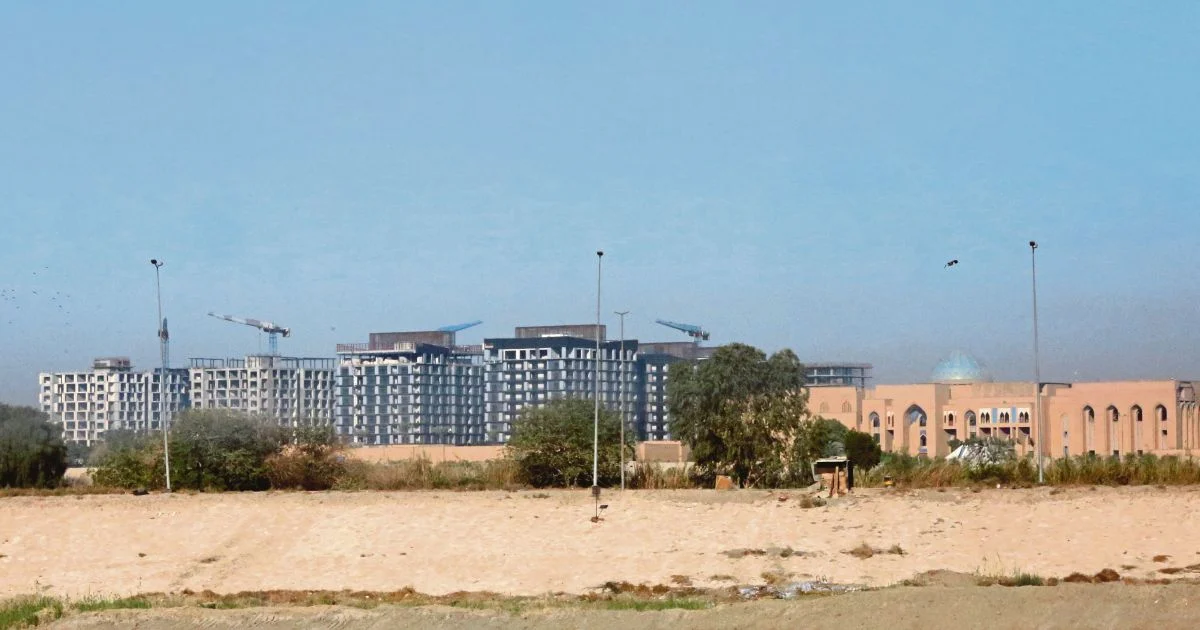
Iraqi security forces deployed in significant force across Baghdad's Green Zone during the early hours of Sunday in what marked a substantial anti-corruption operation targeting the country's political establishment. Among those swept up in the raids were members of parliament and senior government figures suspected of involvement in graft and financial impropriety. The action demonstrated a willingness by authorities to penetrate the heavily secured compound where Iraq's most powerful institutions operate, a step that underscores the gravity with which officials are treating endemic corruption allegations.
The Green Zone, fortified behind concrete barriers and checkpoints, has historically served as a sanctuary for Iraq's political elite. Its isolation from the broader Baghdad population has contributed to perceptions of disconnection between the ruling class and ordinary citizens. Security force presence saturated the area during the operation, signalling both the scale of the investigation and potential concerns about resistance to the raids. The bold move into this sensitive location reflects pressure building within Iraq's government and security apparatus to address systemic corruption that has drained resources from essential public services.
Corruption remains one of the most persistent challenges facing Iraq's post-2003 political system. Transparency International's Corruption Perceptions Index has consistently ranked Iraq among the world's most corrupt nations, with billions of dollars in public funds allegedly diverted through networks of officials and contractors. The drainage of state resources undermines infrastructure development, healthcare provision, and economic opportunity, particularly affecting the country's youth who face unemployment and limited prospects despite Iraq's oil wealth. Citizens' frustration with corrupt governance has periodically boiled over into street protests, most notably in 2019 when demonstrations across Baghdad and southern cities resulted in dozens of deaths.
The timing of these raids carries particular significance within Iraq's turbulent political landscape. The country has witnessed repeated cycles of governmental instability, with shifting coalitions and factional interests competing for influence and resources. Anti-corruption efforts have periodically gained momentum when political competitors seek to delegitimize opponents or when international pressure mounts. The involvement of MPs in the detentions suggests the operation reached beyond merely mid-level bureaucrats into the parliamentary body itself, indicating either genuine commitment to rooting out high-level misconduct or factional manoeuvring within Iraq's fractious political system.
For Malaysia and other Southeast Asian nations, Iraq's corruption struggles offer cautionary lessons about institutional decay. Unchecked graft within government structures erodes public trust in the state, fuels sectarian tensions as communities feel unequally treated, and creates vacuums that non-state actors exploit. Malaysia's own anti-corruption agencies have faced similar challenges balancing aggressive enforcement with concerns about politically motivated prosecutions, a tension evident in Iraq's experience where anti-corruption drives sometimes serve factional interests rather than principled institutional reform.
The security implications of the raid extend beyond simple law enforcement. The Green Zone's fortifications exist partly because of terrorism threats targeting Iraq's government institutions. Concentrated security operations within this compound risk creating security vulnerabilities or distracting from broader counter-terrorism responsibilities. Intelligence resources devoted to investigating corruption could theoretically be redirected toward managing remaining militant threats, though Iraqi authorities presumably calibrated operations to maintain overall security posture during the raids.
International observers, including the United States and United Nations mission in Iraq, have repeatedly emphasized that combating corruption constitutes essential groundwork for state stability and democratic development. International anti-corruption mechanisms and technical assistance have had mixed results in Iraqi contexts, constrained by factional politics and weak institutional capacity. These raids potentially signal receptiveness to external pressure regarding governance standards, though historical patterns suggest sustained commitment to anti-corruption efforts remains uncertain without broader institutional reforms.
The detention of officials pending investigation represents only an initial phase in what would constitute a proper accountability process. Successful anti-corruption action requires functioning judicial mechanisms capable of fairly adjudicating complex financial cases while resisting political interference. Iraq's courts have struggled with both capacity limitations and allegations of bias, creating skepticism about whether prosecutions will proceed impartially. The credibility of these operations depends substantially on transparent judicial proceedings rather than indefinite detention or selective application of law.
Public reception of the raids likely varies dramatically across Iraq's diverse political and sectarian landscape. Some communities may view the action as overdue accountability, while others may interpret it as sectarian targeting of their factional representatives. Managing these perceptions through transparent communication about specific allegations and legal procedures becomes crucial for preventing the operation from exacerbating existing communal tensions. Iraq's fractious media landscape means different constituencies will receive fundamentally different narratives about the same events.
The raids underscore Iraq's ongoing struggle to build functional state institutions capable of self-regulation and accountability. Sustainable anti-corruption progress requires not merely dramatic enforcement operations but systematic reforms strengthening institutional capacity, separation of powers, transparent budgeting, and civil society oversight. International experience suggests that such transformations require years of consistent effort and depend heavily on political will across competing factions, a particularly demanding proposition in Iraq's complex landscape where security challenges, sectarian divisions, and factional competition continuously strain governmental capacity.
Longer-term effectiveness of anti-corruption efforts in Iraq will depend on whether these raids represent the beginning of systematic institutional reform or constitute episodic enforcement driven by temporary political alignments. The involvement of security forces rather than specialized civil anti-corruption bodies suggests reliance on security apparatus rather than dedicated institutional development. For Iraq's stability, democratic development, and economic recovery, genuine progress against corruption requires sustained, institutionalized commitment transcending factional cycles and extending beyond dramatic detention operations to comprehensive governance reform.

