Malaysia's communications regulator has launched the International Regulatory Conference 2026, positioning the country as a thought leader in grappling with the complex intersection of digital innovation, public safety, and governmental oversight. The two-day forum, convened by the Malaysian Communications and Multimedia Commission (MCMC), brings together regulators, technology executives, and civil society from across the region to examine how Malaysia can craft effective policies without stifling economic opportunity. Communications Minister Datuk Seri Fahmi Fadzil is slated to open the conference, which carries the broad mandate 'Shaping the Next Digital Era: Regulation, Resilience and Trust'—a phrase that encapsulates the fundamental tension facing all digital regulators today.
The opening deliberations focused squarely on protecting vulnerable internet users, particularly children, reflecting growing societal anxiety over platform accountability and online predation. A high-level discussion titled 'Online Safety by Design: Platform Accountability and Child Protection in an Age of User Vulnerability' convened voices including Dr Farah Nini Dusuki from Malaysia's Human Rights Commission, Saskia Blume of UNICEF Malaysia, and Danielle Heinecke, Australia's diplomatic representative in Kuala Lumpur. This convergence of human rights advocates, international child welfare specialists, and diplomatic figures underscores how online safety has transcended purely technical concerns to become a diplomatic and humanitarian priority across the Asia-Pacific region. The discussion examined mechanisms to embed safety principles into platform design from inception rather than retrofitting protections after harm occurs.
Data sovereignty emerged as a second foundational theme, particularly as Malaysia accelerates its transition toward a fully digital economy. A parallel session examined 'Sovereign Data, Empowered Citizens: Building Trust, Privacy and Consumer Rights in Malaysia's Digital Future,' spotlighting how nations can harness citizen data as an economic asset while maintaining privacy safeguards and consumer confidence. Panellists representing telecommunications, cloud infrastructure, and technology consulting sectors—including Maxis, T&G Digital, and Ericsson—offered industry perspectives on implementing data localization policies and complying with emerging regulations. For Malaysia specifically, this debate carries considerable weight as the country seeks to position itself as a regional technology hub while safeguarding its citizens' digital assets and ensuring local businesses remain competitive against global technology giants.
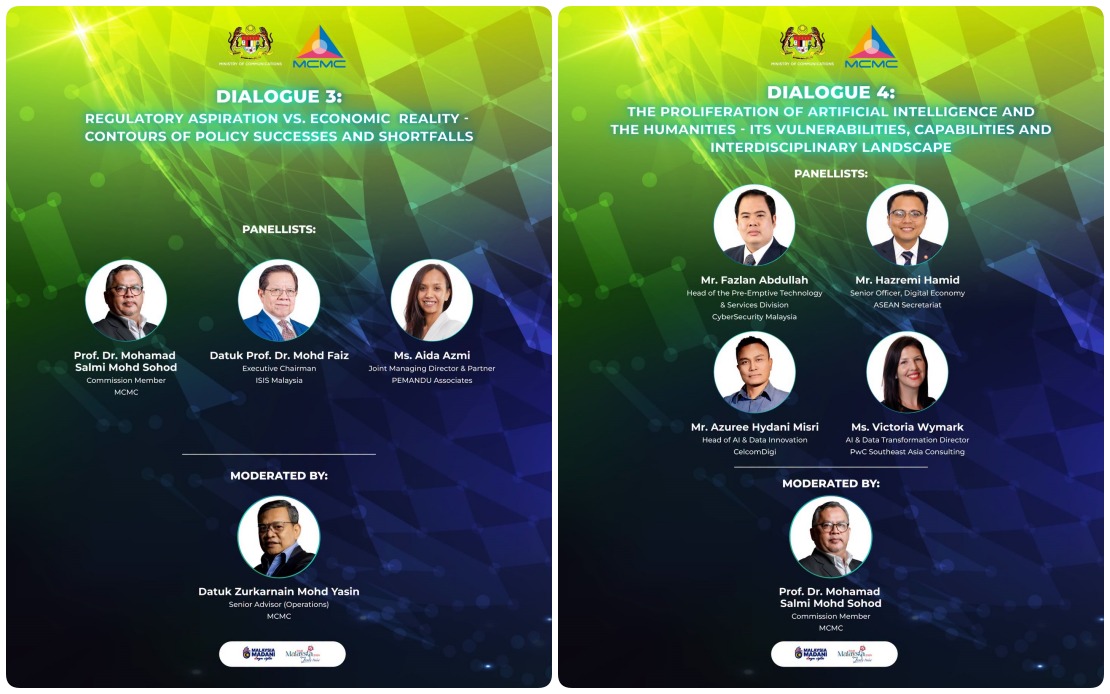
The regulatory balancing act between fostering innovation and preventing market harm occupied the afternoon's analytical sessions. Experts from think tanks including ISIS Malaysia and PEMANDU Associates examined instances where regulatory frameworks succeeded in promoting economic activity without compromising public protection, as well as cases where policy overreach stifled entrepreneurship. This empirical grounding reflects a maturing approach to technology regulation in Southeast Asia, moving beyond ideological positions toward evidence-based policymaking. Malaysia's own regulatory journey provides instructive case studies, given the country's recent introduction of the Online Safety Act 2025 (ONSA), which commenced on January 1 this year and established the nation's most comprehensive framework for platform accountability and content moderation.
Artificial intelligence occupied a prominent place in the conference's intellectual scope, examined through an explicitly humanistic lens. A dedicated session titled 'AI and the Humanities: Its Vulnerabilities, Capabilities and Interdisciplinary Landscape' brought together technologists from PwC Southeast Asia and CyberSecurity Malaysia alongside academic specialists from Universiti Kebangsaan Malaysia, reflecting an emerging consensus that AI governance cannot be left solely to engineers or economists. This multidisciplinary approach acknowledges that algorithmic systems encode values and generate consequences across social, psychological, and cultural domains. For Malaysia, this framing positions the country as intellectually sophisticated in recognizing that technology policy ultimately reflects choices about the kind of society a nation wishes to become.
The conference's second day pivoted toward emerging frontier technologies, signalling Malaysia's ambition to shape governance frameworks before transformative innovations become entrenched. Discussions encompassed quantum computing and communication architecture, examined through sessions featuring IBM quantum specialists and faculty from Malaysia's leading technical universities including Universiti Teknologi Malaysia, Universiti Malaya, and Universiti Kebangsaan Malaysia. This forward-looking orientation suggests that Malaysian regulators are attempting to anticipate regulatory challenges rather than perpetually responding to crises. Quantum technology, in particular, carries implications for cybersecurity, financial systems, and national defense—considerations that justify positioning it at the policy conversation's center.
Robotization of economic sectors and the labor market implications of autonomous systems constituted another frontier topic. A session on 'Regulating the Robotics Revolution: A Cross-Sector Imperative' examined how governments can encourage adoption of automation technologies that enhance productivity and worker safety while managing workforce transitions and preventing exploitative substitution of human labor. For Malaysia, where manufacturing remains economically significant and labor costs create incentives for automation, this discussion carries particular resonance. The session implicitly acknowledged that technology regulation cannot remain confined to digital platforms but must encompass the physical economy as automation accelerates.
The conference also examined the psychological and social costs of constant digital connectivity through a session on 'Digital Dependency and Human Autonomy: Mental Wellbeing, Knowledge Integrity and Boundaries in an Always-On Society.' This thematic arc reflects growing recognition across the Asia-Pacific that regulatory frameworks addressing technology must encompass wellbeing dimensions extending beyond traditional consumer protection. Mental health professionals, academic researchers, and policy specialists converged on questions about how societies can realize digital technology's benefits while establishing boundaries that protect cognitive integrity and psychological flourishing. For Malaysia, where youth mental health concerns have risen alongside digital adoption rates, this discussion addresses genuinely pressing social challenges.
The IRC 2026 represents the third iteration of this conference series since its establishment in 2024, indicating Malaysia's commitment to establishing itself as a regional convener on digital governance questions. The conference has attracted participation from seven countries spanning regulators, government policymakers, and corporate leadership, transforming it into a genuinely regional forum. This positioning matters strategically for Malaysia, which can thereby influence regulatory frameworks emerging across Southeast Asia while learning from peers navigating analogous challenges. The ASEAN Secretariat's participation underscores potential movement toward coordinated regional standards that could facilitate cross-border digital commerce while maintaining national sovereignty over key regulatory choices.
Deputy Communications Minister Teo Nie Ching will formally conclude the conference tomorrow afternoon, signalling ongoing governmental commitment to the dialogue. The timing proves significant given Malaysia's implementation of the Online Safety Act 2025, which represents the nation's most assertive move toward comprehensive digital regulation. The conference serves partly as a venue for government to explain these new frameworks to international peers and industry stakeholders, while simultaneously gathering intelligence on regulatory approaches adopted elsewhere. This simultaneous external engagement and domestic policy consolidation reflects how Malaysia is approaching the complex task of digital governance in the present moment.
The conference's comprehensive agenda—spanning child protection, data sovereignty, artificial intelligence ethics, quantum technology, robotics regulation, and digital wellbeing—demonstrates that regulatory challenges cannot be addressed in isolation. Policymakers increasingly recognize that a decision regarding platform accountability automatically carries implications for data governance, which in turn affects innovation incentives and labor market dynamics. Malaysia's convening of this multifaceted discussion positions the country as intellectually serious about digital governance and willing to engage international expertise in crafting frameworks suited to the region's distinctive circumstances and aspirations.

