The Festival Turath Islami Selangor (FTIS) has graduated to national prominence this year, with its fourth edition transforming into the Festival Turath Islami Malaysia (FTIM) 2026. The expansion reflects a deliberate strategy by Malaysian authorities to position classical Islamic scholarly traditions as central to the nation's intellectual and spiritual development. Held under the banner "Hikmah Warisan Islam" (Wisdom of Islamic Heritage), the eight-day festival running from September 13 represents an ambitious collaboration between the Selangor State Government and the Federal Government's Prime Minister's Department (Religious Affairs), signalling institutional commitment to preserving and promoting Islamic knowledge systems across the country.
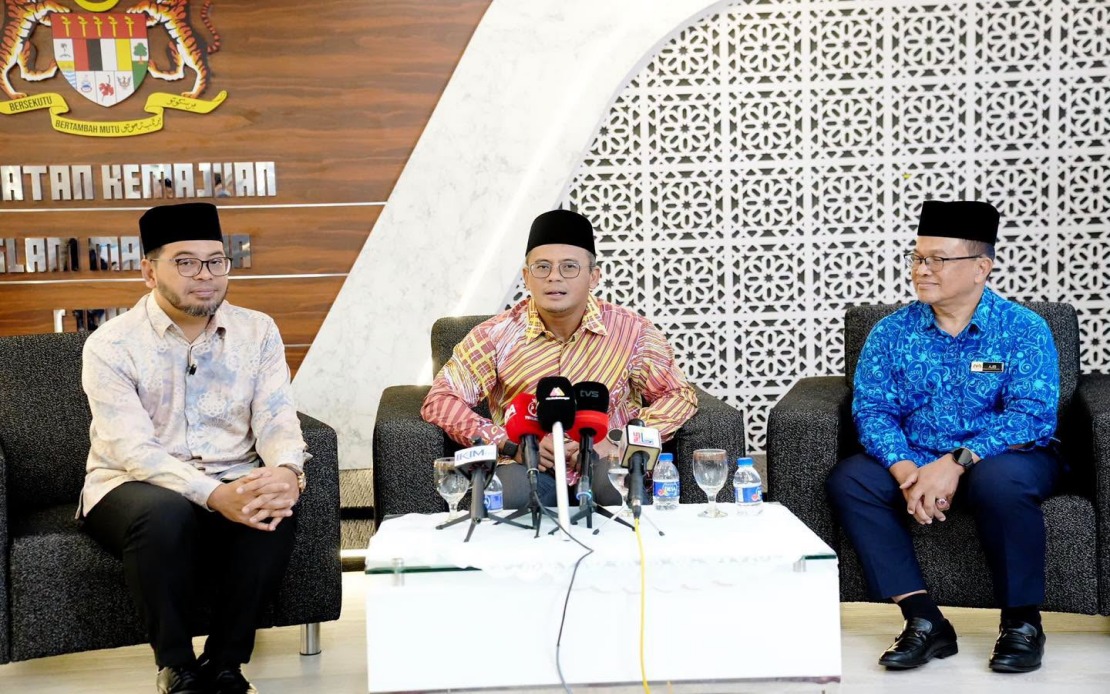
Selangor Menteri Besar Datuk Seri Amirudin Shari announced the elevation at a media briefing in Putrajaya, emphasising that the scaled-up festival would operate substantially from the Putra Mosque rather than Selangor's state mosque, where previous iterations were staged. This relocation underscores the shift in scope and ambition, moving the event beyond state boundaries to a federal level. The participation of Minister in the Prime Minister's Department (Religious Affairs) Dr Zulkifli Hasan at the announcement further demonstrates the gravity Malaysian leadership accords to this cultural and religious initiative, positioning it as part of broader national policy on Islamic affairs and heritage preservation.
The festival's intellectual anchor is Al-Hikam al-Ata'iyyah, a classical Sufi treatise by Ibn Ata-illah As-Sakandari. This medieval work, which delves into concepts of sincerity, divine trust, and the spiritual relationship between worshippers and God, has exercised profound influence across Islamic scholarship and particularly within Malay-Muslim intellectual circles. By selecting this text as the thematic foundation for FTIM 2026, organisers are deliberately reconnecting contemporary Malaysian Muslims with accumulated spiritual wisdom from the classical period, offering philosophical resources relevant to modern challenges facing believers navigating rapid social change.
Since its inception in 2023, the festival series has methodically explored foundational Islamic texts, creating a progressive intellectual journey through classical scholarship. The inaugural FTIS examined Imam Al-Ghazali's monumental Ihya' 'Ulumuddin (Revival of the Religious Sciences), followed by engagement with Imam al-Nawawi's Al-Arba'in al-Nawawiyah (Forty Hadith Compilations) and Imam Jalaluddin al-Suyuti's collaborative Tafsir al-Jalalain (Quranic exegesis). This deliberate sequencing demonstrates a curated approach to intellectual revival, where each year builds upon previous scholarly foundations, allowing audiences to develop deeper comprehension of Islamic thought systems.
The expanded FTIM 2026 programme will convene 23 distinguished scholars from Malaysia and internationally, orchestrating more than 42 scholarly sessions over eight days. Prominent participants include Sheikh Dr Ali Jum'ah, a globally recognised Islamic intellectual, alongside Professor Dr Sayyid Idris al-Fasi al-Fihri, Ustaz Dr Adi Hidayat, Ustaz Wadi Annuar, and Selangor Mufti Datuk Setia Dr Haji Anhar Haji Opir. This constellation of academics and religious specialists represents diverse schools of Islamic jurisprudence and spiritual traditions, ensuring the festival presents multifaceted perspectives on classical Islamic heritage rather than monolithic interpretations.
Beyond formal scholarly lectures, FTIM 2026 will encompass diverse spiritual and cultural activities designed to engage participants across educational levels. Early morning religious lectures (Kuliah Subuh), recitations from Dalail al-Khairat, and a five-day intensive text study programme (Talaqqi Kitab Al-Hikam) provide structured pathways for deepening knowledge. Complementary programming includes inaugural lectures, Qasidah (Islamic devotional poetry) ceremonies, and an Islamic Book Festival, creating a multisensory environment where heritage appreciation extends beyond intellectual discourse into lived spiritual practice and cultural expression.
A particularly significant innovation is the inaugural National Muzakarah Ulama Turath (National Ulama Gathering on Classical Heritage). This convocation brings together Islamic scholars from across Malaysia's diverse states and communities to strengthen intellectual networks, share research perspectives, and collectively analyse contemporary challenges confronting Muslim societies. Such institutionalised scholarly dialogue addresses a genuine gap in Malaysian religious discourse, providing structured forums where ulama from different regions and jurisprudential traditions can collaboratively construct responses to pressing modern questions while grounding these responses in classical Islamic intellectual resources.
The expansion from state to national level carries significant implications for how Malaysia positions Islamic heritage within broader development narratives. By investing institutional resources and federal ministerial attention, authorities signal that engagement with classical Islamic texts represents not antiquarian nostalgia but essential intellectual infrastructure for contemporary Muslim society. In the Malaysian context, where religious affairs occupy constitutionally significant domains and where Islamic discourse frequently intersects with questions of national identity, cultural values, and social cohesion, initiatives like FTIM 2026 carry amplified political and social meaning beyond their immediate educational objectives.
For Southeast Asian Muslims more broadly, the festival's elevation reflects broader regional trends toward reasserting classical Islamic scholarly traditions against globalised religious homogenisation. Malaysia's approach differs from more rigid institutional models elsewhere in the region, emphasising intellectual plurality, scholarly dialogue, and textual engagement rather than prescriptive religious orthodoxy. This methodology appeals particularly to educated urban audiences seeking authentic religious knowledge grounded in historical Islamic civilisation while remaining responsive to contemporary concerns, creating space for nuanced religious thinking that neither abandons tradition nor refuses critical engagement with modernity.
The selection of the Putra Mosque as primary venue carries additional symbolic weight. As Malaysia's national mosque located in the federal capital, staging this intellectual and spiritual gathering there elevates Islamic heritage preservation to status equivalent to other matters of national importance. The architectural setting itself connects contemporary scholarship with Malaysia's institutional Islamic infrastructure, suggesting continuity between classical Muslim intellectual achievement and present-day Malaysian religious institutions and governance structures.
Registration details and comprehensive programme information for FTIM 2026 remain under development, with full schedules to be announced progressively. The phased revelation of programming details suggests organisers are carefully curating content to maximise intellectual impact while managing logistical complexity inherent in hosting such a large-scale multidisciplinary gathering. For Malaysian Muslims interested in deepening engagement with classical Islamic knowledge systems and for international scholars studying Islamic intellectual traditions in Southeast Asian contexts, the festival represents a substantial platform for meaningful scholarly exchange and spiritual enrichment.

