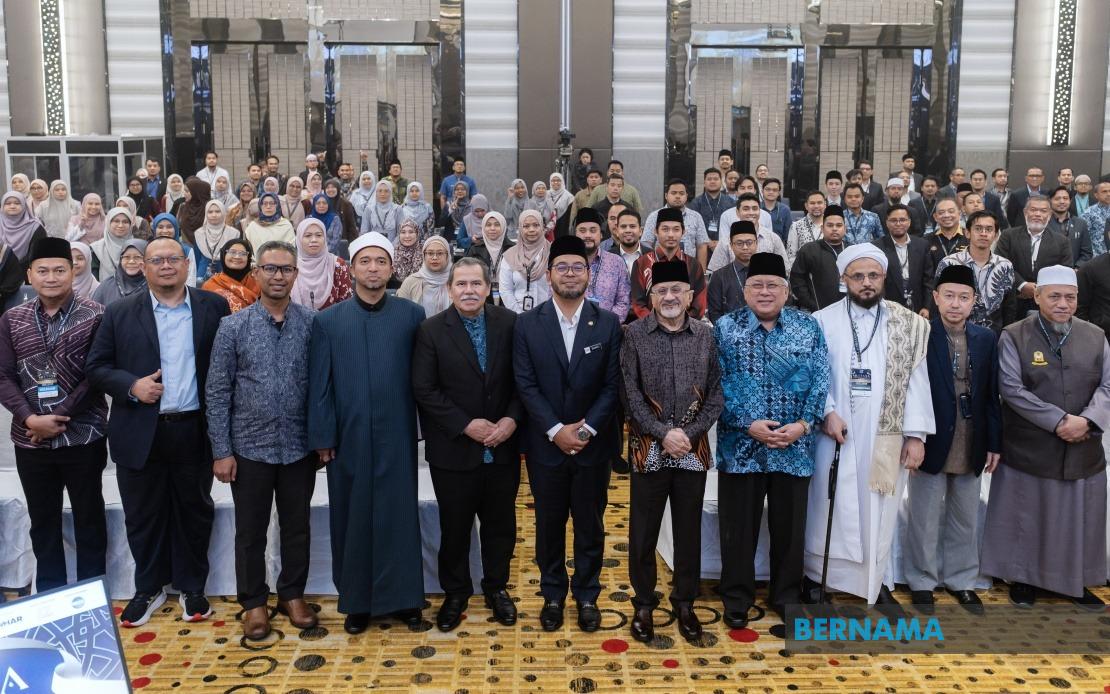
Malaysia is moving to harness Islamic social finance as a deliberate policy instrument to address poverty and accelerate inclusive economic growth, according to Minister in the Prime Minister's Department (Religious Affairs) Dr Zulkifli Hasan. Speaking at the MULTAQA SIDR Islamic Social Finance Conference in Kuala Lumpur, the minister outlined an ambitious vision for mainstreaming this financial segment alongside conventional banking and other established sectors, recognizing its untapped potential to deliver both spiritual and developmental outcomes.
The announcement signals a shift in how the government views Islamic social instruments, transforming them from peripheral charitable mechanisms into core economic infrastructure. Dr Zulkifli emphasized that success requires coordinated effort across multiple stakeholders, with the government committed to identifying collaborative opportunities with public agencies, academic institutions, and commercial enterprises. This multi-sector approach reflects recognition that Islamic social finance cannot develop in isolation but must integrate with broader financial ecosystems and institutional frameworks.
Central to the strategy is the Department of Waqf, Zakat and Haj (JAWHAR), now tasked with overseeing a comprehensive governance enhancement programme for Islamic organisations, particularly non-governmental entities. The designation underscores the government's determination to professionalize the sector, moving beyond traditional voluntary management toward structured, accountable systems comparable to conventional financial institutions. This operational upgrade is essential if Islamic social finance is to attract mainstream investment and retain public confidence.
Universities and higher education institutions emerge as critical partners in this transformation. Dr Zulkifli stressed that collaboration between academic bodies, tertiary institutions, and the voluntary sector is indispensable for streamlining governance and refining management practices within Islamic NGOs. By leveraging research capacity and intellectual resources from universities, the sector can develop evidence-based approaches to fund allocation, impact measurement, and institutional transparency. This academic engagement also creates a pipeline of trained professionals equipped to manage complex Islamic financial products and programmes.
The launch of Malaysia's Islamic Social Finance Report 2026 provides empirical grounding for these policy directions. Developed jointly by the Zakat Collection Centre of the Federal Territories Islamic Religious Council (PPZ-MAIWP) and the CoEISF ISRA Institute-INCEIF University, the report maps the ecosystem's current state, identifies structural challenges, and projects growth opportunities. Its significance extends beyond Malaysia, serving regional governments and institutions seeking to understand Islamic social finance architecture and best practices.
A conceptual reframing underpins this agenda: Islamic social finance must function as 'The Third Force', transcending its traditional role of providing consumptive assistance to vulnerable populations. Rather than perpetuating dependency through welfare distributions, the sector should catalyze productive community empowerment, enabling beneficiaries to generate sustainable livelihoods. This productivity orientation aligns Islamic social finance with modern development economics, which emphasizes capability-building and asset creation over temporary relief.
Governance integrity emerges as a paramount concern. Dr Zulkifli's reference to parliamentary debates surrounding the Royal Commission of Inquiry report on Tabung Haji signals that institutional weaknesses in Islamic finance carry reputational consequences extending beyond administrative spheres. When governance failures occur within Islamic financial entities, public perception of Islamic institutions as a whole suffers, potentially undermining confidence in both religious and commercial dimensions of Islamic finance. This interconnection means that reforming Islamic social finance governance is not merely technical but existential for institutional legitimacy.
The minister articulated a sobering reality: failure to address integrity shortcomings risks damaging the image of Islam itself, not merely particular organizations. This elevated framing reflects understanding that Islamic social finance operates within a religiously-charged environment where institutional conduct reflects upon the faith community. Consequently, governance reforms become theological imperatives, not just management improvements. Building systems that demonstrate honesty, transparency, and competence becomes integral to Islamic institutional witness in pluralistic Malaysia.
When asked about calls for a new Royal Commission inquiry into Tabung Haji investment losses, Dr Zulkifli declined comment, adhering to conventional ministerial discretion on sensitive matters under investigation or deliberation. His silence, however, implicitly acknowledged the controversy's salience and the political sensitivity surrounding Islamic institutional accountability. For Malaysian readers, this restraint suggests ongoing institutional tensions requiring resolution through appropriate investigative and governance channels.
The timing of these announcements reflects broader regional context. Across Southeast Asia, Islamic finance has matured from niche religious provision toward significant economic infrastructure, with Malaysia positioned as a regional hub. By positioning Islamic social finance within national development strategy, Malaysia aims to strengthen its competitive advantage while demonstrating how Islamic principles can address contemporary challenges of inequality and exclusion. The emphasis on academic partnerships and professional standards appeals to international standards bodies and socially-conscious investors seeking faith-based investment vehicles with credible governance.
Implementing this vision presents substantial practical challenges. Coordinating between JAWHAR, universities, NGOs, and private entities requires establishing clear mandates, resource allocation mechanisms, and accountability frameworks. Building professional capacity across thousands of Islamic organizations will demand sustained investment in training, systems, and monitoring. Perhaps most critically, shifting from consumptive to productive assistance models requires rethinking programme design, beneficiary engagement, and success metrics.
For Malaysian policymakers and Islamic finance professionals, the conference and report represent validated strategy documents for sector development. They provide intellectual scaffolding for investment decisions, institutional planning, and advocacy efforts. The inclusion of international academic institutions and research bodies signals Malaysia's aspiration to position itself as thought leader in Islamic social finance discourse, influencing regional and global understandings of how faith-based finance addresses development objectives.
Ultimately, the government's commitment to mainstream Islamic social finance reflects confidence that properly-structured Islamic instruments can deliver poverty reduction and economic inclusion while strengthening institutional integrity that Islam itself depends upon. Success requires moving beyond rhetorical celebration of Islamic values toward unglamorous work of building governance systems, training professionals, and measuring outcomes with rigorous methodology.

