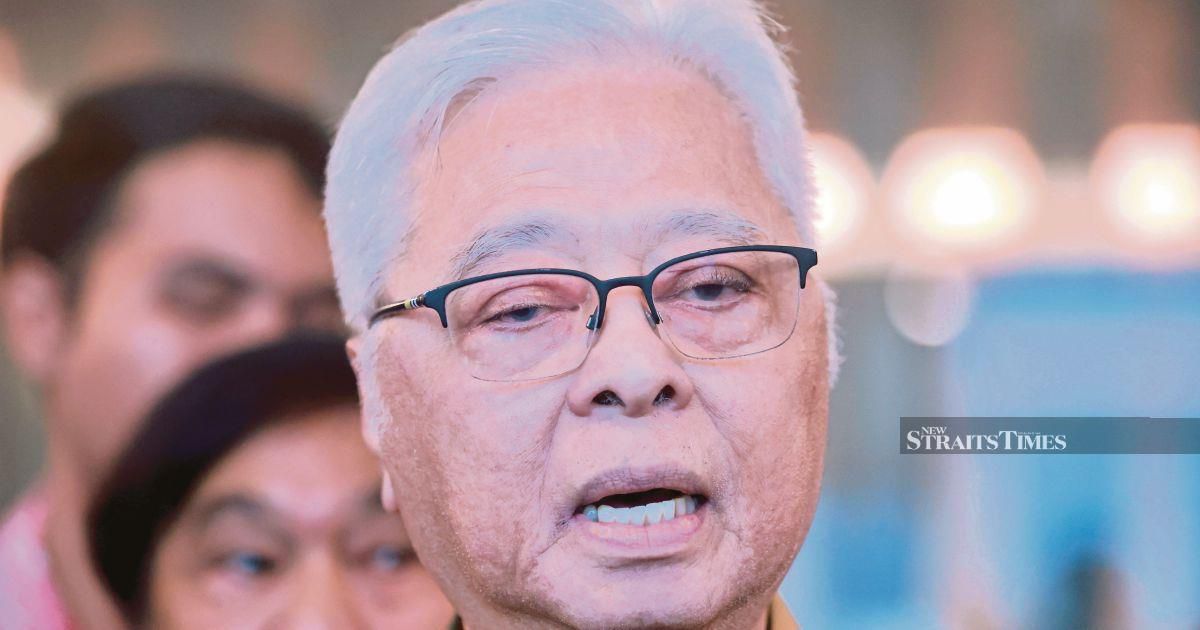
Datuk Seri Ismail Sabri Yaakob appears destined to join an exclusive and troubling club of former Malaysian prime ministers ensnared by the criminal justice system. His anticipated appearance before the courts would mark the third occasion in the nation's modern history that a sitting premier has subsequently faced formal charges—a development that underscores the fraught political landscape governing Malaysia's highest office.
The trajectory outlined by Ismail Sabri's potential prosecution mirrors patterns established by his two predecessors in this unenviable position. Datuk Seri Najib Razak, who served as Prime Minister from 2009 until his electoral defeat in 2018, became the first former head of government to encounter serious criminal charges. His case involved allegations surrounding the misappropriation of funds linked to the state investment fund 1Malaysia Development Bhadbad (1MDB), a scandal that reverberated across the international stage and damaged Malaysia's global reputation. The legal proceedings against Najib have stretched across multiple years, resulting in convictions on certain counts whilst other charges have remained contested through various levels of judicial appeal.
Tan Sri Muhyiddin Yassin followed as the second ex-premier to confront the criminal courts. Muhyiddin, who occupied the Prime Minister's office between 2020 and 2021 during Malaysia's turbulent post-pandemic political realignment, discovered that his tenure in power offered no shield against subsequent legal vulnerability. His facing of charges illustrated that even a more recent exit from office provided limited protection, suggesting that former premiers cannot expect immunity simply by virtue of having previously held the nation's top executive position.
The prospect of Ismail Sabri joining this ranks carries significant implications for Malaysian governance and institutional stability. The emergence of a pattern whereby three consecutive former prime ministers encounter criminal prosecution raises fundamental questions about the integrity of Malaysia's political system, the rule of law, and whether governmental office has become something of a liability rather than a protected status. International observers monitoring Malaysia's institutional health frequently reference such developments when assessing the country's democratic maturity and commitment to equal application of legal standards across all societal strata.
For Malaysia's political establishment, the accumulating legal troubles facing former premiers creates a cautionary backdrop for current and aspiring leaders. The knowledge that departure from office may precipitate criminal investigation and prosecution could theoretically encourage greater circumspection in how power is exercised. Conversely, such trends might also invite cynicism about whether criminal proceedings function as mechanisms for genuine accountability or serve as political instruments deployed against rivals by competing factions.
The regional significance of Malaysia's predicament should not be underestimated. Southeast Asia, whilst home to numerous democracies and constitutional monarchies, has experienced comparable struggles with governance standards and legal recourse against former leaders. Malaysia's approach to these challenges—whether through genuine institutional reform or through patterns perceived as politically motivated prosecution—influences regional perceptions of how Southeast Asian nations balance accountability with political stability.
The legal infrastructure surrounding such cases in Malaysia reflects both the strength and vulnerability of the nation's judicial system. The courts have demonstrated capacity to prosecute sitting leaders and their immediate successors, yet the extended duration of proceedings and complex appeals processes have sometimes frustrated both those seeking swift justice and those concerned about due process. The Ismail Sabri matter would presumably follow similar procedural pathways already established through the Najib and Muhyiddin cases, though each situation carries its own evidentiary complexities.
Political analysts note that the successive criminal entanglements of former prime ministers have fundamentally altered how Malaysian political discourse operates. Elections and leadership transitions now carry implicit understanding that shifting from executive authority to opposition or retirement status may trigger vulnerability to prosecution. This dynamic shapes coalition-building calculations, party loyalty considerations, and strategic decisions about when to relinquish power.
The implications for Malaysia's standing as a middle-income Southeast Asian nation with democratic aspirations remain substantial. International investors, diplomatic partners, and governance observers assess Malaysia partly through the lens of whether its institutions function independently and impartially. Patterns suggesting that multiple former premiers face legal jeopardy invite scrutiny regarding whether such outcomes reflect genuine wrongdoing or whether they point to systemic vulnerabilities in how justice operates across different political administrations.
For the broader Malaysian electorate, the spectacle of successive former prime ministers navigating criminal justice systems generates both resignation and concern. Many citizens perceive their leaders as insufficiently constrained during their terms, only to face consequences afterwards—a phenomenon that raises questions about preventative mechanisms and whether Malaysia's governance institutions can more effectively uphold standards of conduct whilst leaders remain in power rather than pursuing accountability retroactively.
The Ismail Sabri situation thus represents more than a singular legal matter involving one individual. It exemplifies broader institutional patterns that demand attention from Malaysia's political system if the nation seeks to strengthen public confidence in how power operates and how accountability functions across all levels of governance.

