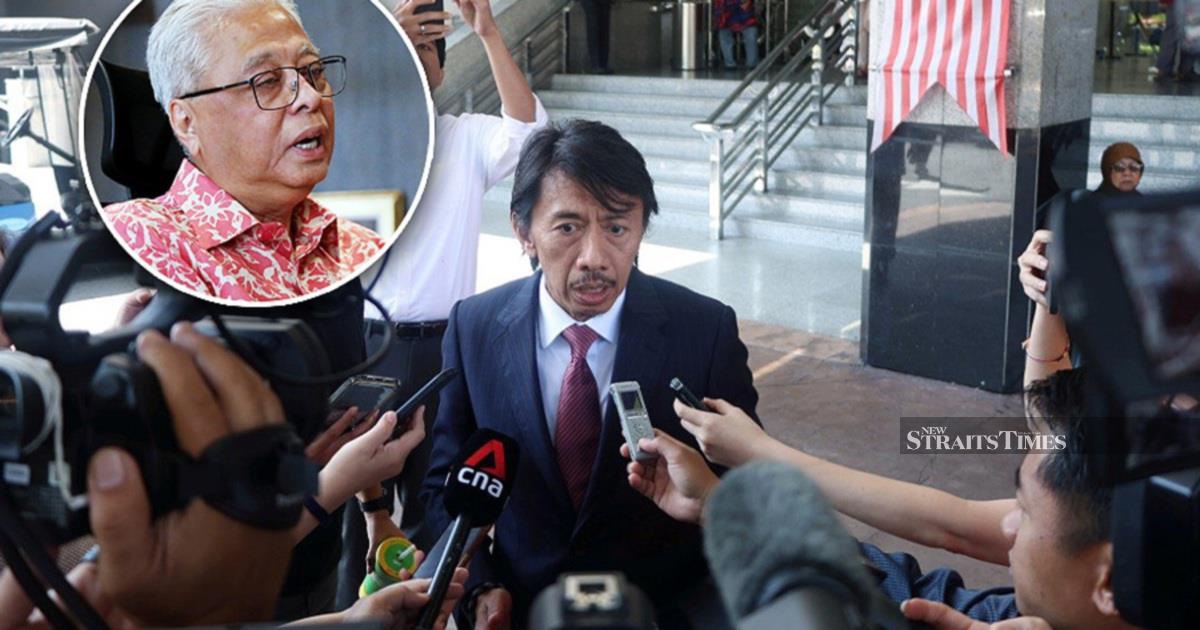
Former Prime Minister Datuk Seri Ismail Sabri Yaakob has signalled his unwavering determination to exonerate himself in the face of impending corruption proceedings, declaring that personal health difficulties will not deter him from vigorously defending his reputation. The ex-premier, whose administration governed Malaysia from August 2021 until November 2022, is bracing for formal charges to be lodged against him under the Malaysian Anti-Corruption Commission (MACC) Act as the month progresses, marking a significant moment in a legal battle that has shadowed his political career since his departure from office.
The forthcoming charges represent a critical juncture for Ismail Sabri, whose tenure as Prime Minister was characterised by navigating pandemic-era governance, economic recovery efforts, and maintaining coalition stability. His administration inherited a nation grappling with the lingering effects of COVID-19 and inherited significant fiscal pressures that required careful management. The transition from his government to the subsequent administration under Anwar Ibrahim has been accompanied by increasing scrutiny from anti-corruption authorities, reflecting the intensification of legal proceedings that have become a recurring feature of Malaysian politics in recent years.
Health challenges have emerged as a complicating factor in Ismail Sabri's legal predicament. The former premier's decision to proceed despite physical difficulties underscores both the gravity with which he regards his defence and his assessment that delaying the legal process would ultimately prove counterproductive. Such health setbacks are not uncommon for high-profile political figures enduring extended legal proceedings, as the stress and demands of mounting a comprehensive defence can take considerable physical toll over sustained periods.
The MACC, Malaysia's principal independent anti-corruption watchdog, has intensified its investigations into various political figures since the collapse of the previous government. This enforcement surge reflects broader efforts to enhance accountability and restore public confidence in governance institutions. For Ismail Sabri, the charges materialising represent the culmination of months of investigation and interrogation, during which he has consistently maintained his innocence and cooperation with authorities. His legal team has been preparing meticulously for the anticipated charges, gathering evidence and witness testimonies to construct a robust defence strategy.
The political implications of Ismail Sabri's legal troubles extend beyond his personal circumstances. His case occurs within a context of heightened scrutiny of former government officials across multiple administrations, creating a complex landscape where legal accountability intersects with political rivalry. The charges against the ex-premier have captured significant public attention, as his leadership directly preceded the current administration and shaped major policy decisions during a critical period in Malaysia's economic and social recovery. Public perception of how these proceedings unfold will likely influence broader discussions about governance, institutional independence, and political accountability in the nation.
Ismail Sabri's explicit assertion of his determination to clear his name carries weight for his political standing and personal legacy. By publicly reaffirming his commitment to defending himself despite health obstacles, he is attempting to frame the narrative around his agency and resilience rather than allowing circumstances to define his response. This rhetorical positioning is strategically important for a figure whose historical significance extends beyond his term in office, particularly given his decades of involvement in Malaysian politics spanning multiple ministerial portfolios and leadership roles.
The legal process ahead will likely be protracted and demanding. Malaysian courts have demonstrated varying timelines for high-profile political cases, with some extending across several years through multiple hearings, appeals, and procedural complexities. Ismail Sabri's case will probably follow a similarly demanding trajectory, requiring sustained engagement from his legal representatives, personal attendance at court proceedings, and ongoing public communication to manage his reputation throughout the proceedings.
For Malaysia's broader political ecosystem, the prosecution of a former prime minister carries constitutional and institutional significance. The handling of Ismail Sabri's case will provide insights into the independence and effectiveness of anti-corruption mechanisms, the robustness of legal safeguards, and the extent to which accountability applies uniformly across the political spectrum. International observers often scrutinise how nations treat former leaders facing legal action, as these cases illuminate the strength of rule of law and institutional impartiality.
Ismail Sabri's steadfast posture in confronting the anticipated charges, coupled with his acknowledgement of health difficulties, suggests a political figure determined to exhaust legal remedies and clear his name through formal proceedings rather than pursuing settlements or withdrawals. His approach may also be motivated by considerations of historical legacy, as acquittals or successful defences carry far greater vindication value than postponements or compromises. The coming weeks and months will determine whether his optimism regarding his prospects proves justified once formal charges are presented and the substantive legal contest commences.

