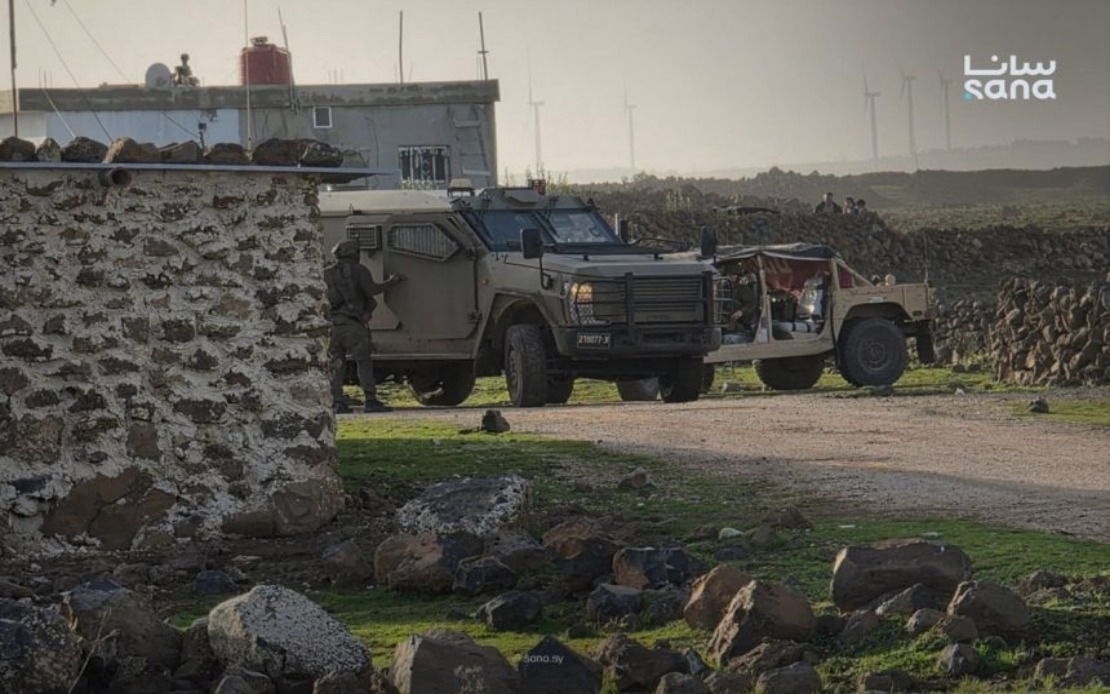
A force of six Israeli military vehicles crossed into Syria's southwestern Quneitra province on Saturday, moving toward the Kudna Dam in the central countryside whilst reconnaissance drones operated overhead, according to reports from the Syrian Arab News Agency cited by regional media outlets. The incursion represents the latest in a sustained pattern of Israeli military activity in southern Syria that has accelerated dramatically in recent months, raising fresh concerns about regional stability and the erosion of Syrian territorial integrity.
The timing of this particular operation reflects a significant shift in Israeli-Syrian military dynamics that has unfolded over the past eight months. The collapse of Bashar al-Assad's regime in December 2024 fundamentally altered the security landscape in the Levantine region, eliminating a longstanding deterrent to Israeli military operations. Following Assad's fall, Israel formally renounced the 1974 disengagement agreement that had maintained a fragile ceasefire in the Golan Heights buffer zone for half a century, effectively ending the strategic status quo that had governed Israeli-Syrian relations for decades.
Since declaring the disengagement agreement null and void, Israel has progressively expanded its military footprint across southern Syria. The pattern extends far beyond isolated border incidents, encompassing systematic incursions featuring armed patrols, drone surveillance operations, military checkpoint installations, and targeted raids against designated locations. These operations have created a climate of sustained tension in regions bordering the Israeli-occupied Golan Heights, with Syrian communities facing repeated security disruptions and the imposition of Israeli military authority in previously stable areas.
The broader geopolitical context amplifies the significance of these incursions for observers across the Middle East and Southeast Asia. The Syrian state's weakened position following the regime collapse has left it without the military capacity or diplomatic framework to effectively resist Israeli encroachment. The transitional Syrian government, focused on consolidating control and managing internal reconstruction, lacks both the military resources and international backing to challenge Israeli operations through conventional means. This power asymmetry has created conditions permitting Israeli operations that would have been politically and militarily costly under the previous regime.
For Malaysian and regional policymakers, these developments carry implications extending beyond Syrian borders. The erosion of established international agreements governing territorial control and military conduct establishes a precedent that undermines confidence in regional dispute-settlement mechanisms. Southeast Asian nations, many of which depend on similar frameworks governing maritime boundaries and military restraint, observe closely how major powers handle the dismantling of long-standing agreements. The Israeli approach signals that transitional periods following regime change create opportunities for the unilateral revision of international arrangements, a principle with potential ramifications across multiple regions.
The drone operations accompanying each incursion underscore Israel's technological superiority and the limited capacity of Syria's nascent military authorities to contest aerial operations. These reconnaissance flights provide intelligence on Syrian military dispositions, infrastructure vulnerabilities, and population movements, compounding the loss of territorial control with informational disadvantages. The systematic nature of these drone flights suggests preparation for potential larger operations rather than one-off reconnaissance missions.
The establishment of military checkpoints inside Syrian territory represents a particularly consequential development, moving Israeli control from episodic incursions toward sustained occupation of specific locations. Checkpoints imply permanent or semi-permanent military presence, enabling systematic monitoring of civilian movement and effectively extending Israeli administrative authority into Syrian territory. This progression from occasional raids to checkpoint networks mirrors occupation patterns seen elsewhere in the region and suggests a deliberate strategy toward territorial consolidation rather than temporary military actions.
The international response to these incursions has remained notably muted, with limited diplomatic pressure from major powers. The United States has largely maintained strategic silence, while European governments have issued routine statements without substantive action. Russia, historically influential in Syrian affairs, has seen its regional leverage substantially diminished following the Assad regime's collapse. This absence of meaningful international pushback effectively grants Israel operational freedom in southern Syria absent the constraints that governed the previous era.
For Syrian citizens living in affected regions, these incursions represent tangible security threats disrupting daily life and economic activity. Agricultural communities near the buffer zone face disruptions to farming operations, while commercial traffic experiences delays at newly established checkpoints. The unpredictability of Israeli military operations creates a persistent state of tension that prevents normal development and investment in these vulnerable border areas.
The longer-term trajectory of Israeli-Syrian military relations remains uncertain. Should the new Syrian government consolidate state authority and rebuild military capacity, tensions could escalate significantly. Conversely, continued Syrian institutional weakness may permit Israel to entrench its position further in southern provinces. Regional actors including Jordan, Lebanon, and Turkey monitor these developments vigilantly, each assessing implications for their own security and territorial interests amid the broader instability affecting the eastern Mediterranean.
The Quneitra incursion illustrates how the Middle Eastern security environment has become increasingly fragmented and unpredictable following the Assad regime's elimination. The removal of established power structures, whilst potentially offering opportunities for political transformation, has created a security vacuum filled opportunistically by stronger military actors. For the Syrian population and the international community, this represents a troubling consolidation of Israeli military advantages without corresponding constraints or diplomatic solutions addressing underlying territorial disputes.

