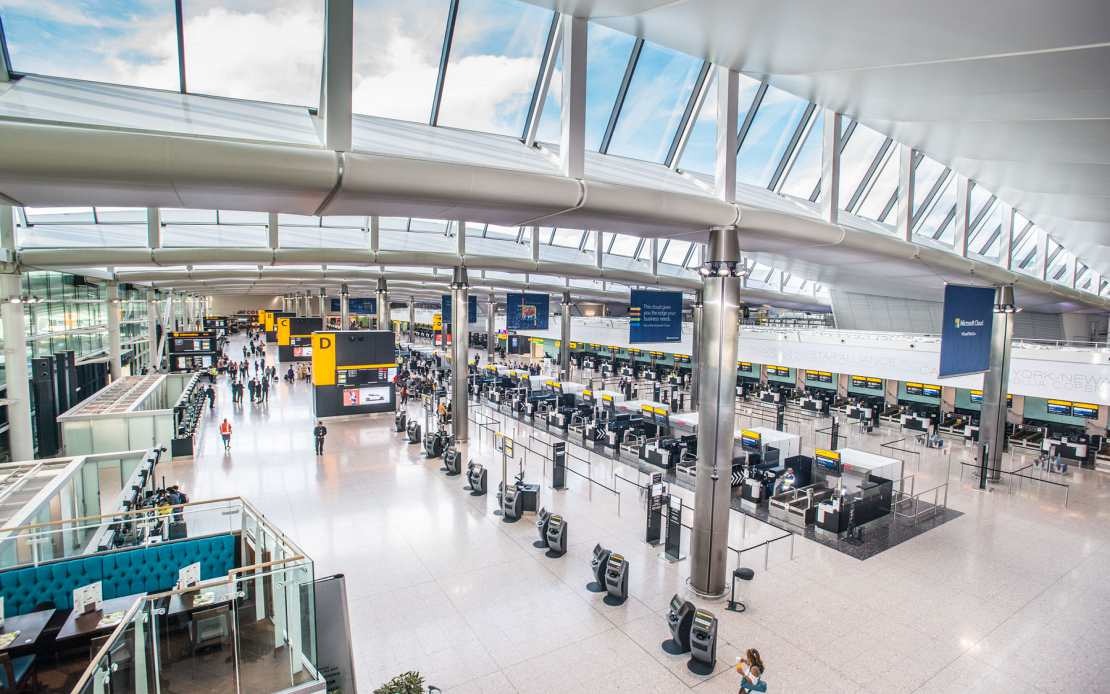
Istanbul Airport has claimed the title of Europe's busiest aviation hub, a distinction held by London's Heathrow for over two decades until this month. The Turkish facility processed 8.15 million passengers during July, edging out Heathrow's 7.86 million travellers across the same period. For Malaysian and Southeast Asian readers attuned to regional hub competition, this shift carries implications for the hierarchy of international air travel centres and the broader contest among global aviation hubs for passenger traffic and connectivity.
Heathrow's loss of its European crown marks a significant turning point in the airport's fortunes. The west London facility had dominated Europe's aviation landscape consistently from 1996 through 2019, a testament to the United Kingdom's historical position as a primary international gateway. However, the dominance proved vulnerable during the COVID-19 pandemic when travel restrictions disrupted global aviation networks. After recovering its position in 2023, Heathrow managed only a year-long tenure before ceding leadership to Istanbul last month.
The performance metrics reveal starkly different trajectories for the two airports. Heathrow witnessed a contraction of 1.5 per cent in passenger numbers compared with July of the previous year, suggesting underlying weakness in demand. Conversely, Istanbul expanded its traffic by 2.3 per cent year-on-year, demonstrating more robust growth momentum. This divergence underscores a shifting pattern in how travellers are routing through European airports, potentially reflecting changes in global trade flows and tourism patterns that merit closer scrutiny.
Geopolitical factors have clearly influenced Heathrow's performance, particularly regarding traffic on routes serving West Asia. The airport recorded a sharp 20.2 per cent decline in passenger movements along these corridors during July when measured against the same month last year. The escalating tensions between the United States and Iran have disrupted traditional travel patterns and airline routing strategies throughout the Middle East and surrounding regions. For Southeast Asian travellers and businesses dependent on connections through European hubs to Middle Eastern and North African markets, such volatility in major transit points carries direct consequences.
The expansion debate intensifies against this backdrop of declining competitiveness. Heathrow currently operates two runways at near-maximum utilisation, constrained by physical infrastructure limitations that prevent meaningful traffic growth. The airport's ownership has championed a third runway project designed to lift annual passenger capacity to 150 million, representing a substantial expansion of the facility's throughput capabilities. The proposal has become a centrepiece of British aviation strategy, with proponents arguing that enhanced infrastructure proves essential for maintaining competitive advantage in global aviation markets.
UK government support for expansion has gained momentum despite previous hesitations. Transport Secretary Heidi Alexander initiated a formal consultation process in June regarding the renamed Heathrow expansion national policy statement, establishing parameters for potential project authorisation. Former Chancellor Rachel Reeves demonstrated commitment to the initiative, expressing determination to commence construction of the third runway during the current parliamentary term, with completion targeted by 2035. These timeframes indicate serious governmental engagement with the expansion agenda, though obstacles and competing priorities remain.
Political opposition and regional concerns complicate the expansion narrative. Prime Minister Andy Burnham, who replaced Reeves in his position, harbours reservations about the Heathrow project. Burnham has articulated concerns that prioritising the London airport's expansion diverts critical infrastructure investment away from northern England, effectively concentrating resources in the capital at the expense of regional development. This tension between London-centric infrastructure spending and broader national development reflects deeper debates about economic geography and regional equity within the United Kingdom.
Heathrow's operational performance during peak summer travel periods offers some counterweight to the expansion controversy. On July 19, the airport recorded its busiest day of the year, processing 267,000 passengers as schools commenced their summer holidays. This single-day volume demonstrates the airport's fundamental role in accommodating surge traffic during peak seasons. The airport has also welcomed new airline partners during July, including ITA Airways from Italy, Alaska Airlines from the United States, and Riyadh Air from Saudi Arabia. These additions signal ongoing market confidence in Heathrow's strategic importance despite its recent loss of the European ranking.
Heathrow's leadership emphasises the airport's ambitions to expand its route network and global connectivity. Chief Executive Thomas Woldbye characterised the summer travel season as promising but expressed conviction that meaningful growth requires infrastructure expansion beyond current capabilities. Woldbye linked expansion directly to preserving Heathrow's continental prominence and attracting the trade, investment, and tourism flows that enhanced connectivity generates. This framing positions the third runway not merely as a capacity upgrade but as essential infrastructure for national economic competitiveness.
The Istanbul comparison carries lessons for understanding hub competition in globalised aviation markets. Istanbul's growth trajectory reflects Turkey's strategic location at the intersection of European, Asian, and Middle Eastern markets, combined with substantial domestic air travel demand. The city's emergence as Europe's primary aviation hub represents both a challenge to British aviation dominance and evidence that passenger flows respond to geography, economic opportunity, and geopolitical positioning. For Southeast Asian readers and policymakers considering regional aviation strategy, Istanbul's ascendancy illustrates how strategic positioning and infrastructure investment can reshape hub hierarchies.
Heathrow's July decline likely reflects temporary disruptions rather than structural deterioration, though the margin of Istanbul's lead suggests the Turkish airport has momentum. Regional readers should monitor whether this represents a lasting shift or merely a summer anomaly influenced by Middle East tensions and holiday travel patterns. The outcome of the UK expansion consultation will shape Heathrow's future competitiveness and its ability to reclaim European leadership. Southeast Asian airlines and travellers using Heathrow as a gateway to European markets should monitor these developments, as infrastructure constraints may influence connectivity and pricing in the years ahead.

