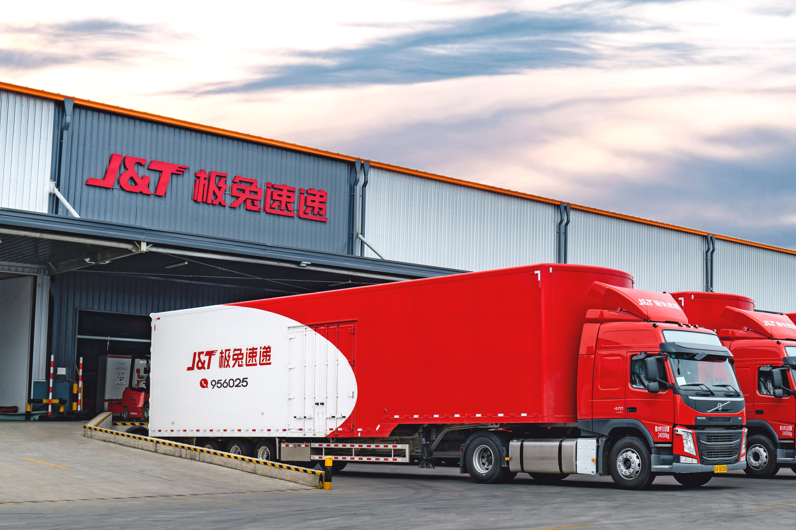
J&T Global Express Ltd, the Hong Kong-listed logistics operator, has set a new company record by crossing the psychological barrier of 100 million parcels handled daily during the second quarter, reflecting accelerating demand across Southeast Asia and other international markets that increasingly offset the company's traditional reliance on China operations.
The volume milestone underscores a fundamental shift in J&T Express's business composition. During the April to June period, the company processed 9.18 billion parcels globally, representing growth of 24.2 percent compared with the same quarter last year. More significantly, international parcels jumped 66.9 percent year-on-year to reach 2.97 billion units, now representing nearly one-third of the company's total global throughput—a striking proportion that demonstrates how rapidly overseas markets have become central to the firm's expansion strategy.
Southeast Asia has emerged as the primary growth engine, with parcels handled in the region totalling 2.76 billion during the second quarter, a surge of 63.2 percent year-on-year that substantially outpaced the company's overall growth rate. The regional daily average reached 30.3 million parcels, positioning Southeast Asia as an increasingly substantial pillar of J&T Express's operations. For the first six months of 2026, Southeast Asian parcel volume accumulated to 5.52 billion units, climbing 71.2 percent annually—a pace that underscores the region's e-commerce transformation and the rising competitive pressure among logistics providers to capture market share in this lucrative corridor.
The company has substantially upgraded its infrastructure to support this regional momentum. By the end of June 2026, J&T Express operated 127 sorting centres across Southeast Asia, an addition of six facilities compared with the close of 2025. More notably, the network of automated sorting lines expanded by 11 to reach 75 installations, modernizing the region's parcel processing capability and improving throughput efficiency. This infrastructure investment signals management's confidence in sustained regional demand growth and their commitment to competing effectively against regional rivals and global logistics giants seeking Southeast Asian market exposure.
China, while remaining the dominant market in absolute terms, represents a more measured growth trajectory as the company navigates intensifying competition and market saturation. Domestic parcels in the second quarter reached 6.21 billion units, expanding 10.6 percent year-on-year, substantially below the international growth rate and reflecting the more mature competitive landscape within Chinese logistics. The average daily volume in China reached 68.2 million parcels, still exceeding the Southeast Asian figure but with considerably slower expansion dynamics. Nonetheless, J&T Express has invested in technological upgrades within China, adding eight automated sorting lines during the first half of 2026 to bring the total to 346 installations, demonstrating efforts to defend market position through operational excellence and cost management.
Beyond Southeast Asia and China, J&T Express is aggressively pursuing expansion into emerging regions that offer significant growth potential but remain underpenetrated by major logistics players. Parcel volumes in Latin America and the Middle East combined nearly tripled year-on-year during the second quarter, jumping 136.5 percent to 211 million units. This explosive growth, though originating from a smaller base, reflects the company's deliberate strategy to build cross-border logistics capabilities and forge deeper partnerships with major e-commerce platforms seeking reliable international fulfillment networks. These markets represent the frontier of J&T Express's ambitions, offering exposure to developing consumer classes with rising online purchasing power and limited incumbent competition.
The company's geographic diversification strategy has resonated with major institutional investors. Morgan Stanley recently elevated J&T Express to overweight rating, attributing the upgrade to the firm's more compelling growth prospects relative to established competitors. The investment bank specifically highlighted the company's Southeast Asian and South American exposure as sources of accelerated e-commerce expansion, noting that these regions offer growth rates substantially exceeding mature markets. This analyst endorsement provides external validation of management's strategic pivot toward international markets and suggests that equity markets increasingly value companies with balanced exposure to both China's massive but slower-growing logistics market and the younger, faster-expanding regional markets surrounding it.
For Malaysian readers and businesses, J&T Express's expansion holds tangible implications. The company's infrastructure investments and operational scaling in Southeast Asia directly enhance competitive logistics options for Malaysian e-commerce firms, exporters, and retailers seeking efficient parcel distribution networks. Enhanced sorting capacity and expanded facilities across the region typically translate to faster delivery times, improved service reliability, and potentially downward pricing pressure—competitive dynamics that benefit businesses relying on logistics for supply chain management and international commerce.
The broader significance extends to Malaysia's position within regional e-commerce ecosystems. J&T Express's aggressive capture of Southeast Asian parcel volume, combined with similar expansions by competitors, indicates that the region's logistics infrastructure is undergoing substantial modernization to accommodate sustained online shopping growth. For Malaysian consumers and businesses, this competitive intensity generally produces service improvements and pricing discipline that enhance the affordability and reliability of both domestic and cross-border commerce, supporting Malaysia's digital economy objectives.
The company's transformation from a China-centric operator to a genuine regional player also reflects structural shifts in global e-commerce patterns, with manufacturing and fulfillment networks increasingly dispersing beyond China into Southeast Asian production hubs and consumption centers. J&T Express's positioning within this redistribution of logistics demand suggests the company has correctly identified and invested ahead of longer-term regional supply chain rebalancing trends that will likely continue driving Southeast Asian logistics demand for years ahead.

