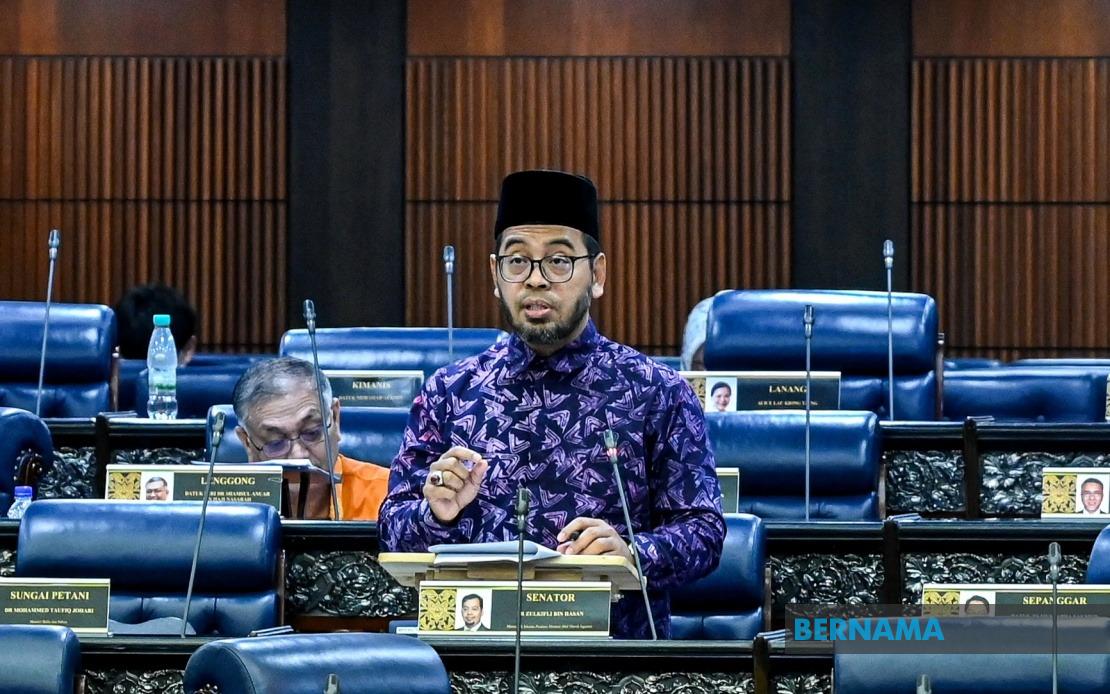
The Malaysian government is mobilising a comprehensive inter-agency strategy to counteract the expanding reach of Islamic teachings that diverge from mainstream Sunni doctrine, particularly those disseminated through digital channels and cross-border networks. Minister in the Prime Minister's Department (Religious Affairs) Dr Zulkifli Hasan outlined this coordinated approach during parliamentary proceedings, acknowledging that authorities face mounting complexity in their regulatory efforts as unorthodox groups shift away from traditional meeting formats towards online platforms and encrypted messaging services.
The evolving nature of these teachings represents a significant enforcement challenge for Malaysian authorities. Rather than operating through identifiable brick-and-mortar organisations, contemporary groups employ sophisticated marketing techniques, packaging their ideology within narratives centred on personal growth, community welfare, mental health remedies and informal religious education. The weaponisation of social media, combined with psychological manipulation tactics and the leveraging of influential figures, has created an environment where adherents can be drawn into alternative belief systems without necessarily understanding the theological implications of their adoption.
Dr Zulkifli identified specific enforcement actions undertaken in recent months that demonstrate the government's determination to address this challenge. In May, authorities detained 288 followers of Ahmadiyya Qadiani in Sabah, while a separate operation targeting a Syiah centre in Petaling Jaya resulted in the apprehension of 226 foreign nationals. These operations exemplify the expanded scope of surveillance and intervention capabilities now deployed across Malaysia's regulatory apparatus, reflecting a recognition that unorthodox teachings often transcend national borders and engage international networks.
The Department of Islamic Development Malaysia (JAKIM) serves as the coordinating fulcrum for this whole-of-government approach, working in tandem with an extensive ecosystem of enforcement and administrative bodies. This network includes state-level Islamic religious authorities, the police force, the Malaysian Communications and Multimedia Commission responsible for digital content oversight, the National Security Council, municipal administrations, immigration services and civil registry departments. The breadth of this institutional architecture underscores the perceived gravity of the challenge and the government's commitment to establishing multiple enforcement checkpoints.
Beyond immediate detention measures, Malaysian authorities are investing substantially in preventive and rehabilitative frameworks designed to inoculate populations against heterodox teachings. The intervention arsenal includes individualised counselling programmes targeting followers and group leaders, court-mandated placement in faith rehabilitation centres under Syariah jurisdiction, and structured rehabilitation initiatives supervised by Islamic authorities intended to realign theological understanding with orthodox principles. These measures reflect a philosophy that combines enforcement with reformation, acknowledging that individuals drawn to unorthodox groups may require structured reintegration rather than purely punitive responses.
Youth represent a particular focus for these preventive initiatives, with the government establishing the National Steering Committee to Address Threats to Faith as a cross-sectoral mechanism for strengthening religious understanding among younger Malaysians. This committee draws representatives from the Education Ministry, Higher Education Ministry, Home Affairs Ministry, JAKIM and other relevant agencies, creating a framework through which religious resilience can be cultivated across educational and social institutions. The institutional emphasis on youth reflects understanding that unorthodox teachings often exploit identity formation processes and spiritual searching among adolescents and young adults.
The government has operationalised several flagship programmes designed to build theological and ideological fortification among the young. The Institut Pemantapan dan Perkaderan Akidah Malaysia (IPHAM) delivers structured faith-strengthening curricula, while the My Insaniah Programme and Rakan Masjid Programme operate through collaboration with the Ministry of Youth and Sports to embed religious resilience within youth engagement frameworks. Simultaneously, authorities are modernising the KAFA 2.0 (Quran and Fardu Ain) curriculum to ensure that traditional Islamic education adapts to contemporary contexts and equips younger generations with intellectual tools to evaluate theological claims critically.
The strategic approach reflects recognition that regulatory enforcement alone cannot adequately address ideological challenges. By layering prevention, education and community engagement alongside enforcement mechanisms, the government seeks to create environments where unorthodox teachings encounter resistance not merely through state prohibition but through authentic theological confidence and informed understanding among the public. This layered strategy acknowledges that individuals attracted to heterodox groups often respond to spiritual deficits within mainstream institutional settings, and that addressing the appeal of unorthodox teachings requires strengthening the affective and intellectual dimensions of conventional religious practice.
For Southeast Asian observers, Malaysia's experience underscores the transnational character of contemporary Islamic theological contestation. The emergence of unorthodox groups with international networks and sophisticated digital operations reflects broader regional dynamics in which religious authority increasingly faces competition from decentralised actors communicating across borders. The Malaysian government's response—combining digital surveillance with youth education and cross-agency coordination—represents an attempt to reassert institutional religious authority while adapting regulatory mechanisms to transnational environments.
The emphasis on distinguishing between legitimate theological diversity and dangerous doctrinal deviation remains contentious, however. Dr Zulkifli's reference to adherence to Ahli Sunnah Wal Jamaah as the doctrinal benchmark establishes a particular theological perspective as the criterion against which other teachings are measured, a positioning that some observers within interfaith communities and secular commentaries have questioned regarding pluralism and religious freedom. Nevertheless, within Malaysia's constitutional framework, where Islam occupies a constitutionally recognised position in matters of faith and practice, the government's regulatory posture reflects established institutional arrangements rather than novel policy innovation.
The intensity of the government's multi-institutional response indicates that unorthodox Islamic teachings have achieved a presence sufficient to warrant sustained attention from Malaysia's highest policy-making levels. Whether through enforcement, education or rehabilitation, state authorities are signalling that they regard the challenge as sufficiently serious to justify substantial resource allocation and inter-agency coordination. As digital platforms continue enabling borderless communication and as theological contestation remains endemic to religious traditions globally, the sustainability and effectiveness of these initiatives will likely determine the trajectory of religious regulatory policy across Southeast Asia's Muslim-majority nations.

