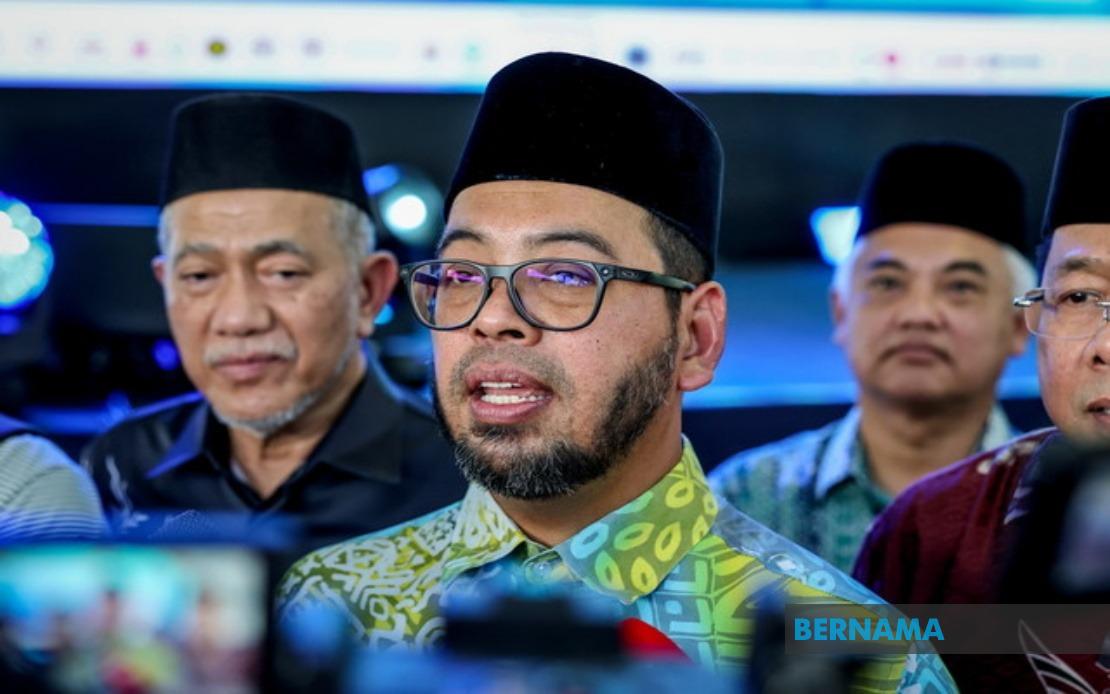
The Department of Islamic Development Malaysia (JAKIM) is moving to create a standardised framework for funeral management practices across the country, prompted by a contentious incident that drew significant public attention. Minister in the Prime Minister's Department (Religious Affairs) Dr Zulkifli Hasan announced the initiative while addressing the media in Bukit Mertajam, emphasising that the new guidelines will serve as a unified reference point for all states while respecting existing state legislation and religious frameworks.
The announcement represents a recognition that Malaysia's current patchwork of funeral management practices—with individual states maintaining separate protocols—has created potential gaps and inconsistencies in how Islamic burial procedures are administered nationwide. While several states have already established their own guidelines, JAKIM has determined that elevating these into a more cohesive and comprehensive national standard is essential for ensuring uniformity and preventing the kind of disputes that have recently surfaced in public discourse.
Dr Zulkifli explained that the development process will be expedited without compromising thoroughness, as foundational guidelines already exist and primarily require refinement rather than complete reconstruction. The emphasis on speed reflects an understanding that delays in resolving such matters can amplify public concern and potentially undermine confidence in religious institutions and their administrative capacity. However, the minister was careful to stress that each state's legal framework would be respected, suggesting a collaborative rather than imposing approach to standardisation.
The timing of this initiative follows a specific incident in Selangor that garnered viral attention on social media, involving allegations of delays in the burial of a deceased person at the Ukay Perdana Muslim Cemetery in Hulu Kelang. The funeral was supposed to take place at Masjid Nurul Hidayah in Kampung Pandan Dalam, but complications arose involving the involvement of Badan Kebajikan Salatulrahim (BKS), the mosque management, and coordination with relevant state authorities. Such high-profile controversies can damage public trust in institutions responsible for managing Islamic rites, which hold profound emotional and religious significance for families and the broader Muslim community.
The Selangor Islamic Religious Council (MAIS), which chairs the state's Islamic religious governance structure, moved swiftly to address the situation by convening a meeting between the bereaved family, the mosque management, the charitable organisation involved, and the Selangor Islamic Religious Department (JAIS). MAIS chairman Datuk Salehuddin Saidin indicated that this intervention aimed not merely to resolve the immediate dispute but to establish mechanisms preventing recurrence of similar problems. The proactive approach demonstrates awareness that individual incidents, if not handled transparently and decisively, can erode public confidence in the entire funeral management ecosystem.
From a regional perspective, Malaysia's effort to standardise funeral practices across its federal structure touches on a broader challenge facing multi-state Islamic governance systems. Different states operate under separate religious administrations, which has historically allowed for local adaptation but also created potential for inconsistency. The move toward standardisation must balance the need for uniform quality and efficiency against the legitimate interests of state religious authorities in maintaining autonomy over matters affecting their populations. This tension is particularly acute in Selangor, which as Malaysia's most populous state and economic heartland requires seamless coordination between multiple stakeholders.
The controversy underlying this initiative also reflects evolving expectations among Malaysian Muslims regarding transparency and professional standards in religious service delivery. Social media has amplified community awareness of funeral management issues, making what might once have been isolated family concerns into matters of public scrutiny and discussion. Charitable organisations and mosques involved in funeral coordination must increasingly demonstrate competence and responsiveness to maintain community trust. The standardised guidelines, therefore, serve partly as a quality assurance mechanism and partly as a public reassurance that religious institutions are adapting to contemporary expectations.
For families navigating the funeral process, standardised guidelines offer clearer expectations regarding timelines, responsibilities of various parties, and dispute resolution mechanisms. When a death occurs, families are typically in a heightened emotional state and may lack detailed knowledge of procedural requirements. Clear, accessible guidelines reduce confusion and the potential for misunderstandings between families, religious institutions, and service providers. They also provide a framework for accountability, allowing families to understand whether delays or complications resulted from procedural necessity or administrative failure.
Dr Zulkifli's appeal for unity and calm is noteworthy given that funeral management can intersect with sensitive community dynamics. In some cases, disputes may involve questions about the Islamic credentials of the deceased, the legitimacy of performing organisations, or family disagreements about appropriate burial practices. Guidelines must be sufficiently detailed to address these complexities while remaining accessible to ordinary families unfamiliar with Islamic jurisprudence. The challenge lies in creating frameworks that are both robust enough to address edge cases and flexible enough to respect diverse legitimate interpretations within Islamic tradition.
The initiative also signals potential broader reforms in how Malaysia's religious establishment interfaces with the public. As institutions become more professional and responsive, they establish benchmarks against which future performance will be evaluated. Once standardised guidelines are published, public expectations will adjust accordingly, and failures to meet stated standards become more visible and contestable. This represents a maturation of governance standards within the religious affairs portfolio, aligning it with quality and transparency expectations that now characterise other government sectors.
Implementation will require coordination not only between JAKIM and state religious authorities but also with mosque committees, funeral service providers, cemeteries, and charitable organisations involved in burial coordination. Each stakeholder operates within different institutional frameworks and may have varying concerns about how guidelines affect their operations. A successful rollout will depend on meaningful consultation and potentially on capacity building to ensure that all involved parties can implement the standards consistently. Some states or organisations may require additional resources or training to align with new protocols.
The fact that no specific timeline was provided, beyond assurances that finalisation would occur "as soon as possible," suggests recognition that rushing to publish incomplete guidelines risks creating new problems rather than solving existing ones. Public dissatisfaction with funeral services typically peaks during active grieving periods, making the stakes of this initiative particularly high. JAKIM and state authorities must balance the political pressure to be seen as responsive with the practical necessity of developing genuinely useful guidance that addresses real operational challenges.
Ultimately, the standardisation effort represents both a response to immediate controversy and recognition of a longer-term need for professional development within Islamic institutional frameworks. As Malaysia continues to undergo social and economic transformation, expectations regarding institutional competence and responsiveness evolve accordingly. Funeral management may seem like a narrowly technical domain, but it touches on profound human needs and religious obligations, making it a crucial area where the state's religious institutions can demonstrate their commitment to serving communities with dignity, efficiency, and respect for Islamic principles.

