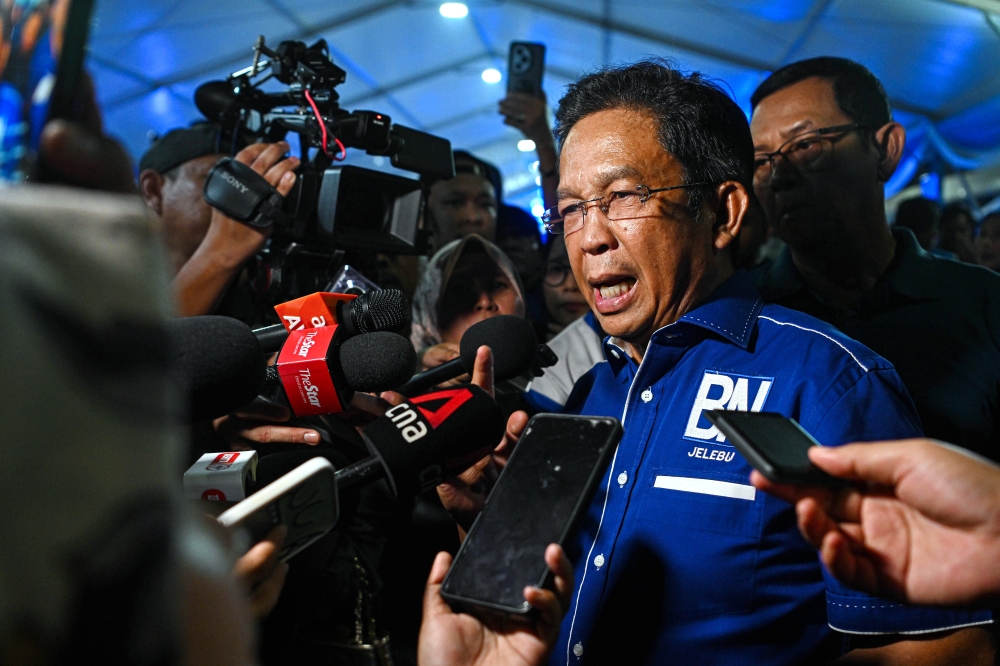
Negeri Sembilan's Umno chief Datuk Jalaluddin Alias expressed his appreciation today towards Perikatan Nasional for endorsing Barisan Nasional's role as the governing coalition should the alliance emerge victorious in forthcoming state elections. The acknowledgement, made during proceedings in Jelebu, underscores the delicate political negotiations occurring across Malaysia's state-level politics as various coalitions position themselves ahead of electoral contests.
The statement represents a significant moment in Negeri Sembilan's political landscape, where securing the backing of coalition partners has become increasingly pivotal in determining which bloc can form a government. Jalaluddin's public gratitude signals that Perikatan's conditional support carries substantial weight in the calculations of Barisan Nasional strategists, particularly in a state where electoral outcomes have grown more unpredictable in recent polling cycles. This development reflects how Malaysia's fragmented political environment now requires coalition partnerships to be explicitly negotiated and publicly validated.
Perikatan Nasional's decision to support Barisan Nasional's leadership aspirations, rather than positioning itself as a competing bloc, demonstrates pragmatic coalition-building among parties that have historically maintained complex relationships. The agreement essentially removes a potential three-cornered contest dynamic that could have fractured the anti-opposition vote, a calculation that previous election cycles have shown to be strategically consequential. For voters in Negeri Sembilan, this arrangement clarifies the political landscape by presenting fewer viable power-sharing scenarios.
The timing of Jalaluddin's remarks carries political significance as state-level politics increasingly influence national political trajectories. Negeri Sembilan, though not among Malaysia's largest states, holds symbolic importance as a traditional Umno stronghold and a territory where Barisan Nasional's electoral performance reflects broader regional sentiment. Recent state elections across Malaysia have demonstrated that traditional power bases cannot be assumed, prompting coalitions to formalize agreements that previous generations might have left implicit.
For Perikatan Nasional, backing Barisan Nasional's leadership rather than contesting independently suggests a strategic calculation about the likelihood of securing enough seats to form government independently. The decision also prevents potential internal conflicts that might arise if both coalitions competed directly across multiple constituencies. This approach allows smaller coalition partners to maintain electoral presence and legislative representation whilst avoiding the reputational damage of being perceived as a spoiler that fragments the anti-opposition vote.
The political dynamics in Negeri Sembilan reflect broader Malaysian trends where state governments have become increasingly contested terrain. Over the past decade, several states previously considered unassailable Barisan strongholds have witnessed competitive elections where results depended on marginal variations in voter turnout and demographic shifts. Jalaluddin's necessity to publicly acknowledge Perikatan's support suggests that Barisan Nasional itself may harbour concerns about its winning margin, making external coalition backing operationally important rather than merely decorative.
Within Umno specifically, Jalaluddin's statement reinforces the party's preference for grand coalition arrangements over head-to-head competition with Perikatan Nasional. This preference reflects Umno's assessment that maximizing coalition breadth provides better electoral security than attempting to win on party strength alone. The express appreciation also serves internal party purposes, signalling to Umno grassroots that leadership has secured valuable external support, thereby boosting confidence heading into campaign phases.
For opposition forces in Negeri Sembilan, the formalized coalition agreement between Barisan Nasional and Perikatan Nasional eliminates scenarios where anti-government votes could be concentrated in ways that disadvantage larger opposition blocs. This consolidation of centre-right and conservative political forces may require opposition coalitions to recalibrate their own strategic positioning. The opposition will likely emphasize governance issues and performance critiques rather than attempting to exploit coalition fragmentation on the government side.
Jalaluddin's public acknowledgement also addresses potential grassroots concerns within Umno about coalition partners receiving disproportionate benefits. By expressing gratitude explicitly and publicly, the Umno chief frames Perikatan's support as a genuine partnership rather than an unequal arrangement, thereby maintaining internal party morale. Such messaging becomes crucial when party members might otherwise question why ministerial positions or development allocations need to be shared with coalition partners.
Looking forward, the agreement established between Barisan Nasional and Perikatan Nasional in Negeri Sembilan may serve as a template for other state-level contests. If the coalition performs successfully in Negeri Sembilan elections, similar arrangements could be replicated elsewhere, potentially reshaping Malaysia's coalition politics into a more predictable pattern. Conversely, electoral setbacks could undermine confidence in this partnership model, prompting future coalitions to explore different configurations.
The broader implication for Malaysian politics involves the institutionalization of coalition agreements that clearly designate which partner leads government formation. Rather than leaving such arrangements ambiguous until after election results become apparent, explicitly stating that Barisan Nasional leads provides certainty to voters about what government structure they are endorsing. This clarity, whilst potentially limiting some coalition flexibility, appears increasingly valued by both political parties and voters seeking stable governance frameworks in an era of electoral volatility.

