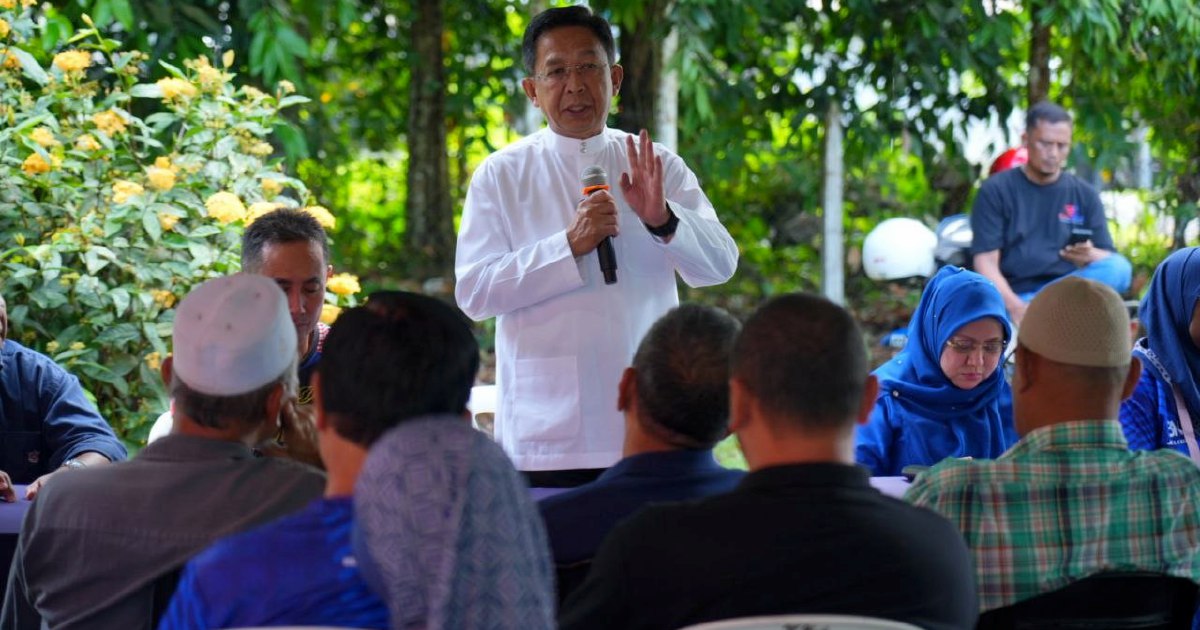
The leadership question looming over Negri Sembilan's August 1 state election gained sharper definition when Perikatan Nasional formally indicated that Datuk Seri Jalaluddin Alias, the state chairman of Umno, ranks among the frontrunners being considered for the chief minister's post should the PN-BN electoral alliance secure power. The announcement, made in Jelebu, reflects the intensity of internal coalition negotiations as both blocs prepare their governance blueprints and succession planning ahead of what polls suggest could be a closely contested contest.
Jalaluddin's placement in this pool of potential leadership candidates underscores the delicate balancing act required when two historically distinct political forces—Perikatan Nasional's nationalist-conservative backbone and Barisan Nasional's established administrative machinery—attempt to govern together. The decision to publicly acknowledge multiple candidates rather than a single frontrunner signals ongoing discussions about power-sharing arrangements, ministerial portfolios, and the geographical and communal representation that must be factored into such appointments in a diverse state like Negri Sembilan.
As chairman of the Umno chapter in the state, Jalaluddin commands significant grassroots influence within Malaysia's dominant Malay-Muslim political party. His position reflects decades of party work and accumulated political capital within Umno's organizational structure, making him a natural contender when leadership vacancies emerge. The public acknowledgment of his candidacy represents a form of market testing—gauging reactions from party members, coalition partners, and the electorate regarding his suitability for elevated responsibility.
However, the deliberate use of the plural form—identifying him as "among" potential candidates rather than the chosen nominee—preserves flexibility in a coalition context where multiple parties must agree on final appointments. In Malaysian state politics, particularly within coalitions involving organisations with distinct power bases and competing interests, the formal announcement often lags behind the actual selection process. By maintaining this ambiguity, PN and its negotiators retain leverage in ongoing discussions with BN counterparts.
Negri Sembilan's political landscape presents particular complexities that influence such calculations. The state's mixed demographic composition, with Malay-Muslim majorities in some constituencies and significant Chinese and Indian populations in others, typically demands a chief minister capable of navigating diverse community concerns. The choice between different candidates often reflects broader strategic considerations about which constituencies the coalition believes it must defend or can afford to contest.
The timing of this revelation—several weeks before voting—serves to prepare the political ground and test potential reactions from various stakeholder groups. In Malaysian electoral culture, early signalling about leadership intentions allows parties to manage expectations, consolidate support within their own ranks, and signal to coalition partners the seriousness of their commitments. For Jalaluddin specifically, this acknowledgment represents validation of his standing within the broader PN-BN framework, even if his ultimate elevation remains conditional on electoral success and final coalition negotiations.
The PN-BN alliance itself represents a significant political realignment in Malaysian governance. Perikatan Nasional, which emerged from internal Umno-PAS dynamics and gained prominence during recent constitutional crises, has gradually moved toward cooperation with the establishment BN structure. Such cooperation does not eliminate underlying tensions between these organisations—they retain distinct party structures, separate membership rolls, and sometimes competing grassroots interests—but the August 1 poll suggests both sides have calculated that electoral advantage lies in presenting a unified front to voters.
For Umno specifically, Jalaluddin's prominence in discussions reflects the party's central role within both PN and BN frameworks. As Malaysia's largest Malay-based party and the traditional standard-bearer of Bumiputera interests, Umno typically secures the largest number of ministerial positions in any government formation. State chief minister posts, particularly in states where Umno maintains organisational strength, frequently go to Umno candidates, making Jalaluddin's candidacy a logical extension of this historical pattern.
The Negri Sembilan contest will test whether the PN-BN alliance can translate organisational coordination into electoral momentum. The state has experienced significant political volatility in recent years, with leadership changes and shifting coalition arrangements affecting governance continuity. A clear PN-BN victory on August 1 would validate the strategic partnership and likely lock in both organisations' roles in the state's governance structure for the subsequent five years, with implications for how federal politics evolve in the post-election landscape.
For Malaysian voters and political observers across the region monitoring developments here, the Negri Sembilan election offers a microcosm of contemporary coalition politics. The careful articulation of multiple leadership candidates, the balancing of different organisational interests within a single alliance, and the background negotiations about power distribution all reflect the complexity of modern Malaysian electoral democracy. Whether Jalaluddin ultimately becomes menteri besar will depend not merely on his qualifications but on intricate calculations across multiple party hierarchies and demographic constituencies, ultimately resolved through August 1's ballot.
The identification of Jalaluddin among potential chief minister candidates signals that leadership succession planning in Negri Sembilan is advancing within coalition frameworks, even as public declarations remain deliberately non-committal. This approach—confirming his serious consideration while preserving flexibility—exemplifies how Malaysian politics manages the tension between public accountability and behind-the-scenes negotiation, particularly in multi-party alliance contexts where final decisions require consensus across competing power centres.

