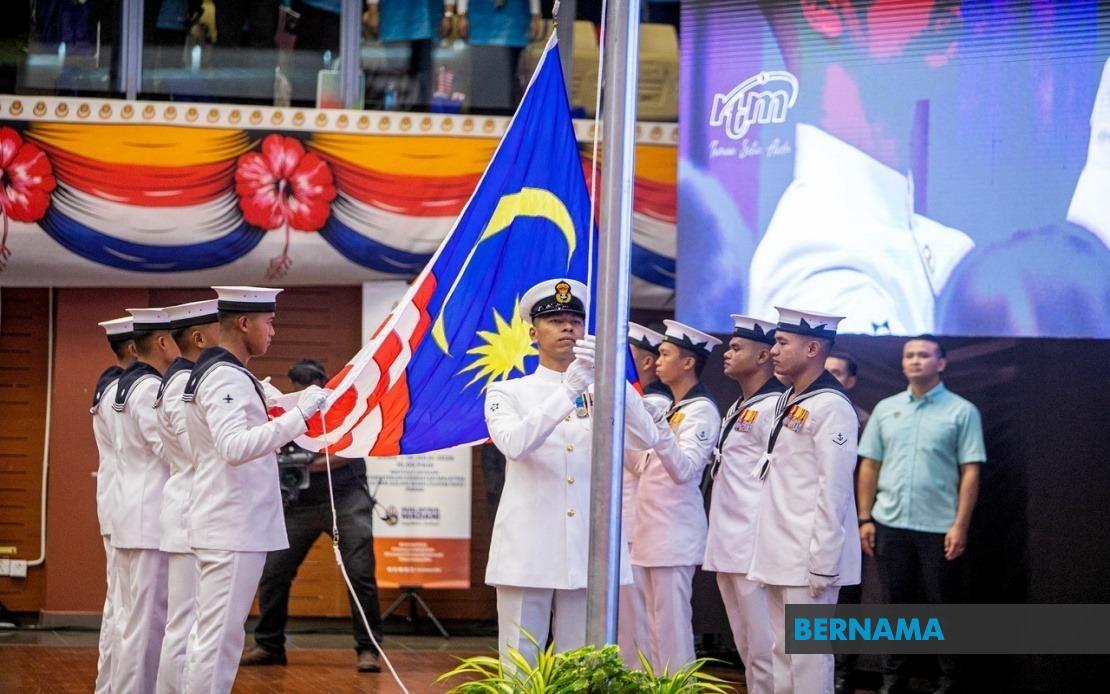
The Jalur Gemilang raising ceremony made its return yesterday as the centrepiece of the 2026 National Month and Fly the Jalur Gemilang campaign launch, marking a symbolic reinvigoration of a patriotic tradition that had been suspended for two years. Prime Minister Datuk Seri Anwar Ibrahim presided over the event at the Sultan Azlan Shah Ministry of Health Training Institute in Tanjung Rambutan, Ipoh, signalling the government's commitment to reigniting national pride as Malaysia approaches its dual celebrations of National Day and Malaysia Day later this year.
The decision to revive the ceremony carries particular significance in the contemporary political landscape. After a period where such ceremonial traditions took a backseat, the government's choice to restore the Jalur Gemilang raising underscores an intentional pivot toward emphasising national unity and patriotic symbolism. This timing—ahead of the August 31 and September 16 festivities—suggests a deliberate strategy to consolidate national sentiment and strengthen civic engagement among Malaysians across the country.
The centrepiece of the ceremony involved the unfurling of a Jalur Gemilang measuring 1.82 metres by 3.65 metres by a nine-member Royal Malaysian Navy contingent from Lumut Base, led by Chief Petty Officer Mohamad Razif Aliff Md Yusof. This handover from the Prime Minister to the naval team represented more than mere procedural choreography; it embodied a symbolic passing of responsibility to the armed forces to serve as custodians of national pride. The flag's dimensions reflected a deliberate grandeur, intended to visually amplify the moment's significance.
The solemnity of the occasion was reinforced through traditional patriotic elements. As the Jalur Gemilang ascended, attendees sang Negaraku, the national anthem, while standing in respectful attention. This collective vocal affirmation served to unite those present around shared national identity. The ceremony subsequently incorporated the Rukun Negara pledge, recited by ILKKM trainee Muhammad Ammar Mohd Asri, embedding constitutional and ethical principles into the patriotic narrative.
Beyond the ceremonial elements, the government deployed cultural symbolism to deepen the campaign's resonance. Faizal Tahir's newly composed song, titled "Aku Berjanji" (I Promise), was unveiled as the official theme for the 2026 celebrations. Made immediately available for public download through the Merdeka360 portal, the song represents an attempt to create an accessible, memorable cultural artefact that ordinary Malaysians can engage with throughout the festive season. Such musical touchstones have historically proven effective in cultivating emotional connections to national milestones.
The Fly the Jalur Gemilang campaign itself represents an annual institutional fixture designed to encourage households and businesses nationwide to display the national flag prominently during the National Month period. This distributed, grassroots approach to patriotic expression stands in contrast to centralised state ceremonies; it democratises participation by enabling citizens of all backgrounds to contribute to the visual tapestry of national celebration. For Malaysian communities—urban and rural, bumiputera and non-bumiputera—the campaign provides a unifying symbolic language that transcends demographic divisions.
From a regional perspective, Malaysia's emphasis on national unity through ceremonial and symbolic means reflects broader Southeast Asian trends. Throughout the region, governments have increasingly employed patriotic campaigns and flag displays as instruments for social cohesion, particularly during periods of political transition or international uncertainty. That Malaysia is intensifying such efforts ahead of major national celebrations suggests awareness of the importance of maintaining domestic consensus and civic engagement.
The two-year hiatus preceding yesterday's ceremony warrants analytical attention. The suspension likely reflects the disruptions and shifting priorities that characterised the pandemic period and its immediate aftermath, when public gatherings faced restrictions and government resources concentrated on health and economic crises. The resumption now signals a return to what officials consider ordinary democratic rhythms, though the deliberate choice to revive the ceremony—rather than allow it to lapse—demonstrates intentionality about ritual and symbolism in nation-building.
The broader National Month celebration spanning August and September represents Malaysia's premier annual period for civic renewal and national reflection. Beginning with the Jalur Gemilang raising ceremony, the festivities will encompass numerous programmes and activities orchestrated across federal, state, and local levels. This cascade of events creates multiple touchpoints through which Malaysians can engage with themes of national achievement, constitutional governance, and multicultural coexistence.
For ordinary Malaysians, the restoration of the Jalur Gemilang ceremony and the Fly the Jalur Gemilang campaign offers straightforward mechanisms for expressing patriotism without requiring specialised knowledge or resources. Displaying the flag on residential properties or vehicles demands minimal effort yet carries symbolic weight within the broader national conversation. This accessibility has historically made flag-flying campaigns effective instruments for achieving broad-based participation in national celebrations.
The government's investment in cultural elements such as Faizal Tahir's commissioned anthem reflects recognition that contemporary patriotism requires multimedia engagement. By coupling traditional ceremonial forms with contemporary music distribution through digital platforms, authorities attempt to bridge generational and demographic divides. Young Malaysians scrolling through the Merdeka360 portal encounter the same patriotic message as older citizens attending the Ipoh ceremony, albeit through distinct cultural channels.
Looking forward, the success of the 2026 National Month campaign will likely influence how future governments approach similar patriotic initiatives. Should the ceremony's revival and accompanying campaigns generate substantial citizen participation and positive sentiment, the template may become institutionalised. Conversely, if participation proves limited or sentiment ambiguous, policymakers may recalibrate their strategies for fostering national unity. The coming months will reveal whether ceremonial resurrection translates into substantive civic engagement.

