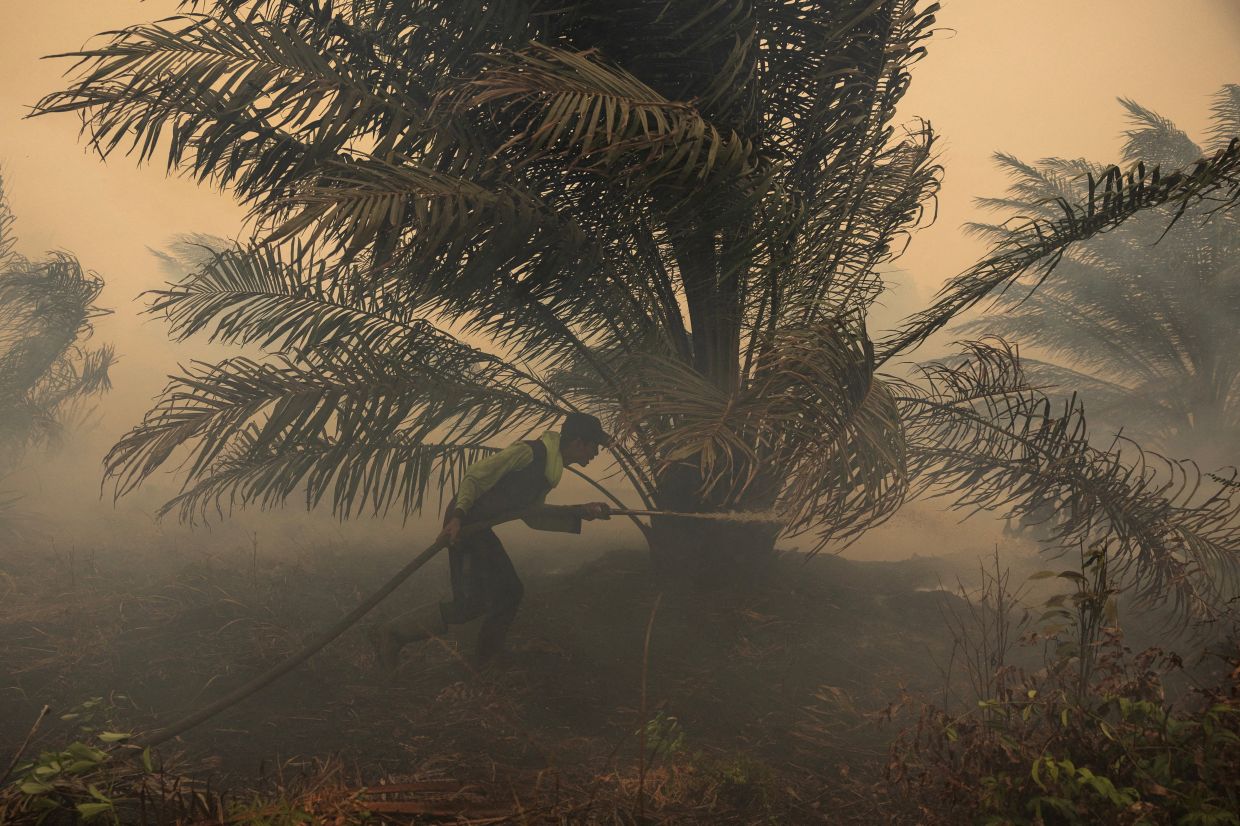
Indonesia is receiving direct military and technical support from Japan to counter an escalating environmental crisis in Kalimantan, where air quality has deteriorated to hazardous levels unseen in recent years. The Japanese government has committed three helicopters to water-bombing operations targeting massive forest and land fires consuming vast tracts of the region, with deployment beginning September 10. This international intervention underscores the severity of conditions that have overwhelmed domestic firefighting capacity and threaten the health of millions across Southeast Asia.
The situation in Kalimantan has become critically dangerous. Jekan Raya in Palangka Raya, Central Kalimantan, recorded an Air Pollutant Standard Index (ISPU) reading of 1,108 as of late Saturday afternoon, while South-East Pontianak in West Kalimantan reached 1,075. Both measurements fall squarely into the hazardous category, representing air quality so poor that outdoor activity poses serious health risks to vulnerable populations including children, elderly residents, and those with respiratory conditions. These unprecedented pollution levels are driving urgent diplomatic coordination between Jakarta and international partners seeking to contain the environmental damage.
Indonesia's National Disaster Mitigation Agency (BNPB) has confirmed that preparations for the Japanese-assisted operations are advancing rapidly. According to Berton Panjaitan, acting head of the agency's Data, Information and Disaster Communication Centre, preliminary site surveys are underway with technical discussions centring on how water-bombing missions will be executed across Kalimantan's challenging terrain. The inclusion of a Chinook helicopter, a heavy-lift aircraft with substantial water-carrying capacity, signals the scale of resources being mobilised. Such specialized equipment reflects recognition that conventional firefighting approaches have proven insufficient against the current conflagration.
The geographic distribution and intensity of fire activity paint a troubling picture across the island. West Kalimantan experienced the sharpest deterioration, with hotspot numbers climbing by 1,629 to reach 3,371 active fire locations. Central and South Kalimantan also reported increases, contributing to a combined 9,242 hotspots across the three provinces. Beyond these concentrated zones, a total of 171 actual fire spots have been physically documented on the ground. The sheer concentration of simultaneous ignition points suggests a combination of natural conditions—possibly exacerbated by drought—and deliberate land-clearing activities typical of agricultural expansion in the region.
Attempts to artificially induce rainfall through cloud seeding have yielded mixed results. Weather modification operations successfully brought precipitation to several areas in Sumatra, including portions of Riau, South Sumatra, Jambi, and Lampung provinces. These successes demonstrate that technological intervention can provide temporary relief when atmospheric conditions cooperate. However, similar operations have proven impossible in Central and South Kalimantan due to an absence of suitable cloud formations. This meteorological limitation underscores how environmental crises can be compounded by factors beyond immediate human control, forcing authorities to rely instead on direct suppression methods.
Indonesia's existing firefighting infrastructure, while substantial, remains inadequate for the current emergency. The BNPB currently operates 52 aircraft dedicated to fire suppression across priority provinces, divided between 38 water-bombing aircraft and 14 planes designated for aerial reconnaissance and weather modification duties. Across all six priority provinces, these operations have managed to deploy approximately 3.5 million litres of water against the flames. While these figures represent mobilization on an impressive scale, the volume required to combat fires across Kalimantan's vast peatland ecosystems and rainforests vastly exceeds current domestic capacity, necessitating the Japanese intervention.
The regional implications of this crisis extend far beyond Indonesia's borders. Transboundary haze from Kalimantan regularly affects air quality in Malaysia, Singapore, Brunei, and southern Philippines, creating diplomatic friction and public health emergencies across Southeast Asia. Malaysian cities have experienced multiple haze episodes in recent years, forcing authorities to issue health advisories and causing billions in economic losses through disrupted transportation and reduced productivity. The current spike in pollution levels suggests that regional haze episodes may be imminent, potentially affecting hundreds of millions of people across the region.
For Malaysia specifically, the implications merit close attention. Previous fire seasons in Kalimantan have produced air quality crises that rendered Malaysian cities unhealthy for prolonged outdoor activities. Schools have been forced to close, construction projects halted, and hospitals flooded with respiratory complaints. The swift Japanese response and acceleration of water-bombing operations may help prevent the most severe transboundary pollution scenarios, but the current trajectory suggests significant regional air quality degradation remains likely. Malaysian environmental agencies and health authorities should prepare contingency protocols and public communication strategies.
The diplomatic dimensions of Japan's assistance also merit consideration. The provision of military helicopters and personnel represents a tangible commitment to regional environmental stability, positioning Japan as an active stakeholder in Southeast Asian ecological governance. This intervention may establish precedent for future international cooperation on transboundary environmental crises, where bilateral arrangements prove faster and more effective than multilateral mechanisms. For Indonesia, accepting external assistance on this scale reflects acknowledgment that national institutions, despite their size and resources, cannot unilaterally manage environmental emergencies of this magnitude.
Underlying this immediate crisis are structural vulnerabilities in how Indonesia manages its forest resources and agricultural expansion. Kalimantan's peatlands, among the world's richest carbon stores, remain vulnerable to repeated fire cycles that release vast quantities of greenhouse gases while destroying irreplaceable ecosystems. Each fire season reveals the same pattern: inadequate prevention, insufficient suppression capacity, and regional consequences that ripple across Southeast Asia. Until root causes—land-use policies, enforcement of fire prevention regulations, and incentive structures for sustainable agriculture—are addressed systematically, emergency interventions like Japan's water-bombing campaign will remain necessary but insufficient responses.
The Japanese deployment represents a critical respite but not a solution to underlying vulnerabilities. As operations commence September 10, success should be measured not merely in hotspots extinguished or pollution indices reduced, but in whether this crisis catalyzes broader policy reforms. Regional countries watching Kalimantan burn understand that environmental stability across Southeast Asia depends on Indonesia's capacity and commitment to preventing such catastrophes from recurring. The international assistance now arriving in Kalimantan, while essential in the immediate term, must be accompanied by structural changes ensuring that future fire seasons do not trigger the same crisis cycle.

