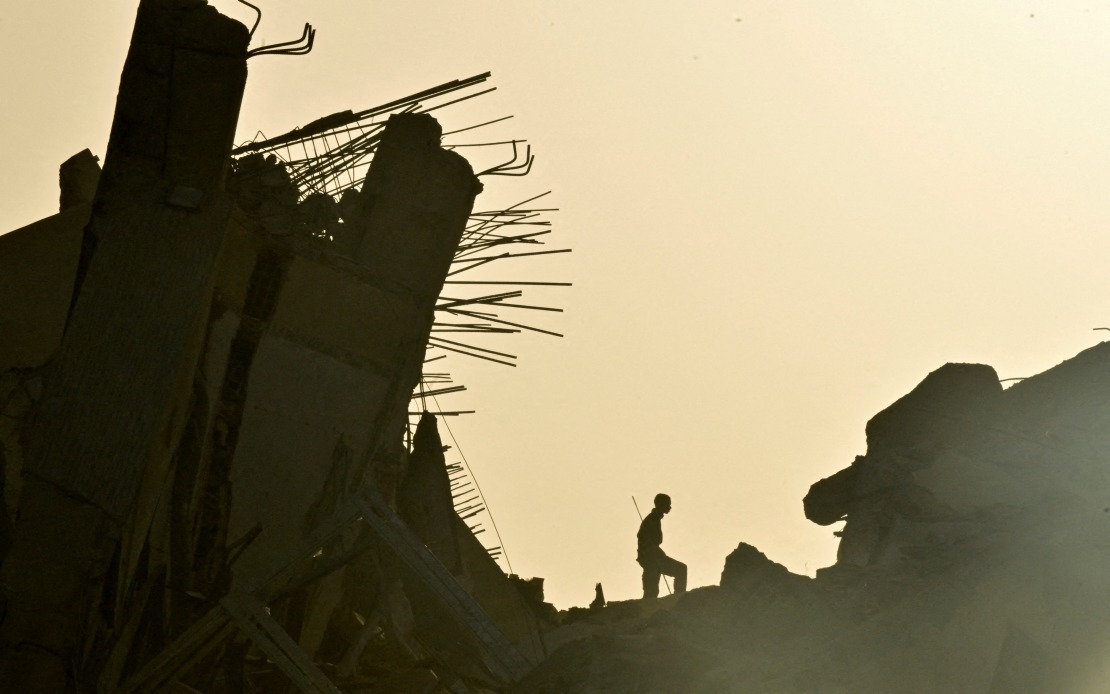
Japan's government announced a substantial humanitarian response to Venezuela's devastating earthquake crisis on Friday, pledging US$3.5 million in emergency grant funding while simultaneously deploying additional medical personnel to the stricken nation. Foreign Minister Toshimitsu Motegi made the announcement during a press briefing in Tokyo, signalling Japan's commitment to sustained engagement with Venezuela's relief and reconstruction efforts in the aftermath of the June 24 twin earthquakes that claimed more than 3,000 lives.
The financial commitment represents a coordinated approach to humanitarian aid distribution. Rather than direct bilateral transfers, Japan has structured the funding to flow through established international organisations, a mechanism that typically ensures efficient resource allocation and coordination with other donor nations. The allocated resources will specifically target critical humanitarian needs: food assistance for displaced populations, healthcare services for the injured and displaced, temporary shelter solutions, and other essential supplies for survival in the immediate aftermath of the natural disaster.
Beyond the financial contribution, Japan's decision to deploy a second dedicated medical team underscores the government's recognition that Venezuela's healthcare infrastructure remains overwhelmed by the immediate crisis. Medical teams represent one of the most valuable forms of disaster relief, as they provide expert assessment of injury patterns, triage services, and treatment capacity that local systems cannot immediately supply. The deployment of a second team suggests that initial reports from the first medical contingent indicated substantial ongoing medical needs that justify additional specialist personnel.
This latest assistance announcement builds upon Japan's earlier humanitarian initiatives. On June 30, merely a week after the earthquakes struck, Japan had already approved shipments of emergency relief supplies, demonstrating rapid decision-making within the Japanese bureaucracy. Three days later, on July 1, the government approved deployment of its first disaster relief medical team, establishing a direct human presence in the affected regions. The announcement of the second team on July 10 indicates that ongoing assessments from the initial deployment identified requirements for expanded medical capacity.
The sequential nature of Japan's response—initial supplies, then a medical team, followed by financial commitments and additional personnel—reflects a well-established Japanese disaster response protocol. This staged approach allows for assessment of ground conditions and prioritisation of resources based on actual needs rather than assumptions. Foreign Minister Motegi's reiteration that Japan will continue providing necessary assistance suggests the government views this as an ongoing commitment rather than a one-time donation.
For Malaysia and Southeast Asian nations, Japan's response carries particular significance. The region shares vulnerability to natural disasters, particularly seismic activity and typhoons, making international solidarity on disaster relief a matter of practical mutual interest. Japan's demonstrated capacity to rapidly mobilise resources and expertise, combined with its willingness to work through international coordination mechanisms, offers a model that regional governments study carefully. The emphasis on working closely with international organisations rather than pursuing bilateral advantage reflects diplomatic sophistication that Southeast Asian nations increasingly value in their development partners.
Venezuela's geographic distance from Southeast Asia might suggest limited regional interest, yet the earthquake response framework has broader implications. The mechanisms Japan employs—rapid financial disbursement, integration with international organisations, deployment of medical specialists, and sustained engagement—represent best practices that inform how regional disaster response networks function. As Southeast Asian countries strengthen their own disaster management protocols, particularly through mechanisms like the ASEAN Agreement on Disaster Management and Emergency Response, reference points from Japan's approach become relevant policy considerations.
The scale of Venezuela's disaster—over 3,000 deaths—ranks among the most severe recent natural calamities affecting a major Latin American nation. This magnitude of loss typically triggers international responses that extend over months or years, not merely days. Japan's structured approach of initial emergency supplies, followed by specialist deployment, and then consolidated financial support through international channels, suggests preparedness for a longer engagement period. Motegi's commitment to ongoing assistance reinforces this perspective.
From a geopolitical dimension, Japan's engagement with Venezuela through disaster assistance maintains diplomatic presence and humanitarian credentials despite the broader complexities of Venezuelan politics and international relations. Disaster relief operates in a humanitarian space that transcends ordinary political dynamics, allowing nations to maintain constructive engagement across ideological divides. This aspect of Japan's foreign policy has proven particularly valuable in regions where political divisions might otherwise limit bilateral interaction.
The deployment of medical teams specifically reflects recognition that natural disasters create acute health challenges beyond trauma treatment. Infectious disease prevention, management of chronic conditions among displaced populations, and mental health support for traumatised survivors all require specialist attention. A second medical team represents tacit acknowledgment that initial assessments indicated healthcare gaps that single-team deployment could not address. The decision to commit additional human resources, not merely financial ones, demonstrates Japanese prioritisation of substantive impact over ceremonial gestures.
Coordination with international organisations, repeatedly emphasised by Motegi, involves partnerships with entities like the United Nations Office for the Coordination of Humanitarian Affairs and regional humanitarian bodies. These organisations maintain established logistics networks, staff presence in affected areas, and experience in conflict zones where direct bilateral government presence faces obstacles. By channelling assistance through such entities, Japan ensures resources reach intended beneficiaries efficiently while benefiting from institutional expertise in emergency operations management.
The announcement also reflects Japan's broader development partnership philosophy emphasising disaster resilience and preparedness. Beyond immediate relief, Japanese government agencies typically pursue longer-term engagement on disaster reduction infrastructure, early warning systems, and recovery planning. The current announcement focuses on emergency response, but often precedes subsequent phases involving infrastructure restoration and resilience-building support that extends over years. Venezuelan authorities should anticipate potential future Japanese engagement in seismic monitoring infrastructure or building code improvements, based on patterns established in previous Japanese disaster responses.

