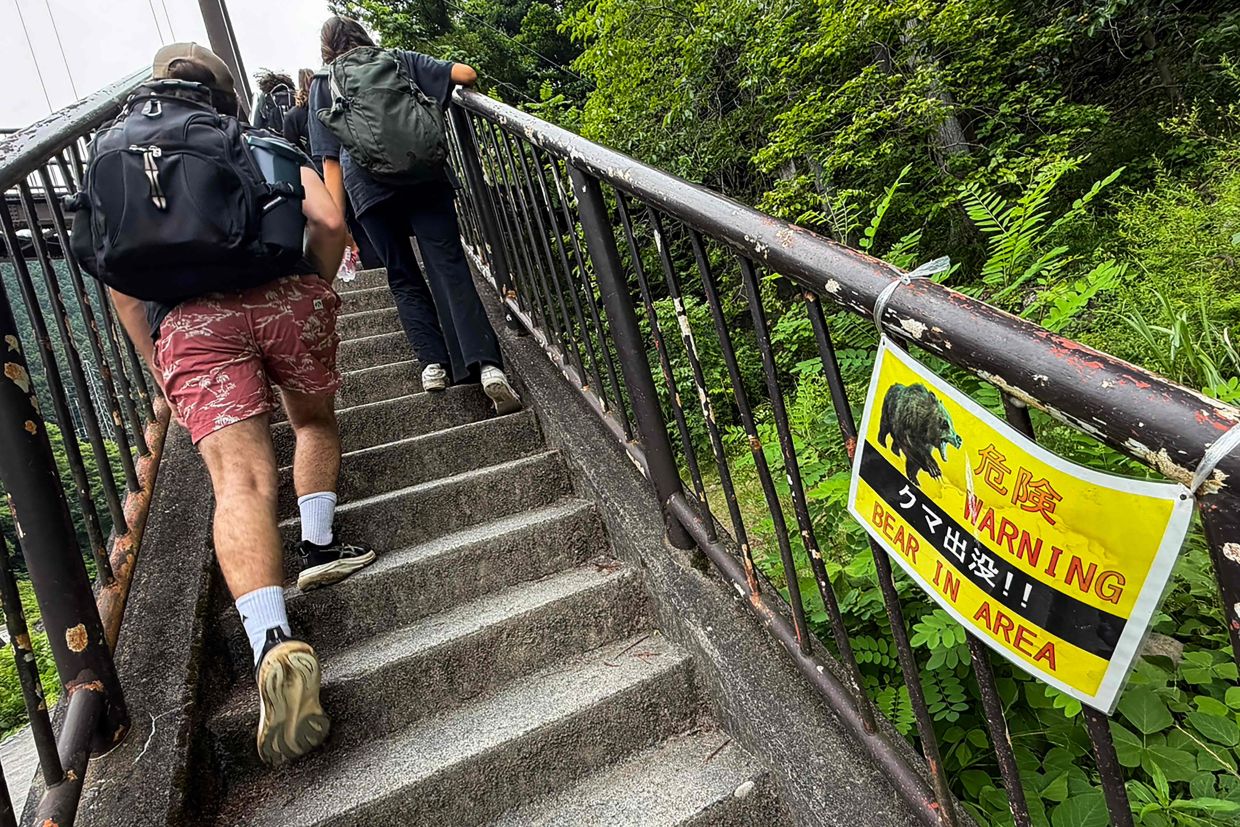
Japan is rolling out a large-scale technological response to an escalating wildlife crisis, with authorities beginning installation of more than 800 cameras across its mountainous regions to track bear populations. The deployment follows an alarming surge in bear-related fatalities, particularly across the northern Tohoku region, where wildlife officials are grappling with unprecedented human-animal conflict. This represents a fundamental shift in how the country approaches wildlife management, moving from reactive local responses to a coordinated national monitoring system.
The scale of the problem has become impossible to ignore. Since the start of April this year, bears have claimed at least five lives in the Tohoku region alone, continuing a troubling trajectory that saw the entire nation record 13 fatal bear attacks during the previous fiscal year—a record that raised alarm bells among policymakers and scientists alike. The environment ministry has designated this situation as sufficiently serious to warrant coordinated national intervention, signalling recognition that existing piecemeal approaches by local governments have proved inadequate to the challenge.
Environment ministry official Yu Takahashi outlined the rationale behind the camera initiative when speaking to AFP. The fundamental problem, he explained, lies in the fragmented nature of current wildlife surveys. Historically, local governments across Japan have conducted bear population assessments independently, each employing different methodologies and monitoring at different times of year, resulting in an inconsistent and often inaccurate picture of actual bear numbers. By implementing a standardized nationwide system, authorities hope to generate reliable baseline data that can inform more targeted and effective interventions.
The initial phase will concentrate surveillance efforts on six major bear populations within Tohoku, Japan's primary zone of conflict, before gradually expanding the survey framework across the country over the ensuing four years. This phased approach allows authorities to refine methodology and gather concentrated data from the most critical problem areas first. The cameras themselves use an ingenious attractant system: jars containing honey mixed with wine positioned at approximately head height are designed to lure bears into the field of view. When the animals rear up on their hind legs to investigate the sweet aroma, the cameras capture the distinctive white chest markings that allow researchers to identify individual bears and track population dynamics.
The urgency of this undertaking becomes clear when examining the underlying causes of the surge. Scientists attribute the rising bear population to demographic shifts in rural Japan—specifically, the steady exodus of people from mountainous agricultural regions over recent decades. With fewer residents maintaining traditional land management practices and inhabiting formerly populated areas, bears have expanded their range and numbers. This demographic hollowing of the countryside has inadvertently created expanding wildlife habitat, tipping the ecological balance away from human-dominated landscapes.
For residents of Tohoku, the situation has evolved into a state of persistent anxiety. National media outlets provide daily coverage of bear sightings in increasingly unlikely locations—shopping centres, public parks, and even school grounds—transforming what was once a remote wilderness concern into an urban safety issue. This media saturation reflects genuine public apprehension about an environmental threat that now touches daily life in ways previously unimaginable. The psychological impact extends beyond the statistics; communities are recalibrating their sense of security in familiar spaces.
The recent case of a man arrested for accidentally discharging bear repellent spray in a Nagoya post office illustrates how pervasive bear concerns have become in the public consciousness. The 22-year-old Vietnamese national, identified as Huynh Nhat Duy, activated the aerosol unintentionally, sending five people to hospital and demonstrating how even accidental encounters with bear deterrent chemicals pose public health risks in crowded urban environments. The incident underscores the broader societal anxiety surrounding wildlife management in contemporary Japan.
Bear spray itself—widely available at outdoor retailers—contains capsaicin, the pungent chemical compound found in chili peppers, creating an intensely irritating sensation upon contact. Authorities increasingly recommend that mountain visitors carry such deterrents alongside other precautions including attachment of warning bells to bags and avoidance of solo mountain travel. Yet these defensive measures offer limited reassurance when bears begin infiltrating urban zones, as occurred in June when Utsunomiya, situated north of Tokyo, experienced a bear incursion requiring four days of intensive trapping efforts by police, professional hunters, and municipal officials. The operation necessitated school closures across the affected area, disrupting normal community functioning.
Particularly troubling incidents have captured public attention for their apparent animal intelligence. Earlier this year, a bear described by officials as exceptionally cunning attacked four people across two separate factory locations in Fukushima after gaining entry through a window, which it subsequently closed—and even activated a water tap. This animal's evasion of capture for days suggested problem-solving abilities that added an element of unease to standard wildlife threat assessments. Such incidents force authorities to reconsider assumptions about animal behaviour and adaptability.
The camera survey initiative must also be understood within the context of Japan's distinctive geography. Mountains comprise approximately 80 percent of the nation's terrain, creating vast territories where bear populations can flourish with minimal human intervention. This topographical reality means that bear management cannot rely solely on habitat destruction or population culling; instead, coexistence frameworks must account for the reality that wilderness covers most Japanese territory. Understanding where bears concentrate and how populations fluctuate becomes essential strategic information for designing sustainable long-term approaches.
For Southeast Asian observers, the Japanese experience offers instructive parallels. Regional nations face their own wildlife-human interface challenges as development encroaches on animal habitats and rural depopulation reshapes landscapes. Japan's deployment of systematic monitoring technology and commitment to data-driven wildlife management provides a template potentially applicable across Southeast Asia, where similar human-wildlife conflict pressures are mounting. The technological solution, however, masks deeper structural challenges—demographic decline, rural abandonment, and habitat transformation—that no camera network alone can resolve. Japan's comprehensive approach thus encompasses both the sophisticated surveillance infrastructure and implicit recognition that sustainable coexistence requires addressing the socioeconomic factors driving wildlife-human conflict in the first instance.

