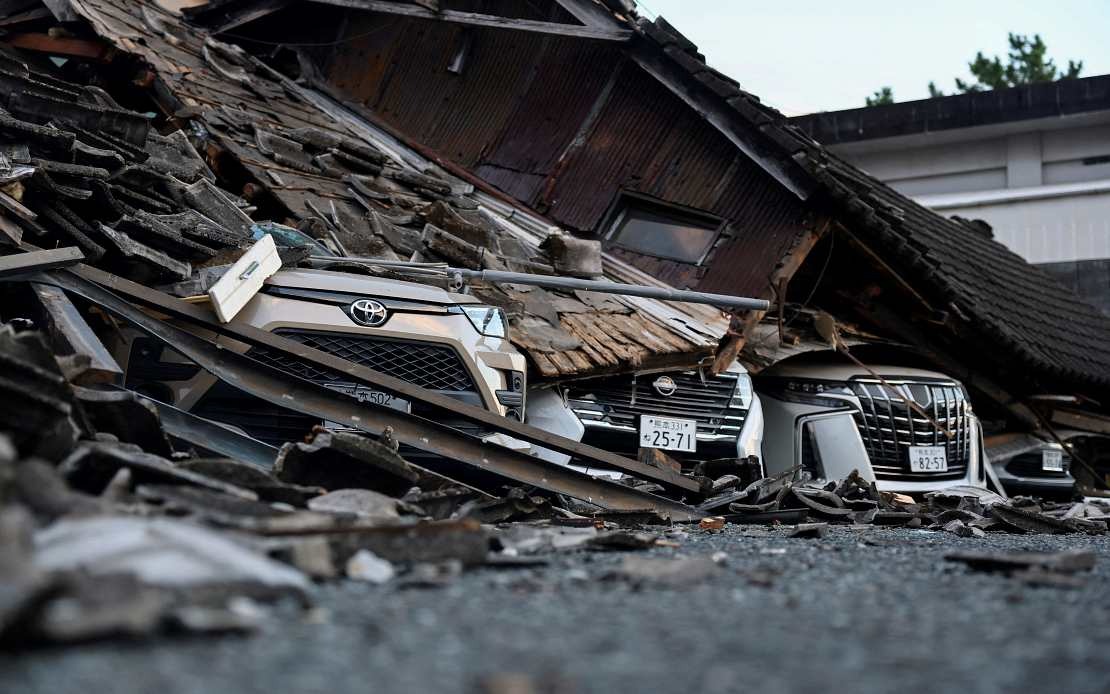
The operator of a variety store chain in southwestern Japan has publicly acknowledged making a decision that would prove fatal, admitting on Monday that it had instructed two employees to return inside an Aeon mall moments after they had safely evacuated following a severe earthquake. The two workers, one a 22-year-old woman, had already left the Kumamoto Prefecture shopping complex in Kashima Town following the tremor when management ordered them back to secure the day's cash receipts. Both women perished in a subsequent explosion that tore through the building, claiming seven lives in total and reshaping an already catastrophic natural disaster into a tragedy compounded by corporate judgment.
The sequence of events unfolded with devastating swiftness on Tuesday when a magnitude 7.1 earthquake struck the region, registering at the highest level on Japan's seismic intensity scale. In the chaos and confusion that typically follows such a powerful tremor, the mall's occupants began evacuating. The two employees and their colleagues moved to safety as standard procedure dictated. However, within that critical window of time between the initial quake and the building's structural failure, management made a decision that would seal their fate. Koji Yuse, a 64-year-old sales manager at the Kumamoto-based Habita company, has since confirmed that he personally authorised the instruction for store management to send the employees back into the structure to retrieve the cash register proceeds from the second floor and secure them in a safe located on the first floor.
When confronted by media representatives on Monday afternoon, Yuse expressed deep regret about the directive, stating, "I think the order was inappropriate. I deeply regret it." The admission carries the weight of profound understatement given the lethal consequences that followed. The company has since issued a formal apology to the families of the deceased and provided a written chronology of events to grieving relatives. This gesture towards accountability, while potentially important for the bereaved families' understanding of how their loved ones came to be in the building during such a dangerous moment, cannot undo the catastrophic outcome or answer the question of whether the cash reserves were genuinely more valuable than human life.
The explosion that claimed the lives of the two Habita employees and five others occurred shortly after they were ordered back into the building. Investigators have been examining the precise cause of the blast, which created a devastating scene across the Aeon Mall Kumamoto complex. The scale of the overall disaster extends far beyond the shopping centre itself. As of Tuesday morning, Kumamoto prefectural government officials confirmed that 36 people had been killed as a direct result of the earthquake, with two additional deaths still under investigation as potentially earthquake-related. This makes the total human toll one of the most significant seismic events in Japan in recent memory, a nation with extensive experience managing earthquake consequences.
The incident raises urgent questions about corporate decision-making in emergency situations and the protocols that retailers, particularly large chains, should maintain during natural disasters. In many developed economies, insurance policies and regulatory frameworks typically mandate that securing merchandise or financial assets should never take precedence over life safety during an active emergency. The fact that a company sales manager felt empowered to make such a directive suggests either a gap in training, unclear emergency procedures, or an organisational culture that prioritised financial loss prevention over personnel safety. How similar retailers across Japan and the broader region have structured their earthquake response protocols is now likely to come under scrutiny.
For Malaysia and Southeast Asian readers, this incident offers a pertinent reminder about corporate responsibility during natural disasters, even though the region's exposure to major earthquakes is limited compared to Japan. However, Southeast Asia does face significant exposure to other natural disasters including severe flooding, typhoons, and occasional seismic activity. The regulatory frameworks governing how companies should respond to emergency evacuations, and the extent to which financial considerations can override personnel safety directives, merit examination. This incident in Japan should prompt regional businesses to review their own disaster management protocols and ensure that no financial consideration can override the fundamental principle that human life cannot be replaced.
The Habita case also highlights how responsibility for catastrophic outcomes in emergency situations can be distributed across multiple levels of an organisation. While Koji Yuse has taken public responsibility for the decision, questions remain about whether institutional systems or corporate culture enabled such a decision to be made. Did store managers feel pressured to comply with an order they might have questioned? Were there opportunities to push back against the directive once the severity of the emergency became apparent? These are questions that will likely be explored further as Japanese authorities investigate the explosion's circumstances and potentially examine the company's emergency response procedures.
The broader context of workplace safety in Japan's retail sector becomes relevant here. Japan maintains generally high standards of workplace safety and stringent building codes designed specifically to withstand seismic activity. Yet this incident demonstrates that no amount of structural engineering can protect workers if they are deliberately sent into danger by management decisions. The reputational damage to Habita and the broader Aeon retail network extends beyond the immediate tragedy, potentially affecting consumer confidence and supplier relationships. For corporate entities throughout Asia, this case serves as a stark illustration of how a single decision made in moments of crisis can define a company's legacy for decades.
The families of the two deceased employees face not only the grief of sudden loss but also the additional burden of knowing that their relatives were placed in harm's way by a preventable management decision. Habita's apology and written account of events represent minimum gestures of corporate accountability. Whether this leads to meaningful policy changes, enhanced training, or structural reforms within the company and across the retail sector more broadly remains to be seen. The broader significance of this tragedy lies in its potential to influence how organisations across Japan and the wider region approach the intersection of emergency management, financial risk, and personnel safety.

