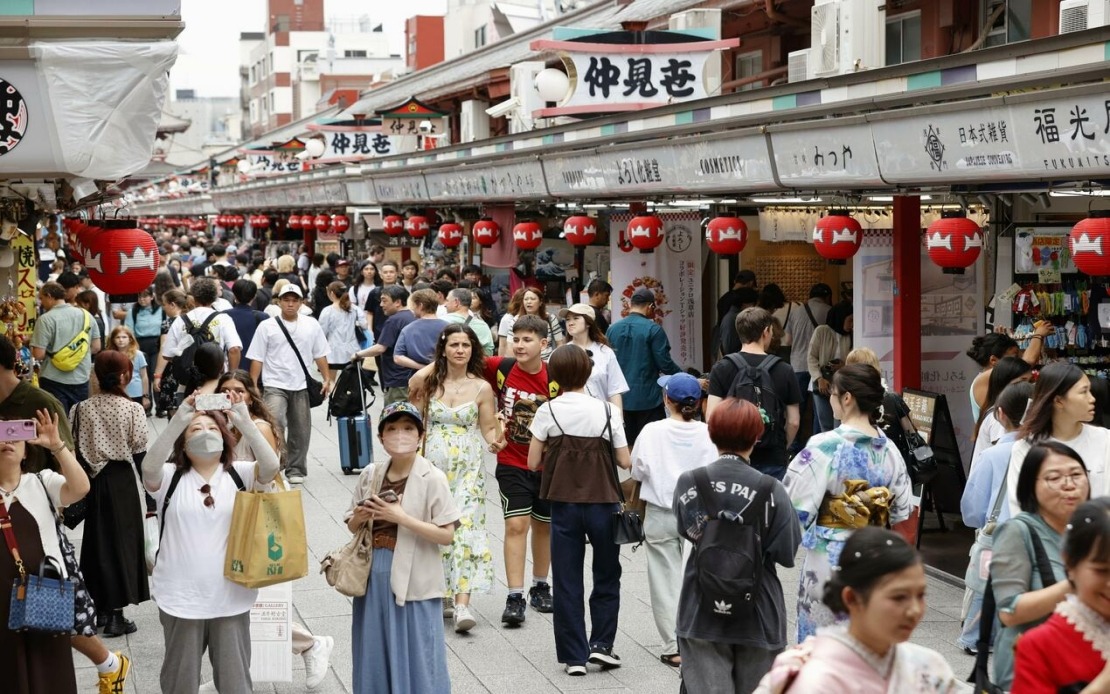
Japan's appetite for overseas summer holidays is cooling this year, with travel companies projecting a significant pullback in international trips as currency headwinds and spiralling travel costs reshape holiday behaviour among Japanese families and professionals. Major travel agency JTB Corp forecasts that departures during the lucrative July 15 to August 31 period will drop 8.8 per cent to reach 2.17 million trips, representing the first contraction since tourism rebounded after the pandemic in 2023. The reversal signals that the post-COVID travel boom is losing momentum, with currency weakness and inflation finally catching up with Japanese consumer confidence.
The culprit behind this retrenchment is multifaceted. The yen has persistently weakened against major currencies, making every dollar or euro spent abroad considerably more expensive for Japanese travellers. Adding to this burden are elevated fuel surcharges imposed by airlines in response to surging aviation fuel prices, themselves a consequence of geopolitical instability in West Asia. JTB's analysis indicates that average spending per person on overseas trips will actually climb 6.3 per cent to 323,000 yen—approximately 2,000 US dollars—precisely because travellers are paying more for less, purchasing fewer nights or cancelling trips altogether in some cases.
Yet beneath these macro-economic pressures lies a subtler shift in Japanese travel psychology. Rather than abandoning international travel entirely, Japanese holidaymakers are becoming discerning, gravitating toward destinations that offer the best value for their depleted purchasing power. This strategic reorientation has profound implications for tourism across Southeast Asia and Northeast Asia. South Korea has emerged as the clear winner, capturing 26.2 per cent of Japan's outbound leisure market, followed by Taiwan at 16.2 per cent. Both destinations benefit from proximity to Japan, which translates into shorter flights, lower fuel surcharges, and faster turnaround times. Moreover, both countries offer rich cultural attractions, culinary experiences, and shopping opportunities that appeal to Japanese tourists without the price premium of long-haul destinations.
Malaysia and other Southeast Asian nations should take particular note of this trend. While JTB's data does not explicitly break down Malaysia's share of Japanese arrivals, the broader pattern indicates that Japan is redirecting tourism investment toward nearby regional hubs rather than distant markets like Australia or North America. This presents both opportunity and challenge. On the opportunity side, Malaysia's established position as a tourism destination—enhanced by competitive airfares, favourable exchange rates for Japanese visitors, and diverse attractions—positions it to capture a share of this budget-conscious segment. On the challenge side, regional competition is intensifying as other Southeast Asian nations similarly benefit from Japan's shift toward proximate destinations.
China's experience this summer illustrates how political and economic factors can rapidly reshape travel flows. Visits to China are projected at only 10.1 per cent of Japan's outbound total, representing a halving of last year's traffic. The decline stems from lingering tensions between Tokyo and Beijing, particularly following Prime Minister Sanae Takaichi's remarks about Taiwan in November, which inflamed bilateral relations. This geopolitical friction demonstrates that currency and cost alone do not determine travel patterns; political perception and diplomatic relations wield considerable influence. Japanese consumers, it appears, are either consciously avoiding China due to the diplomatic chill or finding alternative nearby destinations more attractive given the current climate.
Domestically within Japan, the picture is equally revealing. Domestic tourism is expected to contract 4.4 per cent to 69 million trips, suggesting that Japanese households are tightening travel budgets across the board rather than merely shifting spending from international to domestic destinations. However, per-person spending on domestic trips is projected to increase 3.2 per cent to 48,500 yen, indicating that those who do travel domestically are willing to spend more per night. This bifurcation—fewer trips but higher per-trip expenditure—reflects what JTB characterises as growing polarisation in consumer behaviour. The company's official observed that the market now cleanly divides between cost-conscious travellers shortening their vacations or reducing frequency, and affluent consumers determined to take their desired trips regardless of price.
Geographically within Japan, the distribution of domestic summer travel reveals consumer preferences under economic pressure. Eastern Japan's Kanto region, which encompasses Tokyo and surrounding prefectures, remains the dominant domestic destination at 19.0 per cent of trips. The Kinki region in western Japan, anchored by Osaka and Kyoto, commands 14.9 per cent. Hokkaido in the north attracts 11.2 per cent. These figures suggest that Japanese holidaymakers are concentrating on established, familiar domestic circuits rather than exploring new regions, likely because travel to well-known destinations involves less planning expense and perceived risk in an uncertain economic environment.
The weakness of the yen deserves particular scrutiny for Malaysian stakeholders. A weak Japanese currency might seem detrimental to Japanese tourists' purchasing power, but it can paradoxically benefit destination countries that depend on these arrivals. When the yen weakens, Japanese tour operators and travel agencies often discount package tours to remain competitive, thereby stimulating volume. Additionally, weakened yen makes Malaysia more attractive relative to stronger-currency destinations, potentially diverting Japanese tourists from Australia, New Zealand, or North American options. Malaysia's ringgit, while volatile, has not dramatically strengthened against the yen, preserving the country's competitive advantage for Japanese budget travellers.
Fuel surcharges merit closer attention as a structural cost issue. International aviation has historically passed fuel costs directly to consumers through explicit surcharges, and the current spike in aviation fuel prices—driven by West Asia instability—is particularly visible on long-haul routes. Southeast Asian destinations benefit from shorter average flight distances from Japan, meaning fuel surcharges are proportionally lower. A Japanese traveller to Malaysia pays less fuel surcharge than one bound for Australia or the United States, creating a structural price advantage that should persist as long as geopolitical tensions sustain elevated energy prices.
JTB's projections are based on a June online survey of Japanese travellers planning trips of one night or longer, methodology that captures genuine booking intention rather than casual interest. This lends credibility to the forecasts, though online surveys can skew toward more affluent, digitally engaged respondents. The methodology also means that budget backpackers and very price-sensitive segments may be underrepresented, potentially understating the true appetite for extremely affordable destinations in Southeast Asia.
For Malaysia's tourism sector, this Japanese summer travel slowdown should prompt strategic reflection. The country has cultivated a reputation as a relatively affordable Southeast Asian destination with diverse attractions spanning beaches, urban experiences, and cultural heritage. As Japanese consumers become more price-conscious, Malaysia's value proposition strengthens if the nation can effectively communicate cost advantages and maintain visa accessibility. Regional tourism boards may wish to consider targeted promotions emphasising value-for-money experiences, longer-stay packages, and multi-destination itineraries that spread costs across several countries while keeping total expenditure competitive.
Looking beyond this summer, the broader pattern suggests that Japanese outbound tourism has entered a structurally different phase. The effusive post-pandemic rebound—during which pent-up demand drove travel to premium destinations—has given way to a more discerning, cost-conscious market. This is not necessarily bad news for Southeast Asia, which has always competed on value. Rather, it signals that the region must ensure it remains the most appealing value option, particularly as competing destinations in Northeast Asia intensify their marketing efforts. Japan's travel slowdown is not a signal of declining international interest; it is instead a recalibration toward destinations that offer the best experience per yen spent.

