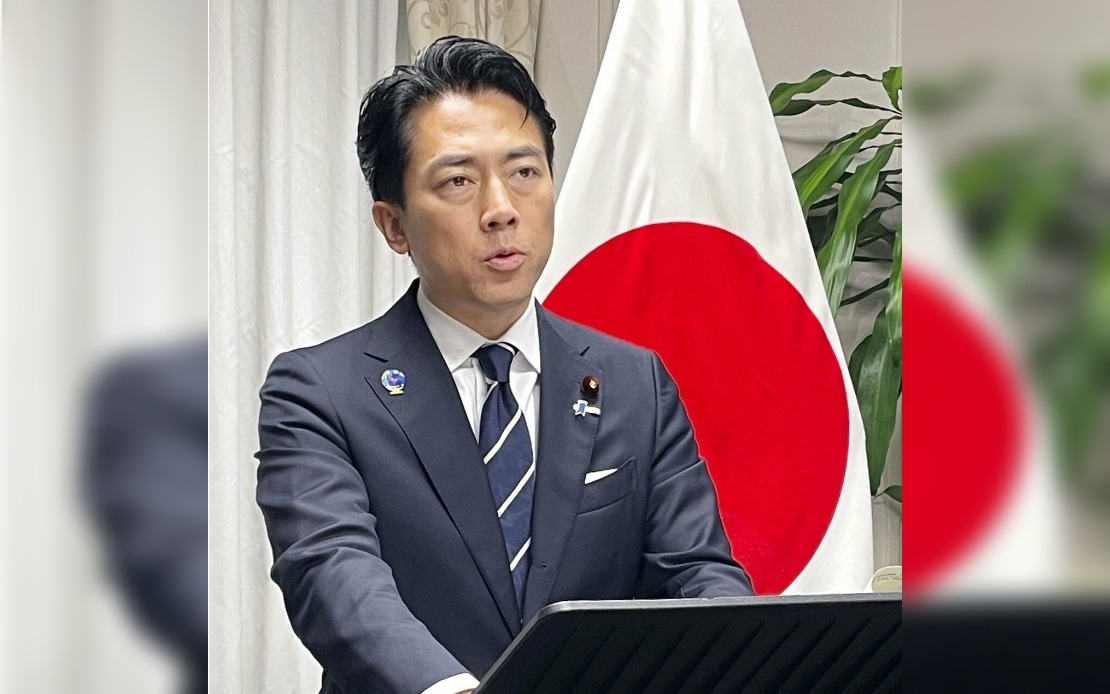
Japan's Defence Minister Shinjiro Koizumi has broken fresh ground in Japanese political discourse by publicly advocating for a comprehensive national conversation about nuclear weapons, marking a significant shift in how Tokyo addresses one of its most sensitive security questions. Speaking through an online programme released on Friday, Koizumi framed the discussion as urgent and necessary, particularly given the dramatically altered strategic landscape where traditional allies are reassessing their own nuclear postures. His comments arrive as Japan prepares to undertake a sweeping revision of three critical national security documents before year's end, suggesting the timing is no accident and that serious consideration of nuclear policy may already be underway within government circles.
The Defence Minister pointed to concrete examples of changing European attitudes toward nuclear weapons as evidence that Japan can no longer treat the subject as taboo. Finland's parliament passed legislation in June that would permit the stationing of nuclear weapons on its territory, a historic reversal for a nation that shares a lengthy border with Russia. Simultaneously, French President Emmanuel Macron announced in March that France intends to expand its nuclear warhead stockpile, representing a departure from decades of relative nuclear restraint among Western democracies. These developments, Koizumi suggested, demonstrate that major developed nations across the Atlantic are fundamentally reconsidering nuclear deterrence architecture in response to emerging threats and geopolitical realignment.
Japan's position on nuclear weapons has remained remarkably consistent for nearly eight decades, rooted in the trauma of being the only nation to endure atomic bombardment during wartime. The nation's three non-nuclear principles—neither producing, possessing, nor permitting nuclear weapons on Japanese soil—have become cornerstones of national identity and a source of moral authority in international disarmament discussions. Yet this principled stance exists alongside a security arrangement where Japan remains under the American nuclear umbrella, a contradiction that has generated increasing scrutiny as regional threats intensify and questions about American reliability grow sharper. The contradiction between maintaining symbolic non-nuclear status while depending on another nation's nuclear arsenal has long troubled strategists and policymakers.
Koizumi's intervention represents a calculated effort to shift the boundaries of acceptable political discourse, arguing that Japan cannot continue to exclude nuclear policy from serious discussion simply because the topic remains culturally sensitive. He contended that Japan's security environment has deteriorated significantly, requiring a corresponding evolution in how the nation approaches strategic thinking. By characterizing certain topics as effectively forbidden from debate, the Defence Minister suggested Japan weakens its capacity to respond adaptively to new challenges. This framing attempts to reposition nuclear weapons discussion not as a radical departure from Japanese values but rather as a mature, responsible engagement with contemporary security realities that demand flexibility.
The groundwork for Koizumi's latest remarks was laid by previous government figures willing to venture into this politically hazardous territory. In December of the previous year, an unnamed official involved in formulating security strategy under Prime Minister Sanae Takaichi's administration suggested Japan should consider acquiring nuclear weapons, triggering fierce objections from opposition lawmakers and diplomatic reproach from neighbouring countries and international partners. Former Defence Minister Itsunori Onodera similarly broke ranks late last year, proposing that Japan should reconsider and debate its non-nuclear principles in light of shifting global circumstances. These sequential statements suggest a coordinated effort within conservative circles to gradually expand the boundaries of permissible debate.
For Malaysian and Southeast Asian observers, Japan's evolving nuclear stance carries substantial implications for regional stability and the broader architecture of Asia-Pacific security. Japan's nuclear restraint has historically served as a reassuring signal to regional neighbours who harbour historical anxieties about Japanese militarism. Any shift toward nuclear weapons development would fundamentally alter the strategic balance in East Asia, potentially triggering reciprocal responses from other regional powers and undermining decades of careful diplomatic accommodation. Malaysia and other ASEAN nations have long appreciated Japan's role as a stabilising, non-nuclear power that serves as a credible counterweight to China without introducing the destabilising effects of nuclear weapons proliferation.
The broader context for this debate involves China's expanding military capabilities, North Korea's accelerating nuclear and ballistic missile programmes, and persistent uncertainty about American security commitments to regional allies. Japan faces a genuine strategic dilemma: its traditional security guarantor appears increasingly distracted by competing global priorities, while adversaries accumulate increasingly sophisticated military arsenals. Under these circumstances, Japanese defence planners understandably explore all available options, including nuclear weapons development, even if such exploration remains politically fraught and diplomatically complex. The question is not whether Japan will acquire nuclear weapons imminently, but whether sustained debate will normalise the concept and gradually erode political and cultural resistance.
Opposition to nuclear weapons in Japan remains deeply rooted in civil society, survivor communities, and political movements that have maintained strong institutional presence for generations. Any serious government effort to reverse non-nuclear principles would encounter significant domestic resistance and could fracture the broad consensus that has characterised Japanese security policy. Moreover, Japan's commitment to the Non-Proliferation Treaty and broader international disarmament frameworks carries substantial weight both domestically and internationally. Abruptly abandoning these principles could isolate Japan diplomatically and undermine its standing as a responsible stakeholder in the international system.
Koizumi's call for debate can be interpreted as a trial balloon designed to gauge public and international reactions before any concrete policy shift. By framing the discussion as theoretical and forward-thinking rather than announcing actual policy intentions, the Defence Minister creates space for substantive conversation without immediately triggering the full force of opposition. This measured approach reflects sophisticated political calculation: permitting debate without committing to particular outcomes allows policymakers to assess feasibility and international response while maintaining plausible deniability about ultimate intentions. The next several months, as Japan revises its security documents and monitors regional developments, will prove crucial in determining whether this discourse translates into actionable policy or remains confined to intellectual discussion.
For Southeast Asia, close monitoring of Japan's nuclear trajectory becomes essential for long-term regional planning. Japan's potential nuclear status would constitute one of the most significant geopolitical developments in post-Cold War Asia, reshaping alliance structures, arms control frameworks, and strategic calculations across the region. Malaysia and ASEAN nations should engage carefully with Tokyo through both multilateral and bilateral channels, expressing clearly the regional preference for continued Japanese nuclear restraint while demonstrating understanding of legitimate security concerns. Simultaneously, regional powers should accelerate efforts to strengthen conventional deterrence mechanisms and non-proliferation frameworks that might reduce pressure on Japan to pursue nuclear weapons as its sole strategic solution to mounting security challenges.

