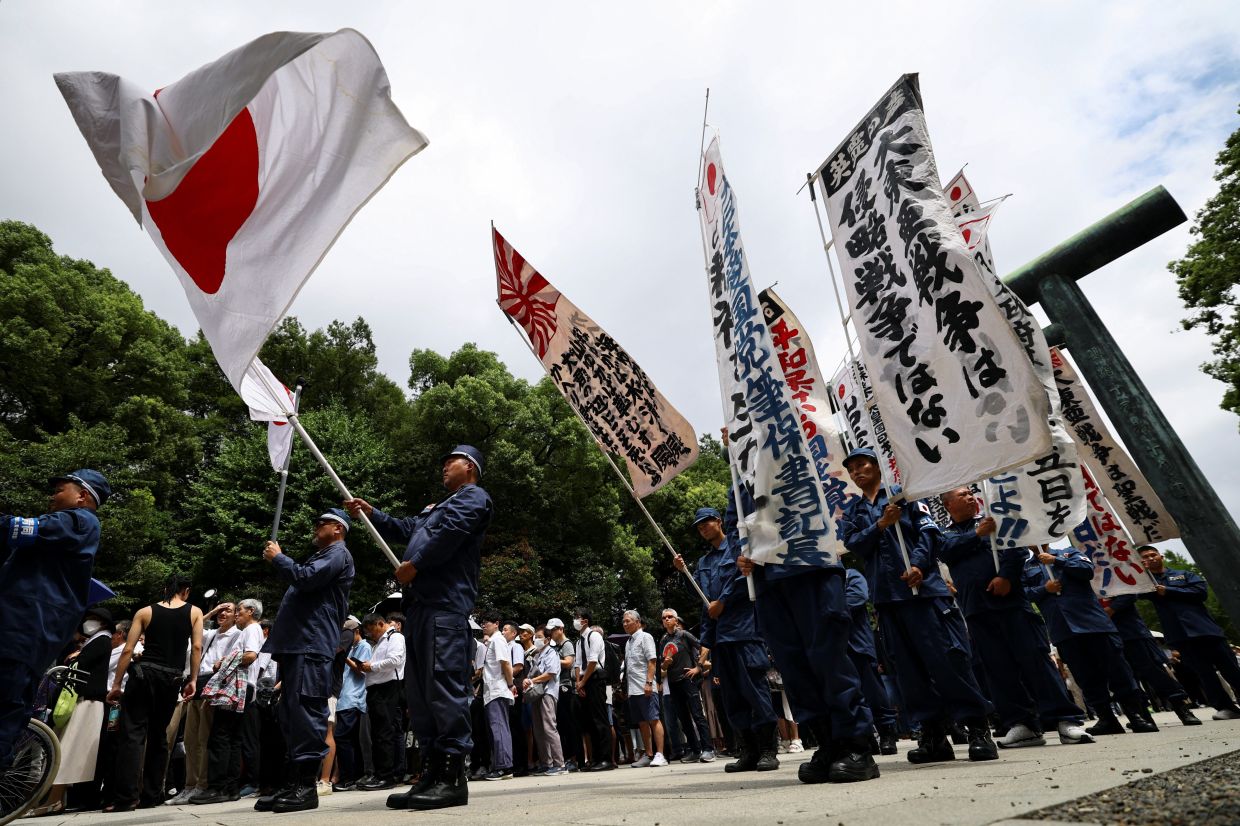
Japan's Defence Minister Shinjiro Koizumi paid respects at the Yasukuni shrine on Saturday, marking the 81st anniversary of the country's World War II surrender, in a move that underscores the delicate balance Tokyo continues to strike between honouring its war dead and managing fraught relations with neighbouring countries. His visit occurred on a day when crowds traditionally flock to the site, though notably absent was Prime Minister Sanae Takaichi, whose decision to stay away signals a calculated diplomatic approach despite her historical pattern of attending the shrine before assuming office in October.
The Yasukuni shrine has been a persistent flashpoint in regional diplomacy for decades. Dedicated to 2.5 million war dead, the site honours both ordinary soldiers and 14 Class-A war criminals convicted for their roles in Imperial Japan's military conquests and atrocities across Asia during the 1930s and 1940s. For China, South Korea and other regional neighbours, politician visits to Yasukuni carry symbolic weight, representing what they view as insufficient Japanese contrition for wartime conduct. Previous visits by senior figures, particularly Shinzo Abe's December 2013 pilgrimage when he was prime minister, have triggered diplomatic crises and even rare criticism from the United States, Japan's closest security ally.
Takaichi's decision to remain away from the shrine this year despite her previous attendance marks a notable shift in her conduct since entering the prime minister's office. She did, however, follow established precedent by sending an offering to the shrine, maintaining a symbolic gesture of respect without the political complications of a physical presence. This approach echoes similar offerings she made during spring festivities earlier in the year, suggesting an attempt to balance reverence for war dead with diplomatic sensitivity. Her restraint contrasts with the approach taken by her mentor Abe, who explicitly visited in 2013, fully aware of the international firestorm such an action would provoke.
Koizumi's attendance as defence minister carries particular significance given his portfolio and his longstanding personal practice of visiting the shrine. While defence ministers have visited Yasukuni in previous years—most recently Minoru Kihara in 2024—the current geopolitical environment makes the symbolic impact of such visits more pronounced. The defence minister's role as Japan's chief military administrator means his actions are scrutinised through both domestic and international lenses, with the visit potentially perceived as part of broader militarisation efforts that Beijing and other capitals have begun to view with alarm.
The timing of Koizumi's visit coincides with an escalating pattern of Japanese military expansion and strategic repositioning. Takaichi has aggressively accelerated defence spending and capability development as Japan gradually sheds the pacifist constraints that have defined its post-war constitution and security posture. In November, Takaichi sparked considerable controversy when she suggested Japan might intervene militarily in any armed conflict over Taiwan, a statement that alarmed Beijing, which considers the self-governing island of over 23 million people as part of its territory. China subsequently warned its citizens against travelling to Japan and imposed selective trade restrictions, while simultaneously intensifying military patrols around disputed maritime territories.
China's response to these developments has been increasingly vocal and pointed. Senior Colonel Chen Xi, spokesperson for the Chinese defence ministry, issued a formal warning against what he characterised as Japanese "neo-militarism," urging Tokyo to "earnestly reflect on itself, recognise and atone for its crimes, adhere to the post-war international order, and stop its dangerous acts of remilitarisation." This statement, delivered just before the anniversary, reflects Beijing's broader concern that Japan is abandoning the security constraints imposed after 1945 and potentially becoming a more assertive military actor in a region where historical grievances remain unresolved. Russia similarly joined in criticism, with Chinese and Russian ambassadors to Japan issuing a joint statement commemorating their countries' World War II sacrifices, a coordinated diplomatic message highlighting great power concerns about Japanese strategic trajectory.
These regional anxieties have been further inflamed by separate developments in the disputed territories. On Thursday, Russian President Vladimir Putin visited the Kuril Islands in the Russian far east—the first time a sitting Russian president had done so—a move that Japan forcefully protested, as it also claims sovereignty over these territories. The convergence of these events creates a complex strategic picture in which historical grievances, territorial disputes and contemporary military capabilities intersect, making gestures at sites like Yasukuni freighted with contemporary geopolitical meaning beyond their historical significance.
Despite these tensions, some positive indicators of regional relationship management have emerged. Relations between Japan and South Korea have shown modest improvement in recent years, with Takaichi and South Korean President Lee Jae Myung engaging in informal cultural exchanges—famously jamming on drums together in January—while Koizumi participated in ping-pong matches with his South Korean counterpart. These people-to-people and leader-level interactions suggest both countries recognise the value of preventing historical disputes from entirely dominating bilateral ties, though the symbolic weight of shrine visits continues to complicate such efforts.
The Yasukuni shrine itself took the unusual step this week of appealing to visitors to refrain from wearing military-style uniforms during Saturday's observances, seeking to prevent the gathering from becoming a focal point for nationalist imagery that might further inflame international sensitivities. While framing the request as guidance rather than enforcement—the shrine stated it would merely "provide guidance" to those "unaware" of the guidelines—the move reflects awareness that the visual presentation of such events carries diplomatic implications. An AFP reporter estimated that approximately 20 to 30 visitors nonetheless appeared in military-style clothing, suggesting the appeal met with limited compliance.
For Southeast Asian observers, these developments carry particular significance. The region has long sought to maintain strategic balance and avoid becoming caught between great power competition, yet Japanese military expansion and Chinese concerns about it inevitably affect regional security calculations. Malaysia and other ASEAN nations have vested interests in maintaining stable relationships with both Tokyo and Beijing while preserving freedom of navigation and territorial integrity in shared waters. The trajectories visible in Japanese defence policy, Chinese assertiveness and the symbolic politics surrounding sites like Yasukuni all influence the strategic environment in which Southeast Asian nations must navigate.
Takaichi's decision to avoid the shrine while allowing Koizumi's visit to proceed appears to represent a tactical compromise—honouring war dead through indirect means while avoiding the international backlash that would accompany a prime ministerial attendance. However, such calibration may offer only limited diplomatic benefit if Japan's broader military trajectory continues to accelerate. The fundamental question animating these disputes remains unresolved: whether and how Japan can modernise its defence capabilities and assert its security interests while simultaneously managing the historical grievances that continue to shape how neighbours perceive Japanese actions. The Yasukuni shrine, in this sense, serves not merely as a memorial site but as a barometer of Japan's evolving relationship with its own history and its regional role.

