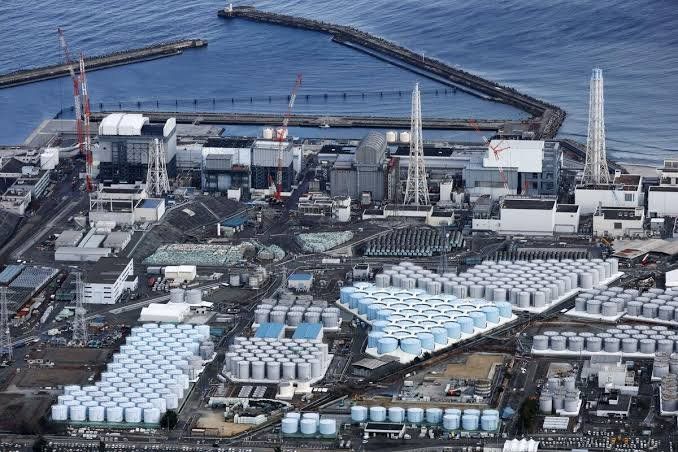
Japan's Fukushima Daiichi nuclear facility has now completed three full years of releasing treated radioactive water into the Pacific Ocean, marking a significant milestone in the country's efforts to manage the aftermath of the 2011 catastrophe. Tokyo Electric Power Company Holdings Inc., which operates the damaged plant, has discharged a cumulative 172,700 tonnes of processed water across 22 separate release operations since August 2023, according to official data released this week. The decommissioning programme remains one of the world's most complex industrial undertakings, requiring careful coordination between the utility, Japan's regulatory authorities, and the International Atomic Energy Agency to ensure environmental and public safety standards are consistently met.
The storage challenge at the Fukushima site has proven formidable since the earthquake and tsunami of 2011 devastated the plant and triggered a nuclear emergency. Each day, approximately 60 tonnes of radioactive wastewater continues to accumulate at the facility as a byproduct of cooling systems applied to the melted reactor fuel remaining within the damaged reactors. Over more than a decade, this daily production has resulted in the accumulation of roughly 1.24 million tonnes of water stored across approximately 1,000 large tanks scattered across the sprawling industrial complex. The decision to release treated water rather than indefinitely store it on-site represents a pragmatic approach to freeing up physical space and infrastructure capacity, allowing the operator to transition stored water into other essential decommissioning activities.
TEPCO's treatment process subjects the accumulated wastewater to advanced liquid processing systems designed to remove radioactive elements, with tritium representing the primary remaining radioactive isotope that cannot be practically eliminated. Following purification, the water undergoes further dilution with seawater until its tritium concentration falls below one-fortieth of the maximum threshold established under Japan's domestic nuclear safety regulations. This stringent dilution requirement ensures that the released water meets international standards and minimises potential environmental impact, though the process has nonetheless generated considerable international controversy and economic repercussions for affected industries.
Through these three years of operations, TEPCO has successfully reduced its on-site tank storage volume by approximately 7.6 per cent, with 17 of the original thousand storage tanks now dismantled after being emptied and decontaminated. This steady reduction in tank inventory demonstrates the operational feasibility of the discharge programme, though the utility maintains an ambitious timeline to complete all releases by 2051, coinciding with the anticipated full decommissioning of the plant. The company has adjusted its operational protocols to enable continuous transfers between measurement tanks and release systems, allowing for increasingly frequent discharge cycles. Initial operations involved four releases during Japan's fiscal 2023, followed by seven releases in each of fiscal years 2024 and 2025, with eight releases planned for fiscal 2026, of which four have already been executed.
International monitoring and oversight provide additional assurance regarding water safety. The International Atomic Energy Agency, alongside Japan's government regulatory bodies and TEPCO's own quality control systems, continuously monitors tritium concentrations in nearby marine waters and in seafood samples harvested from surrounding fishing grounds. To date, no abnormal tritium levels have been detected beyond the immediate discharge area, suggesting that dilution processes and ocean dispersion mechanisms are functioning as anticipated by scientific modelling. This independent verification framework has been crucial for maintaining credibility with international observers, though public concerns persist in communities dependent on fisheries and aquaculture.
The Chinese government's response to the releases has profoundly impacted regional trade dynamics and diplomatic relations. Immediately after discharges commenced in August 2023, China implemented a comprehensive ban on all Japanese seafood imports, effectively eliminating access to what had historically been Japan's most valuable seafood export market. Although Beijing indicated in June 2024 that it would partially relax restrictions, permitting imports from all Japanese prefectures except ten including Fukushima itself, the practical effect has been negligible. Chinese authorities have effectively maintained the import suspension amid escalating diplomatic tensions stemming from Prime Minister Sanae Takaichi's public statements in November suggesting Japan's potential involvement in a Taiwan conflict, demonstrating how nuclear safety concerns have become entangled with broader geopolitical disputes.
Beyond China, trade barriers have extended to other significant markets. Russia maintains import restrictions on Japanese seafood, as do several other countries and territories, collectively representing substantial losses for Japan's fishing industry and related businesses. The economic consequences have fallen particularly heavily on exporters of high-value items such as scallops and sea cucumbers, which commanded premium prices in Asian markets before the restrictions took effect. These trade impediments have created genuine hardship for coastal communities reliant on seafood export revenues, even though scientific evidence supports the safety of products from unrestricted regions.
TEPCO has acknowledged its obligation to compensate businesses suffering losses attributable to the water releases and associated trade disruptions. As of early August, the company had processed approximately 1,100 compensation claims totalling roughly 92.8 billion yen, equivalent to approximately US$585 million at current exchange rates. The claims predominantly involve fishing and aquaculture operations unable to access their traditional export markets, with scallop and sea cucumber producers particularly prominent among claimants. This compensation mechanism, while substantial, has not fully resolved community concerns regarding the long-term viability of regional industries or the precedent of corporate responsibility for externalities imposed by government policy decisions.
Akira Ono, TEPCO's chief decommissioning officer, addressed these tensions during a recent press conference, emphasising the company's commitment to conducting releases safely whilst simultaneously providing transparent public information and appropriate financial remediation. His statements reflect the delicate balancing act required of the utility, which must simultaneously satisfy regulatory requirements, maintain scientific credibility, support affected communities, and navigate complex international relations. The decommissioning programme will require sustained focus and resources over the coming decades, with the 2051 completion target representing a crucial deadline for Japan's energy sector and nuclear policy. For Malaysian observers and Southeast Asian policymakers, the Fukushima experience offers instructive lessons regarding the long-term costs of nuclear accidents, the necessity for robust international monitoring frameworks, and the intricate relationship between technical safety measures and public acceptance of controversial industrial operations.

