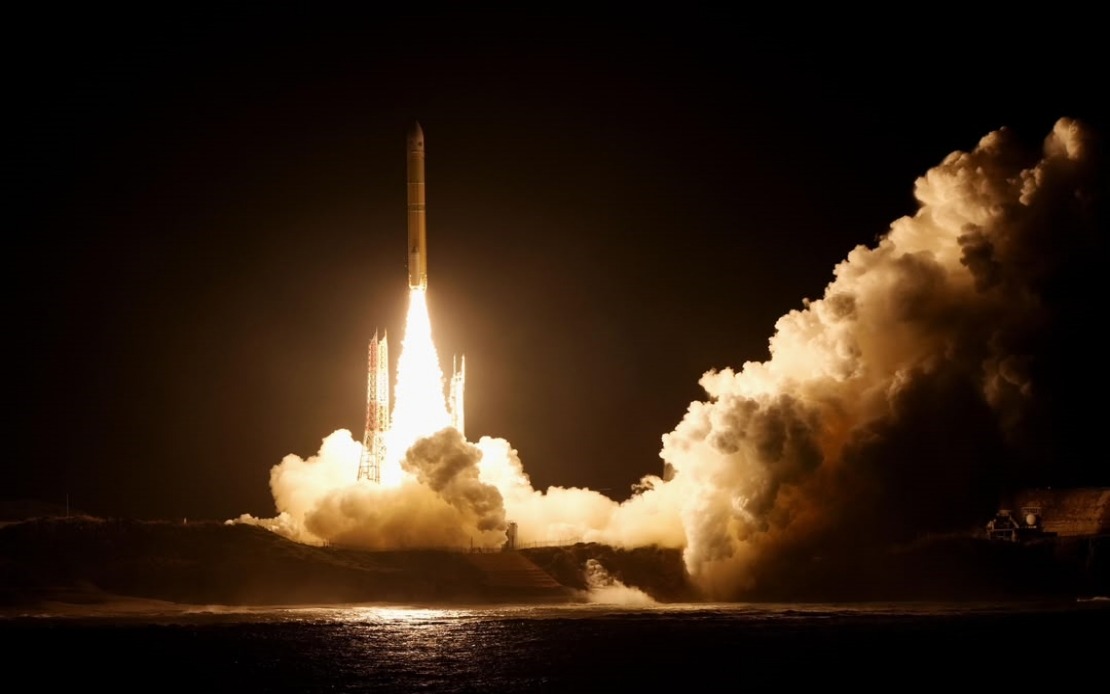
Japan's quest to establish an independent space infrastructure reached an important waypoint on Tuesday when the Japan Aerospace Exploration Agency successfully lifted an H3 rocket into the skies above Tanegashima, carrying with it the nation's seventh Quasi-Zenith positioning satellite. The launch from the Tanegashima Space Centre, situated on a small island in southwestern Japan, marked the second consecutive successful deployment of the H3 rocket system and represented a crucial recovery from a disappointing failure that had disrupted the programme's momentum the previous year.
The satellite, designated Michibiki No. 7, will join an expanding constellation designed to provide precise location information independent of foreign infrastructure. This positioning system already operates five functional satellites and forms a critical pillar of Japan's broader strategy to maintain technological sovereignty in space operations. The ability to generate and control such positioning data independently holds strategic significance for a nation that faces geographic vulnerabilities and recognises the importance of technological self-reliance in an increasingly interconnected world.
Weather complications delayed this particular launch sequence by two days. The mission, originally scheduled for Friday, was first pushed back to Monday as a passing typhoon threatened the launch site, then postponed once more due to adverse weather conditions in the immediate vicinity of the space centre. Such delays, though frustrating for programme managers, reflect the operational rigour required when managing complex space infrastructure from island-based facilities vulnerable to seasonal weather patterns.
The previous December presented a darker chapter in the H3 narrative. That launch attempt, involving the Michibiki No. 5 satellite, ended in failure when the rocket system proved unable to successfully inject its payload into the intended orbit. This setback reverberated through Japan's space timeline, forcing a postponement of the No. 7 satellite launch from its originally planned February window and triggering intensive technical investigations across the JAXA organisation. The failure raised questions about the reliability of Japan's new flagship system precisely when the nation sought to demonstrate advanced capabilities.
JAXA's response to that December difficulty proved relatively swift and effective. Engineers identified and remedied the underlying technical issues, then validated their corrections through a successful June launch that demonstrated the H3's capability by placing multiple small satellites into orbit. This mission success provided crucial evidence that the December failure represented a surmountable technical challenge rather than a fundamental design flaw, rebuilding confidence among stakeholders and the broader Japanese public in the new system's viability.
The H3 rocket itself carries significant symbolic weight within Japan's space programme. It succeeds the highly celebrated H2A rocket family, which maintained an impressive reliability record across more than twenty years of operation and became synonymous with Japanese launch excellence. That legacy created substantial expectations for the H3, and early difficulties threatened to undermine the programme's standing. Tuesday's success represents progress toward establishing the H3 as a worthy successor capable of sustaining Japan's independent access to space.
The complete Quasi-Zenith system envisioned by Japanese planners will ultimately comprise seven satellites operating in concert to deliver comprehensive positioning coverage without reliance on external systems. Currently, five of these satellites are operational and providing positioning services, primarily supporting smartphone applications and vehicle navigation systems that Japanese consumers increasingly depend upon. Reaching the full constellation of seven represents a concrete goal with meaningful deadlines and technical milestones.
For Malaysia and other Southeast Asian nations, Japan's progress in space technology carries indirect but significant implications. A Japan confident in its independent space capabilities demonstrates the broader region's technological potential and may encourage investment in regional space infrastructure development. Moreover, as geopolitical competition intensifies in the space domain, a Japan with proven independent positioning capabilities influences regional security calculations and technology partnerships throughout Southeast Asia.
The mixed track record of the H3 programme, despite recent successes, underscores the inherent challenges of developing new space systems. Even mature space-faring nations experience setbacks; the critical variable is whether organisations can learn from failures, implement corrections, and demonstrate recovery through sustained success. Tuesday's launch and June's preceding success suggest JAXA has navigated this learning curve effectively, though the programme will require continued successful missions to fully establish the H3's reputation and operational credibility.
Looking forward, Japan's space ambitions extend well beyond positioning satellites. The H3 programme represents just one component of a broader Japanese strategy encompassing lunar exploration, asteroid missions, and enhanced launch capabilities. As the nation pursues these ambitious goals, the performance trajectory of the H3 rocket will significantly influence the feasibility and timeline of subsequent programmes. The success achieved this week provides momentum and institutional confidence that will prove valuable for managing the substantial technical challenges ahead in Japan's expanding space portfolio.

