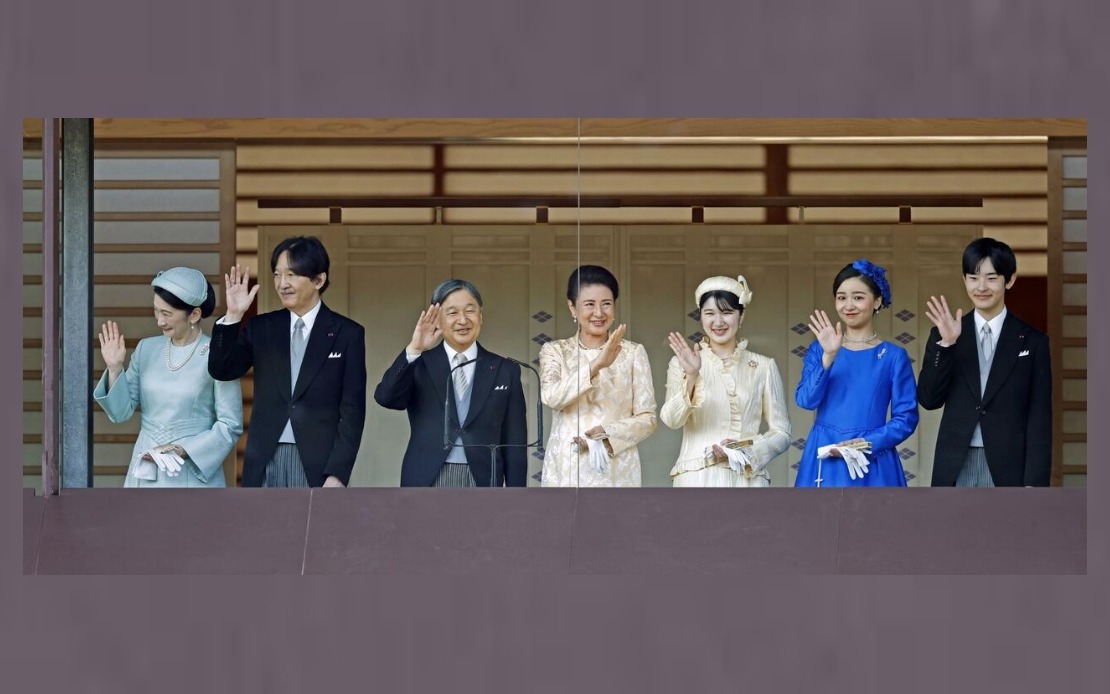
Japan's government has enacted a sweeping overhaul of the Imperial House Law aimed at ensuring the long-term viability of the world's oldest hereditary monarchy, yet the landmark change has exposed fault lines between official policy and public expectations. The revision, passed by parliament on Friday, permits male descendants aged 15 and older from eleven former imperial branch families to be adopted into the imperial family, a measure designed to reverse the declining number of royal members currently standing at just 16. Despite these provisions, the reform has left those within the Imperial Household Agency grappling with unfamiliar terrain, while ordinary Japanese remain divided about whether the government has taken the right approach to succession planning.
The impetus for reform reflects persistent demographic pressures within the imperial institution. Prime Minister Sanae Takaichi, whose conservative administration prioritizes the monarchy's stability, has positioned the adoption provision as essential to guaranteeing a sufficient pool of imperial family members for future generations. Agency officials acknowledge the logic of this argument, recognizing that the revised law creates pathways previously unavailable. An Imperial Household Agency spokesperson noted that the decision now provides a concrete mechanism to maintain imperial numbers, though the same official cautioned that should adoptees eventually join the family, they would need comprehensive support to navigate their responsibilities and earn public respect. This measured endorsement belies deeper anxieties about translating legislative intent into institutional practice.
Practical skepticism about the law's effectiveness has emerged even among those most directly affected. Asahiro Kuni, an 81-year-old member of the Kuninomiya branch family that surrendered royal status in 1947, expressed doubt that individuals would voluntarily enter the imperial system, describing such a prospect as unrealistic. His reservations underscore a critical gap between the policy architects' assumptions and the lived experiences of those within the eligible lineages. The question of whether young men from these families would accept the substantial restrictions and obligations accompanying imperial membership remains largely unanswered, leaving the law's practical significance uncertain.
Concerns about cultural and institutional continuity have also surfaced within the palace bureaucracy. Senior agency officials worry that adoptees may lack deep familiarity with the particular demands of Japan's symbolic imperial system, as defined by the postwar constitution. The emperor functions not as a political actor but as a national symbol, a role requiring both constitutional understanding and emotional attunement to public sentiment. Recent emperors, including the current Emperor Naruhito and his predecessor, have emphasized this symbolic function through extensive public engagement, including visits to disaster-affected regions and overseas diplomatic missions. Whether individuals from outside the core imperial line could authentically embody these expectations represents a legitimate institutional anxiety rather than mere bureaucratic conservatism.
The reform's treatment of female succession has provoked the strongest criticism, both within government circles and among younger Japanese citizens. Under the revised law, women including Princess Aiko, the only daughter of Emperor Naruhito, remain ineligible to accede to the throne. However, princesses who marry commoners may now choose whether to retain their royal status—a provision that sounds permissive but places an extraordinary burden on individual women. Five unmarried female imperial family members, including Princess Aiko and Princess Kako, daughter of Crown Prince Fumihito, now face this choice. A senior Imperial Household Agency official candidly described the decision as a harsh one, acknowledging that contemporary circumstances and public expectations make departure from the imperial family extraordinarily difficult. The new policy, which leaves spouses and children of marrying princesses as commoners, creates an additional complication: mixed family status that one aide characterized as potentially strange and dysfunctional.
The government's implicit rejection of female succession has become unmistakable despite official euphemism. One imperial aide directly interpreted the reform as designed to foreclose the possibility of female emperors or succession through the maternal line, a reading that reflects the administration's conservative ideology rather than public preference. Opinion polling consistently demonstrates that substantial majorities of Japanese support the prospect of a female emperor, yet policymakers have crafted legislation that deliberately circumvents this possibility. This disconnect between public sentiment and elite decision-making has not gone unnoticed, particularly among younger generations who view the imperial succession as a live question rather than a settled constitutional matter.
Public response to the reform reveals both cautious support and principled objection. Shinichi Kokubun, a 76-year-old who met Emperor Naruhito and Empress Masako during their April visit to Fukushima Prefecture, expressed conditional acceptance, arguing that if adoptees demonstrated the emperor's commitment to serving the people, public concerns would likely dissipate. This perspective captures a pragmatic strand of Japanese public opinion that evaluates imperial legitimacy through performance and dedication. Yet younger citizens, particularly those near Princess Aiko's age, have criticized both the substance of the law and the process by which it was adopted. Miyu Nakao, a 22-year-old from Hiroshima, pointed to strong polling support for female succession while denouncing the government's unilateral decision-making as exclusionary of public voice.
The information deficit surrounding the reform compounds public dissatisfaction. A 20-year-old college student from Osaka acknowledged that neither he nor his peers possessed familiarity with the Imperial House Law, and criticized the government for failing to conduct adequate public outreach or facilitate democratic deliberation about such a significant constitutional matter. This testimony suggests that the reform, despite its historical importance, has proceeded without cultivating public understanding or buy-in. For a constitutional monarchy whose legitimacy ultimately depends on popular acceptance, such a gap between elite action and public engagement represents a strategic vulnerability.
For Malaysia and Southeast Asia, Japan's imperial succession debate carries indirect but meaningful implications. As a region containing several constitutional monarchies, including Malaysia itself, the Japanese experience illustrates the tensions between traditional succession norms and contemporary democratic expectations. The way established democracies negotiate questions of female succession and institutional adaptation shapes regional conversations about monarchy's future role. Japan's choice to prioritize male succession through adoption rather than female succession reveals how deeply embedded patriarchal assumptions remain even within politically sophisticated societies. Southeast Asian monarchies, which face their own succession questions and public expectations, may observe both Japan's legislative pathway and the accompanying public dissatisfaction as they contemplate their own institutional futures.

