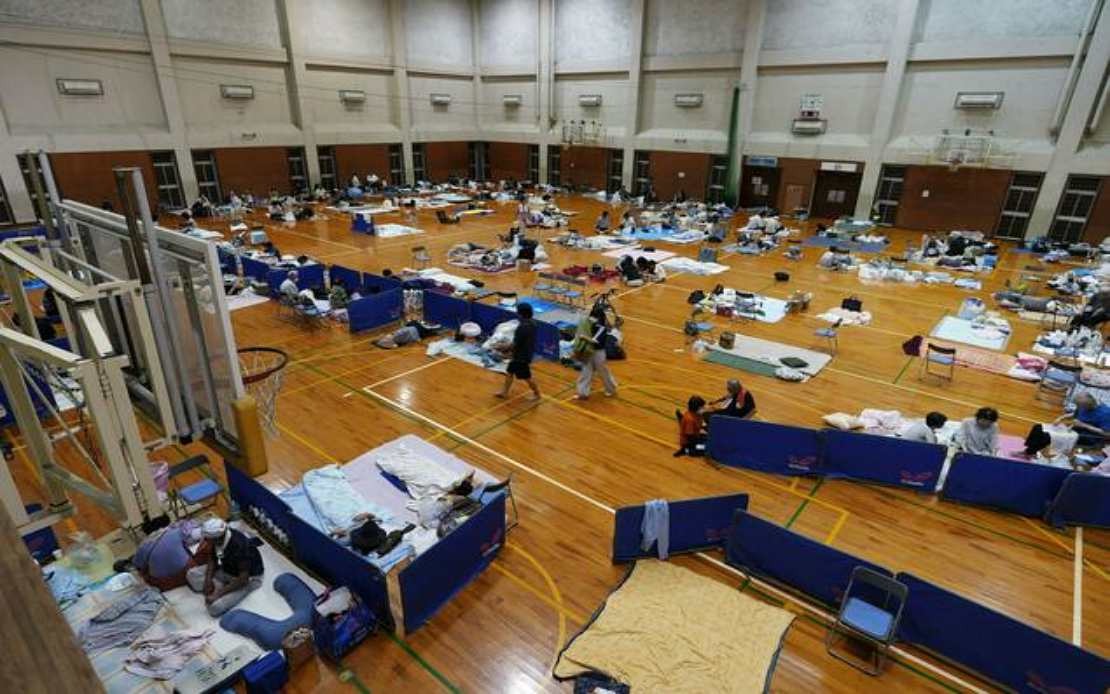
Seven days after a powerful magnitude 7.1 earthquake devastated Kumamoto Prefecture in southwestern Japan, the crisis continues to unfold with more than 8,000 residents still living in makeshift evacuation shelters. The disaster that struck around 4:27 p.m. on July 28 has left an enormous humanitarian challenge in its wake, with authorities scrambling to provide basic services to displaced populations even as extreme heat compounds the suffering in shelters across the prefecture.
The scale of the destruction remains staggering. Approximately 12,000 buildings sustained damage in the initial tremor, with the impact concentrated across multiple municipalities. The human toll stands at 38 confirmed deaths, a figure that includes seven fatalities from an explosion at an Aeon shopping mall in Kashima and nine deaths at a Nippon Paper Industries facility in Yatsushiro where a chimney collapsed during the quake. Emergency responders continue to document additional casualties attributed to secondary effects of the disaster, including one confirmed death from heatstroke among people seeking refuge in their vehicles.
The displacement crisis extends far beyond those sheltering in official facilities. Currently, roughly 150 evacuation centres across the prefecture are operating at capacity, but authorities acknowledge that an unknown number of people are sleeping in parked cars throughout affected areas. This informal sheltering arrangement poses acute health risks, particularly given the unseasonable weather patterns gripping the region. On Monday alone, most areas recorded daytime temperatures exceeding 35 degrees Celsius, with several locations reaching 40 degrees Celsius for the first time in recorded history. The combination of heat exposure, limited access to water, and confined shelter conditions creates life-threatening conditions that officials have flagged as requiring urgent intervention.
Water supply remains perhaps the most immediate crisis facing evacuees and residents alike. Approximately 45,000 households across five municipalities continue to experience partial or complete water outages. The lack of access to clean water poses cascading problems—residents cannot adequately bathe, flush toilets, or maintain basic sanitation standards necessary to prevent disease transmission. In response, water distribution trucks have been deployed from across Japan to serve affected communities, while authorities work to expand portable toilet facilities at shelter sites. Spot coolers have been installed in evacuation centres as an emergency measure to prevent additional heat-related medical emergencies.
Prime Minister Sanae Takaichi visited one of the evacuation shelters on Monday to assess conditions firsthand, emerging from the visit with a declaration that carries significant financial implications. The government has formally designated the Kumamoto earthquake as a "disaster of extreme severity," a classification that unlocks substantially higher subsidy rates for local governments pursuing reconstruction projects. This designation recognises the scale of damage and accelerates access to federal resources that would otherwise be unavailable under standard disaster protocols.
Plans for transitioning evacuees from emergency shelters to more stable accommodation are already underway. Applications for secondary evacuation to hotels have commenced, providing at least temporary relief for those able to access such arrangements. More significantly, construction of temporary housing has begun in the hardest-hit municipalities of Uki and Hikawa, offering hope for residents facing extended displacement. However, these initiatives take time to implement at scale, leaving many thousands in precarious shelter situations during what meteorologists expect to remain dangerously hot conditions.
The earthquake's impact extends beyond Japan's borders, prompting regional solidarity that underscores Asia's interconnected humanitarian networks. Kaohsiung, a major city in southern Taiwan, learned of critical shortages at Miyabien, a nursing home in Yatsushiro that serves vulnerable elderly residents. The Taiwanese municipality organised the delivery of essential care supplies to address acute gaps in basic necessities. Midori Tagata, the facility's director, acknowledged the donation with particular emphasis on how widespread water outages throughout Yatsushiro have compromised the ability to maintain proper hygiene standards for residents—a concern that resonates across the entire region as similar facilities struggle with identical challenges.
Transportation networks remain severely disrupted by the earthquake, affecting both commercial activity and relief operations. The Kyushu Shinkansen Line, a critical bullet train connection, remains suspended between Kumamoto and Kagoshima-chuo stations, severing one of Japan's busiest rail corridors. Similarly, the Kyushu Expressway is closed to general traffic between the Matsubase and Ebino exits, forcing significant detours for vehicles attempting to traverse the affected area. These closures complicate both evacuation logistics and the delivery of supplies to isolated communities.
For Malaysian and Southeast Asian observers, the Kumamoto situation illustrates both the immediate challenges natural disasters pose and the longer-term reconstruction complexities that follow. Japan's institutional capacity to respond—despite significant disruption—demonstrates the importance of pre-positioned disaster response frameworks, trained personnel, and inter-regional cooperation mechanisms. The region's vulnerability to seismic activity mirrors risks present throughout Southeast Asia, where several nations sit along active fault lines and face similar exposure to earthquake hazards. The coordination between Japanese authorities and international partners like Taiwan further demonstrates how cross-border humanitarian response increasingly characterises disaster management in Asia, a model particularly relevant as nations throughout the region strengthen disaster preparedness protocols.
The coming weeks will prove critical in determining whether authorities can stabilize conditions and prevent the health crisis from worsening. With temperatures expected to remain elevated and water restoration efforts ongoing, evacuees face continued hardship even as reconstruction planning accelerates. The formal disaster declaration should facilitate faster resource deployment and reduce bureaucratic obstacles that typically slow recovery operations. However, the reality facing the 8,000-plus people in shelters remains grim—an indefinite period in crowded, uncomfortable facilities separated from their homes and livelihoods, awaiting the slow machinery of reconstruction to restore what the earthquake destroyed.

