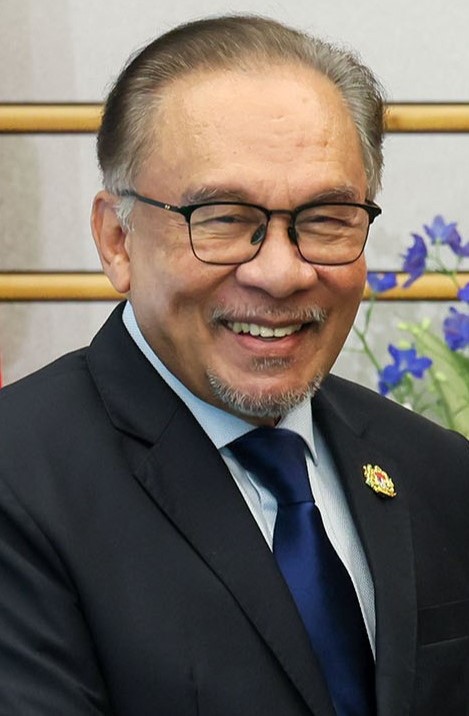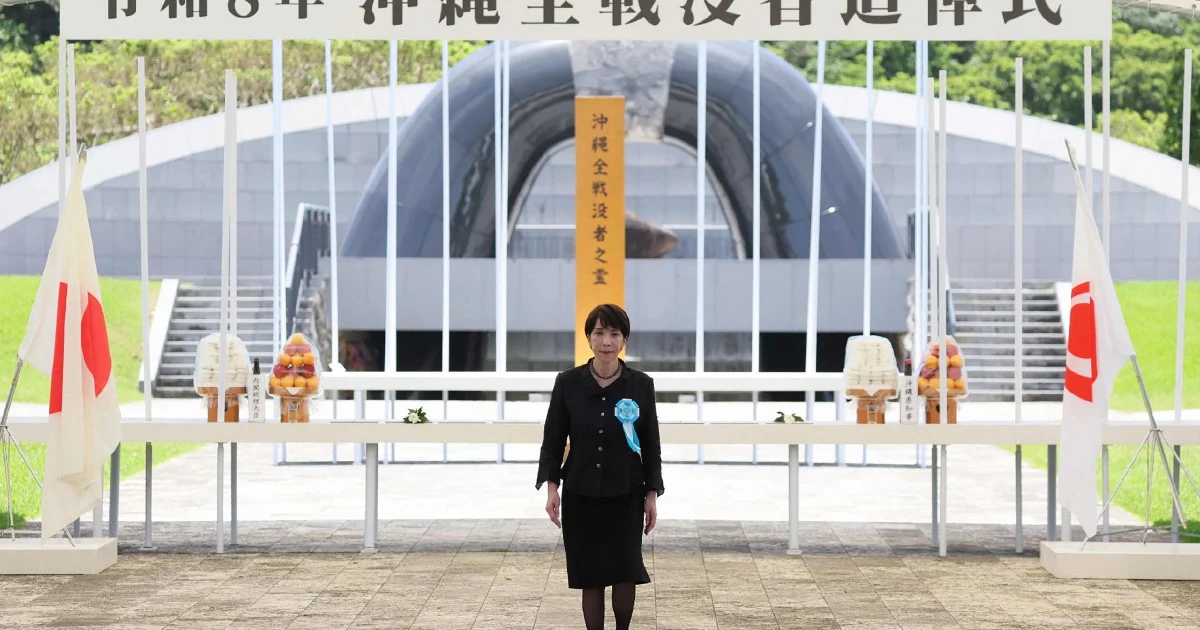
Prime Minister Sanae Takaichi encountered vocal opposition at a World War II memorial event in Tokyo, with protesters expressing deep unease about Japan's increasingly assertive military direction. Television coverage documented the heckling incident, capturing a pivotal moment of public dissent over one of Japan's most contentious policy shifts in recent decades.
The disruption underscores growing domestic tension surrounding Tokyo's gradual abandonment of the pacifist principles that have defined Japanese foreign policy since the post-war constitutional settlement. For over seven decades, Japan maintained a restrained military posture, prioritizing economic development and regional diplomacy over substantial defence expansion. This philosophical foundation, embedded in Article 9 of the Japanese Constitution, has shaped national identity and international relations across generations.
Takaichi's administration represents a significant departure from this established norm, pursuing greater military capability and a more robust security stance in response to evolving regional threats. The timing of protests at a WWII memorial carries particular symbolic weight, as such venues commemorate the devastating consequences of unchecked militarism and imperial ambition. For many Japanese citizens, the juxtaposition of military expansion rhetoric with spaces dedicated to wartime victims creates a discordant and troubling image.
The backlash reflects a substantial segment of Japanese public opinion that remains deeply committed to pacifism. Polls consistently demonstrate that older generations, who possess living memories or family connections to WWII, harbour particular resistance to military acceleration. Younger demographics show more varied perspectives, though a significant majority still favours maintaining constitutional constraints on defence development.
Japan's military recalibration responds to concrete security challenges that have intensified over the past decade. China's rapid military modernization, North Korea's continued weapons development, and Russia's broader regional assertiveness have prompted Japanese policymakers to reassess national defence requirements. Additionally, shifting geopolitical dynamics in the Indo-Pacific region and evolving alliance structures with countries including Australia and the United States have created strategic imperatives for greater military readiness.
Government defence spending has increased substantially under recent administrations, with proposals for further expansion in coming years. These budgetary commitments represent unprecedented levels since the post-war period, signalling a fundamental reorientation of Japan's security strategy. Officials argue such measures prove necessary for protecting territorial integrity and maintaining regional stability amid intensifying great-power competition.
However, the Takaichi administration's approach has catalyzed organized opposition within Japan itself. Civil society groups, peace advocacy organizations, and concerned citizens view the military expansion as fundamentally incompatible with Japan's constitutional framework and cultural identity. Critics contend that such policies risk dragging Japan into regional conflicts that diplomatic engagement might otherwise prevent, and worry about economic costs of expanded defence budgets when domestic social needs remain pressing.
The incident at the memorial ceremony highlights how defence policy debates in Japan carry emotional resonance that transcends ordinary political disagreement. WWII memorials function as spaces where Japanese society confronts difficult historical truths and articulates values for the future. Protesters' choice to voice concerns at such a venue demonstrates their conviction that military expansion contradicts the lessons learned from catastrophic wartime destruction.
The protest also reflects broader anxieties about Japan's democratic discourse and the pace of policy change. Many citizens feel that consequential security decisions are advancing through legislative processes without adequate public deliberation or consensus-building. They worry that shifting the nation's defence posture represents an irreversible transformation that deserves more extensive democratic engagement before implementation.
Regional observers across Southeast Asia and beyond monitor Japan's military trajectory with considerable interest. Nations throughout Asia maintain delicate balances between security concerns and desires to avoid escalatory arms races. Japan's policies potentially influence broader regional security dynamics, affecting everyone from Malaysia to Vietnam to the Philippines. How Tokyo calibrates its defence expansion while managing allied relationships and managing tensions with Beijing will have implications extending far beyond Japan's borders.
The Takaichi government faces the challenge of advancing what it views as necessary security modernization while addressing legitimate concerns from substantial portions of the electorate. Future WWII memorial events may become frequent venues for such protests unless the administration better communicates its strategic rationale and builds broader societal consensus for its defence initiatives.
Government officials maintain that military strengthening remains defensive in character and serves regional stability rather than undermining it. They argue that robust Japanese capabilities actually deter aggression and contribute to peaceful resolution of disputes. Whether these arguments gain traction with sceptical publics will significantly shape Japan's political landscape and defence policy trajectory in coming years.