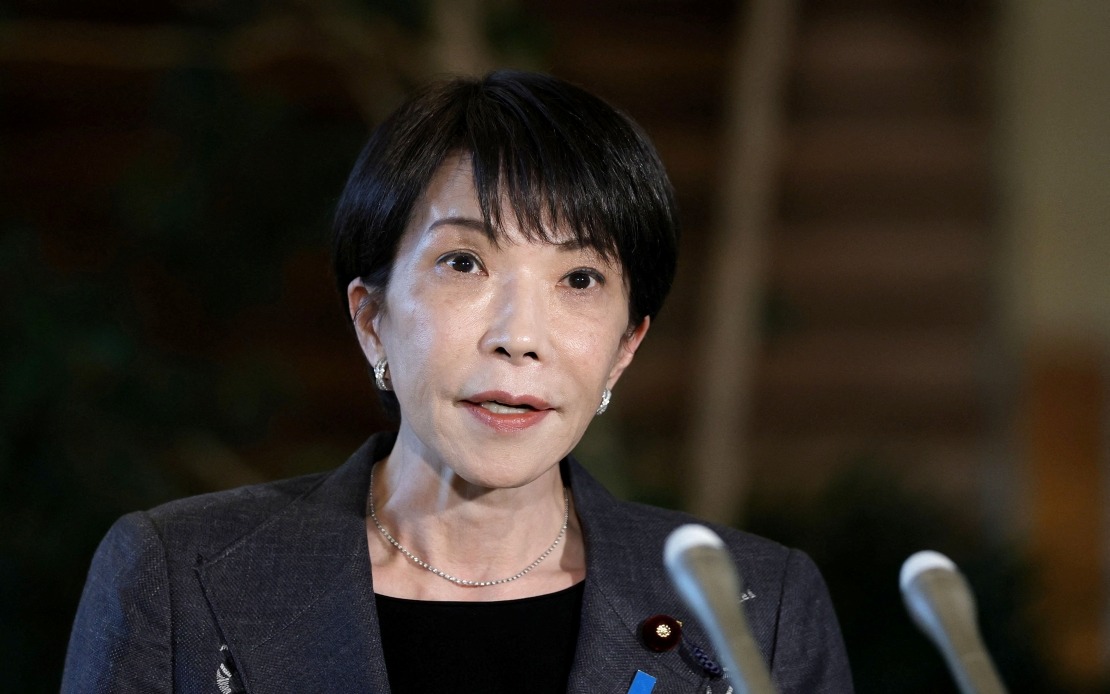
Prime Minister Sanae Takaichi has given her clearest commitment yet to reverse a temporary consumption tax reduction on food, pledging that the rate will return to its full 8 per cent level after just two years of cuts. The announcement arrives as Japan grapples with the dual challenge of honouring campaign pledges aimed at household relief while confronting serious questions about the sustainability of its public finances.
The timing of Takaichi's assurance reflects growing tensions within Japan's political establishment over how to implement the tax relief without exacerbating the nation's already precarious fiscal position. Speaking during parliamentary questioning at the House of Representatives, she directly addressed concerns raised by Democratic Party for the People lawmaker Ken Tanaka, who warned that restoring a higher tax rate after cuts would inevitably provoke public opposition by appearing as a tax increase rather than the reversal of a temporary measure.
The proposal being developed by Takaichi's Liberal Democratic Party represents a strategic compromise from the party's original election pledge. Rather than eliminating the consumption tax entirely on food and beverages—a commitment made during the February lower house campaign—the LDP now proposes reducing it to just 1 per cent when the measure takes effect in April 2027. This shift reflects practical concerns about implementation, particularly regarding the technical challenges retailers would face in reprogramming cash register systems to accommodate a zero rate.
To maintain the spirit of the electoral promise while acknowledging fiscal realities, the LDP has devised a creative alternative involving annual cash handouts totalling 600 billion yen, approximately US$3.7 billion. This sum effectively compensates households for the revenue gap between a 1 per cent tax rate and a zero rate, ensuring that consumers experience meaningful relief without the administrative complications that a complete elimination would entail.
The proposal emerged from deliberations within a cross-party national council examining taxation and social security policy. The council framework reflects recognition across much of Japan's political spectrum that inflation has eroded household purchasing power and that some form of relief targeting essential food items carries genuine electoral appeal. The LDP's junior coalition partner, the Japan Innovation Party, along with several opposition groups, all campaigned on similar relief measures during the election cycle.
Takaichi has signalled her eagerness to move forward with implementation quickly once the council completes its interim report later this month. This urgency reflects political pressures to demonstrate responsiveness to voter concerns about cost-of-living pressures that have accumulated across multiple years. For Malaysian readers attuned to regional economic dynamics, Japan's struggle mirrors challenges facing governments throughout Southeast Asia, where inflation has similarly strained middle-class households and forced policymakers to weigh relief measures against budgetary constraints.
However, Japan's underlying fiscal situation adds a layer of complexity absent in most comparable economies. The nation carries the heaviest public debt burden among Group of Seven members, with government bond yields recently reaching their highest levels in decades. The weakness of the Japanese yen in currency markets further compounds concerns about the government's ability to finance additional spending through borrowing, as rising interest rates increase the cost of servicing Japan's existing debt mountain.
Tanaka's parliamentary warning about the political difficulty of reversing tax cuts touches on a fundamental challenge facing democracies worldwide. Once voters experience lower taxation on essentials, reversing that benefit becomes extraordinarily difficult politically, even when justified by fiscal necessity. The two-year timeframe represents an attempt to manage this tension—sufficiently brief to claim the relief remains temporary, yet long enough to provide meaningful household assistance. Whether this approach will prove durable depends partly on Japan's broader economic trajectory over the coming years.
For Southeast Asian observers, the Japanese case offers instructive lessons about the limits of tax policy as an inflation-fighting tool. Thailand, Indonesia, and other regional economies have similarly faced pressure to provide relief through consumption tax adjustments, yet face comparable constraints regarding fiscal sustainability. The Japanese government's embrace of compensatory cash handouts rather than rate elimination also suggests an emerging policy consensus that targeted transfers may prove more fiscally manageable than broad-based tax reductions.
The interim report from the national council expected later this month will clarify not only the precise timeline for implementation but also the mechanisms through which the LDP envisions transitioning back to standard rates. This clarity matters because, as Tanaka astutely noted, the framing of the reversal will substantially influence public reception. Marketing the restoration as a temporary measure's expiration, rather than emphasizing tax increases, will prove essential to managing political fallout.
Takaichi's explicit commitment to restoration after two years represents an effort to bind future governments to fiscal discipline. By stating clearly and repeatedly that the cut remains temporary, she aims to signal to international creditors and domestic investors that Japan recognises the need to control expenditure. Whether subsequent governments will honour this commitment remains uncertain, particularly if economic conditions deteriorate and political pressures mount for extension.