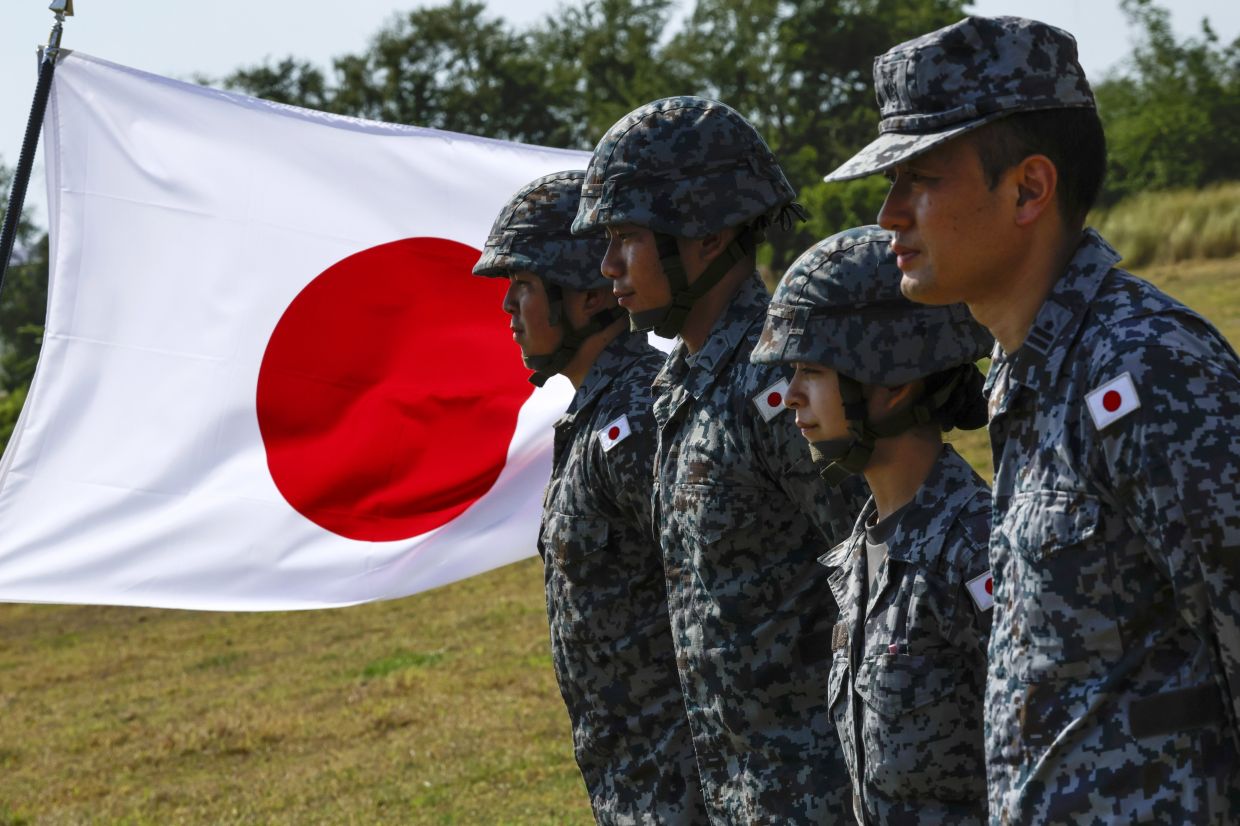
Japan has emerged as a prominent security architect in the Indo-Pacific, leveraging high-profile diplomatic events and expanding military partnerships to establish itself as a counterweight to Beijing's military expansion. Speaking at Singapore's security forum on May 31, Defence Minister Koizumi underscored Tokyo's commitment to regional stability, a message reinforced when a scheduled session showcasing China's cooperative partnerships was cancelled—a symbolic moment that reflected Japan's determination to shape the strategic narrative in Asia.
Yet beneath the surface of Japan's ambitious outreach lies a more complex reality. Tokyo's very prominence at such forums masks an underlying anxiety about the durability of its alliance with Washington and Japan's capacity to act independently as Beijing strengthens its military capabilities. When Koizumi met publicly with US Defence Secretary Pete Hegseth during the forum, the meeting was designed to project Allied unity but inadvertently exposed Japan's deep dependence on American security guarantees—a vulnerability that constrains how far Tokyo can push its regional agenda without risking its own defence posture.
Japan's strategic pivot is becoming increasingly visible in tangible military developments. Senior officials have explored building nuclear-powered attack submarines, a move that would shatter Japan's longstanding nuclear taboo and signal Tokyo's determination to develop indigenous capabilities. This ambitious project reflects a broader recognition within Japan's defence establishment that tomorrow's security landscape may demand capabilities that Tokyo cannot indefinitely outsource to Washington, particularly as questions mount about American reliability under current leadership. The debate around submarines encapsulates Japan's predicament: pursuing advanced militarisation to deter China while maintaining the security alliance that remains central to its defence.
To operationalise its regional vision, Japan has systematically expanded a network of defence partnerships extending from Southeast Asia to the Pacific Islands. Wellington's announcement that an upgraded Japanese Mogami-class frigate had been deployed represented one visible manifestation of this strategy, part of a larger framework that analysts describe as a multilayered military architecture designed to fill potential gaps as US presence is perceived as potentially contracting across Asia. These partnerships reflect Tokyo's judgment that it must take proactive steps to prevent Beijing from capitalising on any perceived American withdrawal.
The emerging framework represents something more sophisticated than straightforward military alignment against China. Instead, Tokyo has constructed an integrated approach combining defence assistance, economic support, and flexible diplomatic engagement. This strategy recognises that many Indo-Pacific nations, particularly in Southeast Asia and among Pacific Island states, prioritise economic development and resilience over traditional security competitions. Rather than presenting itself as a military counterbalance, Japan positions itself as offering an alternative pathway—one that combines security support with infrastructure investment and energy transition assistance, thereby allowing partners to strengthen their security without appearing to choose definitively between great power rivals.
Prime Minister Sanae Takaichi's May announcement of an updated Free and Open Indo-Pacific framework illustrated this evolution in Japanese strategic thinking. The revised approach moves beyond the principled emphasis Shinzo Abe championed in 2016—focused on rule of law and regional norms—towards concrete tools addressing immediate partner concerns. Tokyo now prioritises undersea cable security, energy supply chain resilience, and maritime domain awareness, integrating these development priorities with military-relevant capabilities. This recalibration reflects Tokyo's recognition that sustainable partnerships require addressing the full spectrum of regional anxieties, not merely military balance.
A critical innovation enabling this integrated approach has been Japan's introduction of the Official Security Assistance programme, which permits direct defence support to allied militaries while preserving Japan's commitment to non-military development aid principles. The OSA framework has expanded dramatically, growing from supporting four countries with 2 billion yen in funding to 12 countries receiving 18.1 billion yen—a nearly ninefold increase in just three years. This growth has enabled Japan to supply advanced radar systems, drones, and other capabilities that partner nations require but cannot independently finance. For developing states facing capability gaps that China could otherwise fill, Japanese assistance offers a path to genuine capacity building without the dependency risks associated with Beijing's approach.
Tokyo's infrastructure development strategy carries particular significance for regional stability. By funding ports, airports, and maritime facilities that serve dual civilian and defence-related purposes, Japan provides visible development benefits while creating infrastructure that enhances partners' coastguard and naval capabilities. This approach is politically palatable in ways that direct military aid might not be, yet accomplishes strategic objectives by building the physical infrastructure upon which maritime security depends. Japan views this connectivity approach as fundamentally reshaping the Indo-Pacific's strategic foundation, replacing asymmetric dependencies with reciprocal capability development.
Beyond regional engagement, Japan's defence strategy includes a powerful domestic industrial dimension. The April decision to lift restrictions on lethal weapons exports creates opportunities for Japanese defence manufacturers to access markets spanning 17 countries, including six ASEAN nations: the Philippines, Malaysia, Indonesia, Vietnam, Thailand and Singapore. This export pivot generates commercial opportunities for Japan's defence sector while simultaneously demonstrating military equipment in operational contexts that enhance its marketability. The June agreement between Tokyo and Jakarta to negotiate potential export of Japanese Asagiri-class destroyers to Indonesia exemplifies how strategic partnership and commercial opportunity intertwine in Japan's approach.
The broader economic component of Japan's strategy crystallised with the April launch of the US$10 billion Power Asia initiative, a targeted programme addressing partner nations' energy security amid volatile global conditions and concerns about chokepoints like the Strait of Hormuz. This initiative bridges development and security by recognising that regional stability depends partly on energy resilience—a concern that transcends traditional military metrics. By positioning itself as crucial to partners' economic survival, Japan creates non-military leverage that strengthens relationships in ways that arms sales alone cannot.
However, significant obstacles constrain Japan's ambitions despite these multifaceted initiatives. Washington's reliability as a security guarantor has been questioned by Japanese policymakers, particularly regarding demands that Tokyo and South Korea significantly increase defence spending whilst simultaneously facing American tariffs on strategic goods. This apparent contradiction creates strategic uncertainty in Tokyo, suggesting that even enhanced military partnerships and economic initiatives may prove insufficient if the American alliance fractures under current pressures. Japan's defence establishment recognises that no amount of regional outreach can substitute for stable, predictable American commitment to the Indo-Pacific.
Experts note that Japan must navigate the delicate task of building a comprehensive regional architecture without explicitly branding it as anti-China in ways that might alienate partners seeking balanced relationships. The strategy's success depends on demonstrating that Japanese engagement offers genuine development benefits rather than simply military positioning against Beijing. This requires Tokyo to maintain narrative discipline, emphasising shared prosperity and security rather than great power competition. Should partners perceive Japan's initiatives as primarily serving anti-China objectives rather than their own advancement, enthusiasm could rapidly diminish.
The fundamental challenge underlying Japan's entire strategic initiative remains the structural constraint that Tokyo, despite possessing sophisticated capabilities, lacks the financial and military resources to independently compete with China's scale whilst maintaining commitments across the entire Indo-Pacific. Japan must therefore rely on assembling complementary partnerships in which each participant contributes distinct capabilities and resources. This collaborative approach is elegant in theory but vulnerable to fracturing if individual partners calculate that accommodating Beijing offers better outcomes than continued alignment with Tokyo and Washington. Japan's success ultimately depends not merely on the quality of its own strategic vision but on whether partners remain convinced that the cooperative architecture Tokyo is building genuinely serves their interests.

