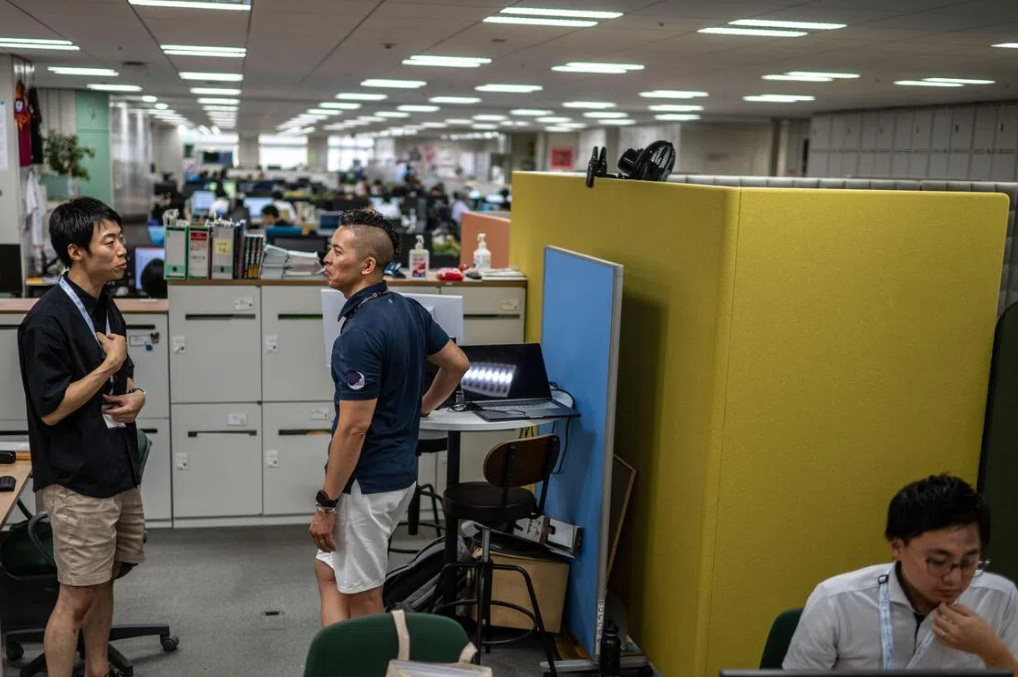
Tokyo's environmental authorities have encountered an unexpected obstacle in their latest effort to help office workers endure oppressive summer heat: the cultural discomfort surrounding male colleagues' exposed shin hair. The metropolitan government's April expansion of the "Cool Biz" campaign, which now encourages employees to swap formal business suits for casual alternatives including T-shirts, trainers and shorts, has triggered online complaints about "leg hair harassment" or "sunehara"—a newly coined Japanese term describing the visual discomfort some women experience when faced with hirsute male legs in the workplace.
The initiative emerged from pragmatic concerns about Japan's intensifying summer climate. Between July 6 and July 12 alone, authorities recorded seven deaths from heatstroke and admitted 4,580 people to hospitals, according to the Fire and Disaster Management Agency. Extreme temperatures combined with high humidity compromise the body's natural cooling mechanisms, prompting officials to encourage workers to adopt lighter clothing and take preventive measures such as staying hydrated and using air-conditioning. The casual dress allowance represents one prong of the government's broader heat management strategy.
Tokyo's environmental official Noboru Watanabe articulated the policy's underlying philosophy when speaking to the BBC, emphasizing that the campaign aims to "give people more options in the severe heat, not tell them what to wear." This statement underscores the government's intention to expand personal choice rather than impose restrictive standards. However, the framing of workplace appropriateness has proven far more contentious than policymakers anticipated. Watanabe acknowledged that attire should not offend colleagues, yet determining what constitutes genuinely offensive workplace presentation remains contested ground.
A June survey conducted by Gorilla Clinic, a men's cosmetic treatment chain, illuminates the societal ambivalence surrounding the shorts debate. The poll found 53.5 percent of respondents opposed wearing shorts to work, while 46.5 percent supported the practice—revealing an almost evenly split population. Significantly, women substantially outnumbered men among those objecting to workplace shorts, suggesting a gender dimension to the discomfort. Respondents cited concerns about visible body shape and body hair as primary reasons for their opposition, indicating that leg hair represents more than a trivial aesthetic matter but rather touches on deeper anxieties about professionalism and workplace decorum.
The controversy has generated unexpected commercial consequences. Akifumi Funatsu, a director at Gorilla Clinic, reports that increasing numbers of male clients are pursuing laser hair removal treatments, motivated not primarily by vanity but by what they perceive as "social etiquette when wearing shorts." This phenomenon reveals how workplace pressure can translate into physical modification decisions. Some men apparently internalize the notion that visible leg hair might cause colleagues discomfort, prompting them to seek permanent hair removal as a professional investment. The trend demonstrates how evolving dress codes can inadvertently create new social expectations and consumer demands.
Japan's trajectory toward casual workplace attire spans nearly two decades. In 2005, then-environment minister Yuriko Koike—now Tokyo Governor—launched the original Cool Biz initiative to reduce air-conditioning consumption during summer. The campaign initially advocated removing ties and jackets in favor of short-sleeved shirts, gaining significant cultural traction when then Prime Minister Junichiro Koizumi appeared publicly without formal neckwear. Following the 2011 earthquake and tsunami that strained Japan's electrical infrastructure, the government introduced "Super Cool Biz," further relaxing workplace dress standards. Over the intervening years, casual attire has progressively normalized, particularly within technology companies and startups, though traditional sectors have maintained stricter protocols.
The shorts debate represents an extension of this gradual liberalization, pushing Japan's workplace fashion boundaries further into casual territory. However, the "leg hair harassment" controversy suggests that cultural acceptance of casualness has limits. Unlike previous dress-down campaigns that focused on eliminating formal elements such as ties and jackets—items of clothing rather than bodily features—the shorts initiative forces confrontation with visible body characteristics. This distinction may explain the elevated social friction; removing neckwear feels like a professional adjustment, whereas exposing leg hair touches on fundamental questions about bodily presentation and professional identity.
Beyond the debate over shorts, Japanese consumers are embracing diverse heat-mitigation technologies and products to cope with sweltering conditions. Wearable fans, cooling wipes, heat-blocking umbrellas, and portable air-conditioning devices have proliferated throughout urban centers as residents seek personal solutions to extreme temperatures. These innovations suggest that many people prefer technological interventions to substantial shifts in workplace culture, particularly regarding matters as sensitive as bodily presentation.
The Cool Biz expansion occurs within a broader Asian context of changing workplace norms. Southeast Asian countries have long permitted more casual dress codes in tropical climates, yet Japan's relatively formal corporate culture has traditionally resisted such informality. The Tokyo government's push toward shorts in offices represents a notable cultural inflection point, one that challenges deeply embedded professional conventions. However, the "leg hair harassment" controversy demonstrates that policy changes do not automatically translate into social acceptance; the normalization of casual dress requires navigating complex attitudes about propriety, gender dynamics, and bodily exposure in professional settings.

