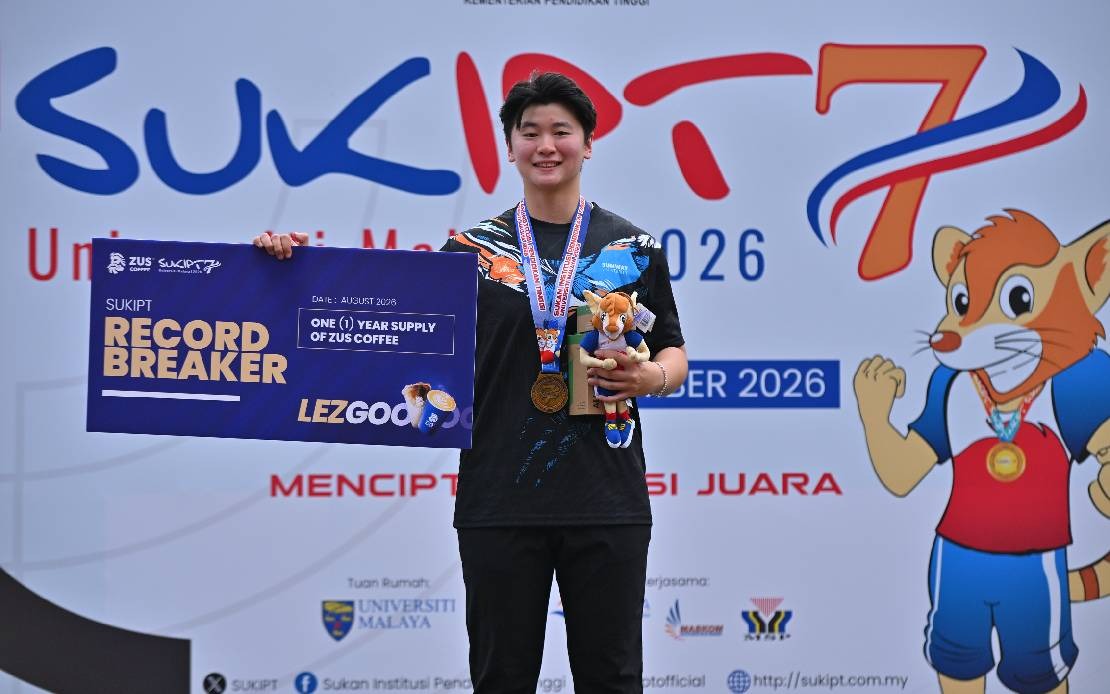
Javelin thrower Ng Jing Xuan delivered a standout performance for Sunway University during Malaysia's National Day week by establishing a new meet record at the 2026 SUKIPT championships held at UM Arena, Universiti Malaya, on August 31. The 22-year-old athlete's throw of 46.92 metres eclipsed the previous benchmark of 44.41 metres, a mark that had stood since the 2016 edition when Nur Fatin Adibah Suharman from Universiti Malaysia Perlis (UniMAP) set it. This achievement carried symbolic weight as universities across the nation gathered to compete during Malaysia's Independence Day celebrations, with Jing Xuan's record-breaking effort adding a sporting dimension to the nationwide Merdeka festivities.
The national women's javelin representative acknowledged the significance of her gold medal victory whilst maintaining a measured perspective on her overall ambitions. Jing Xuan had entered the competition harbouring aspirations beyond securing the SUKIPT record, specifically targeting an assault on her own national record of 52.17 metres. When she fell short of that more ambitious benchmark, she experienced a measure of frustration about what might have been achieved, though she ultimately recognised the tangible merit of breaking the five-decade-old meet standard. Her willingness to contextualise the performance demonstrates the mental resilience required at the elite level, where athletes must balance immediate satisfaction with long-term strategic objectives.
The preparation leading into the SUKIPT competition proved intensive and demanding. Jing Xuan had returned from competing in the Asian U23 Athletics Championships and immediately committed to a month of concentrated training specifically designed to peak for the university games. This compressed timeline meant she arrived at the competition with the physical conditioning expected of a national-level athlete, yet the demanding schedule also left room for variables beyond her control. She reflected on how competing at her highest capacity requires not just physical preparation but optimal circumstances, acknowledging that some variables—particularly unexpected scheduling adjustments—could influence performance.
An unexpected logistical change appears to have affected her consistency during the competition. The organising committee shifted her event from an afternoon slot to a morning session, a modification that disrupted the established rhythm and preparation routine she had developed. Such alterations, whilst sometimes necessary for efficient event management, can meaningfully impact an athlete's performance when they have trained with specific conditions in mind. Jing Xuan described feeling that her throws carried less explosive force than anticipated, suggesting the schedule change contributed to the gap between her expectations and ultimate results. This observation underscores how elite athletic performance remains dependent on multiple interconnected factors beyond pure physical capability.
The competitive field in the women's javelin category displayed the considerable depth of talent within Malaysia's university athletics programme. Farisha Athirah Wai from Universiti Pendidikan Sultan Idris (UPSI) secured the silver medal with a respectable throw of 36.21 metres, demonstrating the secondary tier of competitive ability present at SUKIPT. Tai Yu Tian from Universiti Putra Malaysia (UPM) completed the podium by earning bronze with a distance of 32.74 metres. The substantial margins separating these finalists from Jing Xuan's winning throw highlight her decisive dominance within the collegiate athletics sphere, a position that reflects years of dedicated training and national-level competition experience.
Despite the unfulfilled ambition of breaking her national record during this particular competition, Jing Xuan has already fixed her attention on upcoming international opportunities that demand sustained excellence. The ASEAN University Games scheduled for December represents the immediate competitive horizon, requiring her to maintain the physical conditioning and technical refinement demonstrated at SUKIPT. Beyond that looms the SEA Games in 2026, an event where national prestige and individual achievement intertwine, creating additional motivation for Malaysian athletes representing their country on a regional stage. Her commitment to these targets indicates that the SUKIPT performance, whilst satisfying in isolation, functions primarily as a waypoint in a longer trajectory toward larger athletic ambitions.
From a Malaysian sporting perspective, Jing Xuan's emergence as a dominant javelin competitor represents meaningful progress in women's track and field athletics, a discipline where consistent national-level excellence remains crucial for regional competitiveness. The javelin throw demands combination of strength, technique, and explosive power, qualities that require sustained investment in coaching infrastructure and training facilities. Her success at SUKIPT provides encouragement for university athletics programmes contributing to national talent development pipelines, demonstrating that pathway integration between collegiate competition and elite international athletics can function effectively. The emphasis on university-level competition as a developmental stage for future national champions remains vital to Malaysian athletics' long-term institutional health.
The timing of this record-breaking performance during National Day week carries cultural resonance beyond pure sporting achievement. Athletic accomplishments during periods of national celebration become embedded in collective memory, representing the nation's ongoing investment in developing human excellence across multiple domains. Jing Xuan's contribution to Sunway University's medal tally, achieved through disciplined preparation and competitive resolve, exemplifies the individual sacrifices underlying national sporting ambitions. The merging of athletic accomplishment with patriotic observance transforms a university competition into a broader statement about Malaysia's capacity to nurture talent and achieve excellence on the international stage.
Looking ahead, Jing Xuan's trajectory suggests continued development and potential for breaking through her national record barrier in coming competitions. The fact that she approached the SUKIPT games with expectations significantly exceeding what she ultimately achieved indicates her own assessment of her capabilities remains elevated. This internal expectation, whilst producing temporary disappointment after the August 31 competition, typically drives the focused training and mental preparation necessary for subsequent competitive breakthroughs. Her coaching and support environment appear sufficiently robust to facilitate continued progression, positioning her as a potential medal contributor when Malaysia competes at the ASEAN University Games and beyond.

