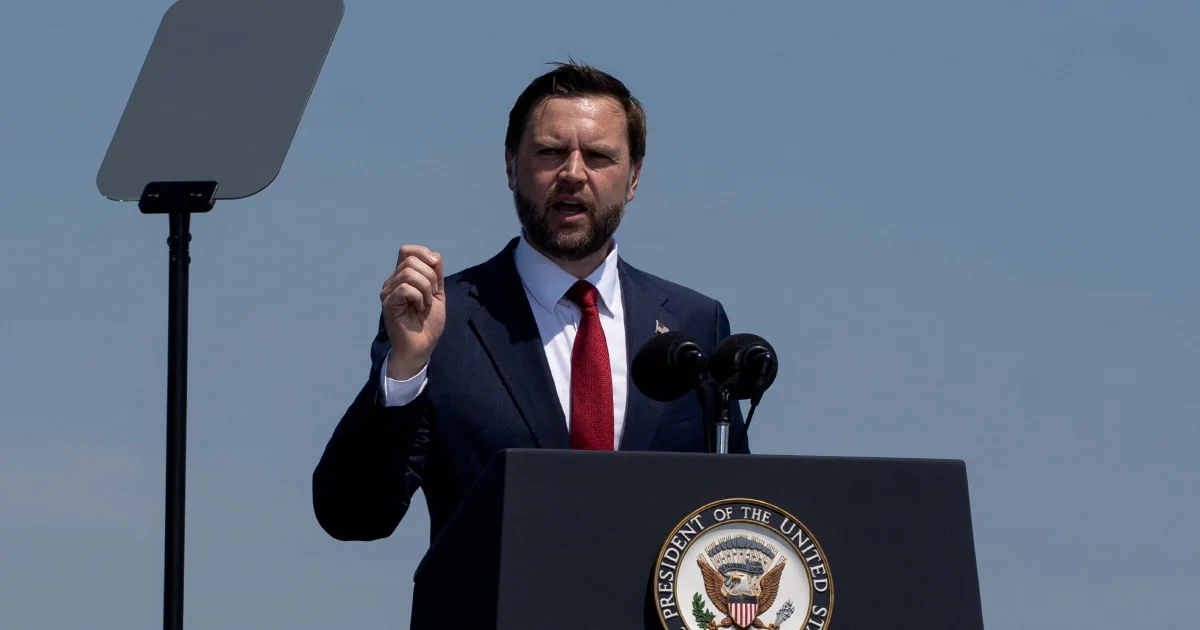
Vice President JD Vance has delivered a pointed assessment of Britain's governance, declaring that the nation's political leaders have failed to meet public expectations over an extended period. Speaking during a visit to London, Vance indicated that he remains hopeful the next British prime minister will address the deep structural issues that have left voters demanding change after years of political instability.
Vance's remarks reflect growing international scrutiny of British governance during a particularly turbulent period in Westminster politics. The United States, Britain's closest ally, has been watching the succession of recent administrations and the evident frustration among British voters with the pace and substance of policy delivery. By publicly commenting on the state of British leadership, Vance signalled the depth of American concern about the state of the country that remains Washington's most reliable partner in global affairs.
The assessment taps into a broader sentiment that has gripped the British electorate in recent years. Multiple changes of prime minister, parliamentary deadlocks, and policy reversals have created widespread disillusionment with the political establishment. Vance's willingness to voice such criticism, even gently, suggests that American officials view the current situation as unsustainable and requiring decisive action from whoever assumes the top job.
The American vice president's comments carry particular weight given the transatlantic relationship's importance to both nations. Washington views a stable, effectively governed Britain as essential to shared security and geopolitical interests. When the US leadership expresses concerns about another country's governance, it typically reflects more than casual observation—it suggests underlying worries about coordination on everything from NATO operations to economic policy.
Vance's emphasis on structural change rather than incremental reforms indicates that American officials believe cosmetic adjustments will not satisfy British voters. This suggests international observers, including those in the Biden administration, recognise that Britain faces systemic challenges that require comprehensive rather than piecemeal solutions. The focus on structural matters distinguishes genuine reform aspirations from mere political theatre.
For Malaysian and Southeast Asian observers, Vance's comments underscore how closely the US monitors governance quality among its allies. This dynamic has implications for the region, particularly for nations that value American security guarantees or trade partnerships. When the US signals dissatisfaction with an ally's leadership, it often precedes shifts in diplomatic positioning or policy emphasis. Britain's situation, while distinct, illustrates how Washington evaluates governance performance in determining the depth of engagement.
The timing of Vance's remarks—made during his London visit—carries diplomatic significance. Statements about another nation's leadership, particularly when they come from senior officials of a closely aligned power, shape international expectations about that nation's future direction. By explicitly expressing hope for change, Vance positioned the incoming prime minister as the focal point for broader international hopes for British renewal.
Vance's comments also reflect a transatlantic conversation about democratic governance and institutional effectiveness. The American vice president is essentially arguing that leadership matters profoundly, and that voters have the right to expect competent stewardship. This perspective resonates with constituencies across the Western world who have grown impatient with what they perceive as political underperformance and misaligned priorities.
The British public's evident appetite for change, which Vance acknowledged, represents a significant moment for the country's political renewal. After years of ministerial turnover and policy reversals, there is genuine public interest in whether a new administration can chart a more stable course. International observers, including American officials, are watching closely to see whether Britain's next prime minister can translate voter expectations into tangible improvements in public services, economic performance, and institutional functioning.
For Britain's relationship with Malaysia and broader Southeast Asia, political stability in London matters considerably. A more effectively governed Britain with clearer strategic priorities could potentially strengthen engagement across multiple domains. Malaysia, as a major Commonwealth member and important regional player, maintains substantial ties with the United Kingdom across trade, education, and security. A more focused British government might prove a more reliable partner in the region.
Vance's intervention reflects the reality that governance quality transcends national boundaries in its consequences. When major democracies struggle with leadership and institutional effectiveness, it creates uncertainties that ripple across their network of alliances and partnerships. Conversely, renewed British political effectiveness, should the next prime minister deliver on reform expectations, could strengthen the entire Western alliance system that remains important for regional security architectures.
The vice president's remarks ultimately constitute a gentle but firm message from Washington: the United States expects tangible improvement from Britain's next administration. This articulation of expectations, coming from someone in Vance's position, may prove influential in shaping how the incoming British prime minister approaches governance challenges. International pressure, when wielded diplomatically, can sometimes catalyse the institutional reforms that domestic constituencies have been demanding.

