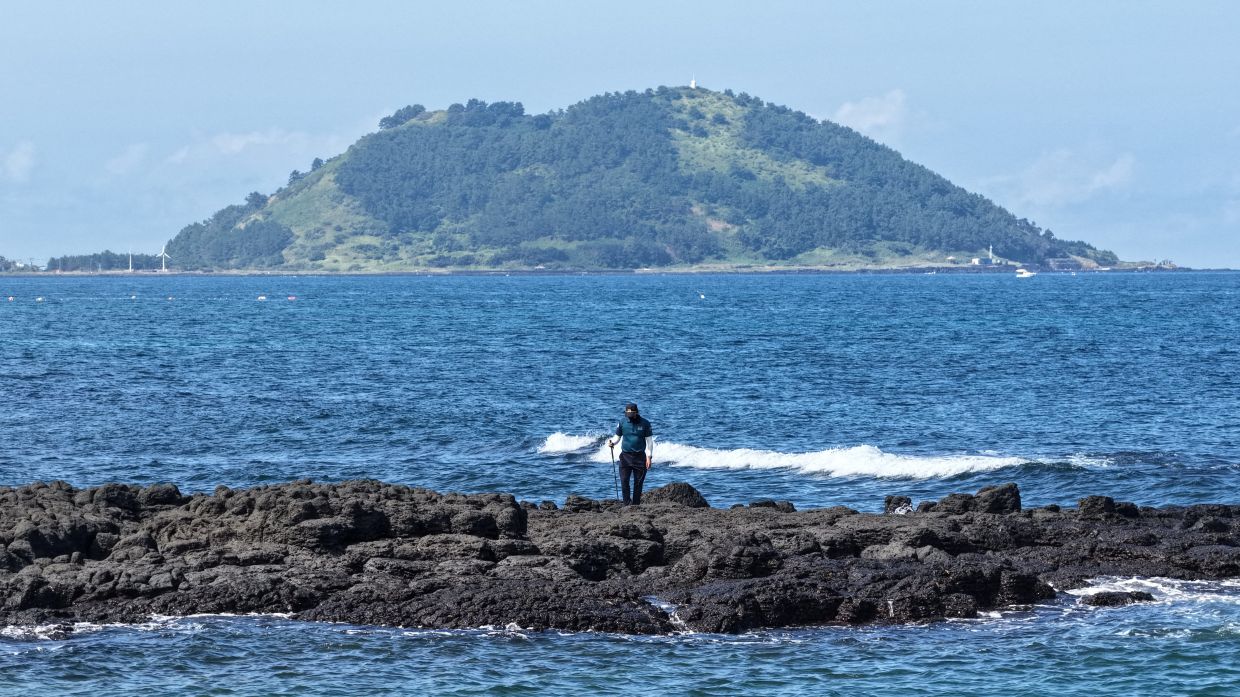
Jeju Island, long marketed as South Korea's premier romantic escape and honeymoon haven, confronts an unprecedented reputation crisis as revelations of police mismanagement in missing-person investigations have crystallized broader public anxieties about safety. The convergence of four bodies discovered within a 72-hour period through Monday, August 24, combined with evidence that a police officer deliberately falsified case records, has fractured the carefully cultivated image of this island resort and raised troubling questions about institutional accountability that extend beyond Jeju itself.
The scandal centres on Jang Mi-ran, a 37-year-old woman who vanished sometime between late May 12 and early May 13 after departing her home in Hallim-eup, Jeju City. For nearly three months, her disappearance languished in official limbo before the situation unraveled dramatically. A body believed to be hers surfaced on Monday among palm trees situated less than a 10-minute walk from her residence, revealing that the responsible police officer had falsely closed the case in May by claiming he had successfully contacted her. This brazen falsification of investigative records exposed systemic failures in Jeju's law enforcement apparatus and triggered a belated comprehensive search operation that produced grim discoveries elsewhere across the island.
The same officer's negligence extended to a second case. An unidentified man in his 60s, who had been classified as missing in Gujwa-eup, was found dead on Saturday following a search that had been delayed precisely because his case file had been improperly closed by the same officer. In a matter of hours, investigators uncovered an additional body near a valley in Aewol-eup on the same Monday, while a fisherman subsequently spotted a man in his 70s deceased in waters adjacent to Sinheung-ri in Jocheon-eup. Authorities have resisted drawing definitive connections between these fatalities or declaring evidence of systematic criminality, yet the clustering of discoveries and the documented police failures have shattered local and visitor confidence in institutional protections.
The reputational damage has manifested swiftly across digital platforms frequented by potential visitors and current residents. Cho, who operates a short-term rental business on the island, disclosed via Instagram that tenant cancellations have accelerated following recent events, indicating that the perceived safety deterioration directly threatens Jeju's accommodation sector. Hong Hye-geol, a television personality and preventive medicine specialist resident on the island for seven years, articulated in a public post a starkly different characterization of Jeju's landscape than traditional tourism marketing. She highlighted the existence of numerous isolated village roads far from populated areas, describing environments where individuals straying from established routes risk becoming isolated from potential assistance, and cautioned that neither women nor men should venture these zones unaccompanied, regardless of daylight hours or road conditions.
Prospective visitors have begun withdrawing planned trips. One individual cancelled wedding photography sessions initially scheduled for Gujwa-eup, citing apprehension that recent developments rendered such ventures inadvisable. Another social media user publicly advocated for a tourism boycott of the island, arguing that visitors should refrain from travelling to Jeju until authorities conclusively investigate the police officer's conduct in Jang's case and establish accountability for the additional missing-person investigations. These expressions reflect a significant psychological shift in how potential visitors assess Jeju's risk profile, transforming the destination from aspirational to anxiety-inducing in public discourse.
Tourism operators report mounting unease despite the absence of demonstrated visitor decline in official statistics. Bang, a 52-year-old proprietor of a women-only guesthouse operating in Jocheon-eup for eight years, has fielded escalating guest inquiries regarding personal safety. Just two days prior to speaking with reporters, a three-person reservation was cancelled, though causality with the recent missing-person discoveries remains ambiguous. Bang emphasizes that the establishment's surrounding environment incorporates comprehensive lighting infrastructure, including street lamps with supplementary illumination at intervals of 20 to 30 metres, and residents have historically felt sufficiently secure to leave the front gate unsecured during evening hours when guests congregate in common areas.
Paradoxically, Bang observes that her facility's primary differentiating factor—catering exclusively to female clientele—has transformed from marketing advantage to source of guest apprehension. The positioning that once conveyed specialized security and comfort now amplifies visitor nervousness, suggesting that fear disproportionately affects the demographic most likely to seek specialized accommodations. Bang emphasizes that police and local authorities must implement visible interventions to counteract what she characterizes as baseless rumour-driven anxiety before the narrative cascade creates self-fulfilling damage to the tourism economy.
Jeju's predicament emerges at a particularly vulnerable moment for the island's tourism sector. The Jeju Tourism Organization reported that domestic visitor numbers in July totalled 963,401, representing a 12.4 per cent decline equivalent to 136,620 fewer visitors compared to July 2023's 1,100,021 arrivals. This marked the first instance since the Covid-19 pandemic emerged in 2020 that Jeju's monthly domestic visitor count descended below the 1 million threshold. The downward momentum has persisted throughout August, with data from August 1 through August 23 revealing an average daily domestic visitor count of 35,295—approximately 300 fewer than the corresponding 35,575 recorded during the identical period in 2023.
The timing of this crisis compounds pre-existing economic headwinds rather than introducing an isolated incident into otherwise stable conditions. Jeju has already struggled with declining domestic tourism, meaning that the safety narrative triggered by the police scandal strikes an industry already navigating reduced demand. For Malaysian and Southeast Asian observers, this pattern illuminates how crisis narratives can propagate through digital channels with extraordinary velocity, transcending any objective measurement of actual risk and instead operating according to psychological and social dynamics that authorities find difficult to counter through conventional reassurance messaging.
Data from the Korean National Police Agency reveals that Jeju recorded the nation's highest crime rate during 2024, registering 4,539.6 crimes per 100,000 residents. This statistical ranking requires careful contextual interpretation, as the figure derives from calculation against Jeju's resident population of approximately 663,000, despite the island receiving millions of visitors annually. The mathematical ratio thus potentially overrepresents crime severity since visitor populations significantly expand the effective denominator against which criminal incidents occur, yet official statistics perpetuate the headline figure without this crucial qualification. Regional authorities now confront the challenge of rebuilding institutional credibility while simultaneously managing a tourism economy dependent on visitor confidence, a calculus that demands transparency regarding police accountability and systematic institutional reform rather than defensive statistics.

