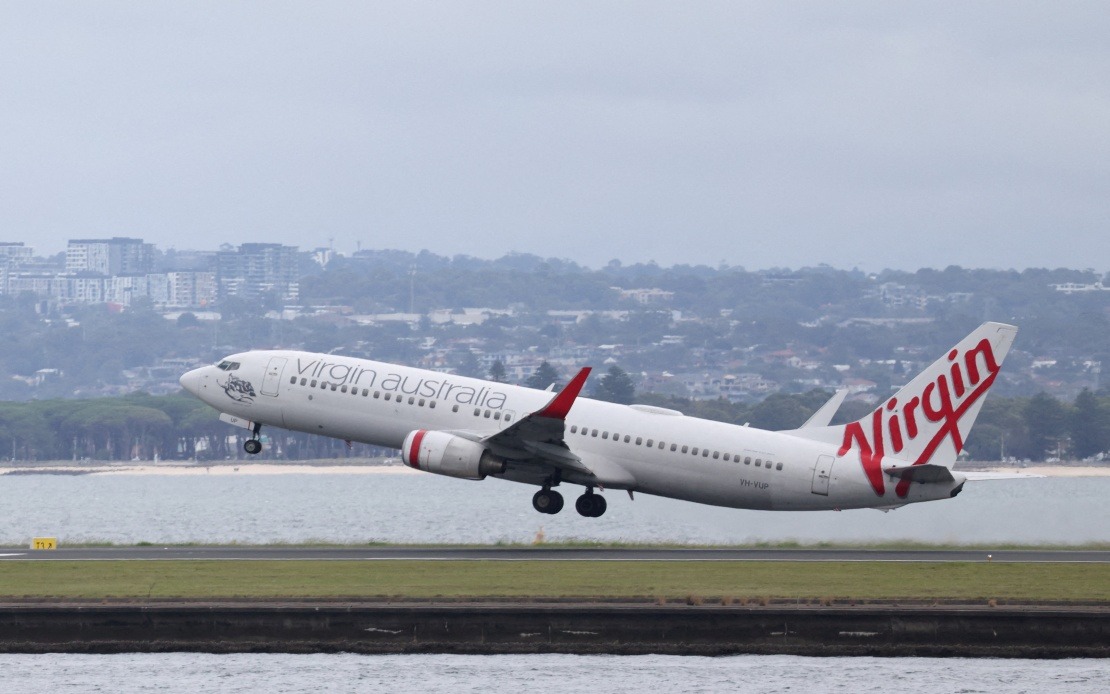
A potentially catastrophic incident unfolded on the tarmac at Sydney Airport on Sunday morning when a Jetstar Airways aircraft executing pre-departure taxiing manoeuvres narrowly avoided striking an unoccupied Qatar Airways Boeing 777 that was being moved across the runway. The close call occurred around 7 am Australian Eastern Standard Time as Jetstar flight JQ402, bound for the Gold Coast, was preparing for takeoff when its pilots were forced to execute emergency braking procedures to evade the towed aircraft.
The sudden evasive action inflicted injuries on at least one member of Jetstar's cabin crew, who received immediate medical attention from airport paramedics. Fortunately, the passenger complement aboard the Jetstar aircraft escaped harm in the incident. The Queensland-based carrier, which operates as a wholly-owned subsidiary of Qantas, has launched a comprehensive investigation into the circumstances surrounding the near-collision.
According to a Jetstar spokesperson, the aircraft was operating in full compliance with directives issued by Air Traffic Control at the time of the incident. The statement emphasises that the flight crew received instructions to proceed along their designated taxiway route when they detected the Qatar Airways aircraft in close proximity and initiated immediate braking to prevent contact. This account raises questions about coordination between ground control operators and the personnel responsible for towing the Boeing 777, a critical interface point in airport operations where human error or communication breakdown can have severe consequences.
The incident casts a spotlight on operational pressures and staffing challenges affecting Australia's aviation infrastructure. Just days before the runway near-miss, Airservices Australia, the organisation responsible for managing air traffic control at the country's principal airports including Sydney, experienced significant personnel shortages that cascaded into widespread disruptions across the network. Between Friday and Saturday, more than 250 flights departing from Sydney suffered delays attributable to inadequate staffing levels within Airservices Australia's control towers and approach facilities.
For Malaysian travellers and the regional aviation community, the Sydney Airport incident serves as a sobering reminder of the intricate safety choreography required at one of the Asia-Pacific's busiest international hubs. Sydney Airport handles millions of passengers annually, including substantial numbers from Southeast Asia, and maintains critical connections for Australian carriers serving Malaysian and regional markets. Any degradation in operational safety or efficiency reverberates throughout the interconnected aviation ecosystem.
The timing of this occurrence against a backdrop of workforce shortages at Airservices Australia suggests systemic vulnerabilities in Australia's air traffic management capacity. While the specific causal chain remains under investigation, the coincidence of a near-collision with recent staffing crises raises troubling implications about whether controllers and ground personnel were operating under elevated stress levels or compromised situational awareness. Australian aviation authorities will likely scrutinise whether fatigue management protocols and staffing thresholds adequately safeguard against such incidents.
The incident also underscores the operational complexity inherent in managing simultaneous aircraft movements across modern airport runways. The Qatar Airways Boeing 777 was unoccupied at the time, being repositioned as part of routine ground handling operations. Such aircraft movements, though routine, require absolute precision in coordination with active runway traffic. The fact that a departure aircraft and a towed aircraft came into dangerous proximity suggests either a lapse in ground control coordination, a misalignment of taxi clearances, or potentially inadequate separation protocols during concurrent runway operations.
Jetstar's investigation will necessarily examine multiple dimensions of the incident, including radio communications between the flight crew and air traffic control, the specific instructions provided to both the towing operation and the departing aircraft, visibility conditions at the time, and whether all relevant parties possessed accurate real-time positional awareness. The carrier's response to such incidents carries significant implications for its operational credibility and insurance standing.
The broader context of staffing challenges at Airservices Australia demands attention from aviation regulators and government policymakers across Australia. Chronic understaffing at critical infrastructure facilities compromises not merely efficiency but fundamental safety margins. When air traffic controllers are overextended, the margin for error narrows, and incidents that might ordinarily be prevented through optimal procedures become more probable. The 250 delayed flights earlier in the week represented tangible economic losses but also symbolised a system straining against capacity constraints.
For the Southeast Asian aviation market, which depends substantially on Australian connectivity, the incident and underlying staffing issues carry commercial implications. Delays and safety concerns at Sydney Airport ripple through regional networks, affecting connections to New Zealand, the Pacific, and onward services to Asia. Malaysian carriers and passengers rely on Sydney as a major transit and destination hub, making operational stability there a matter of indirect but genuine interest to the local aviation industry.
Investigations into near-miss incidents typically consume weeks or months as multiple parties coordinate their findings. Jetstar, Airservices Australia, the Civil Aviation Safety Authority, and potentially the Australian Transport Safety Bureau will each contribute data and analysis. The final determination of causation will illuminate whether this was primarily a procedural breakdown, a training deficiency, a systemic communication failure, or perhaps an isolated error by an individual operator. Regardless of findings, the incident serves as validation that even at modern, well-equipped airports, constant vigilance remains essential to prevent tragedy.
The injured cabin crew member's recovery progress will likely receive attention within industry circles and union representations, as crew welfare following traumatic incidents influences both individual recovery and broader safety culture within airlines. Jetstar's handling of worker support in the aftermath will contribute to perceptions of the airline's safety commitment beyond technical compliance.
Ultimately, this near-collision at Sydney Airport exemplifies how aviation safety depends on the cumulative reliability of interconnected systems, from air traffic control staffing levels to ground handling coordination, from pilot training to equipment maintenance. When any component weakens, the risk surface expands. The incident, while contained by professional responses, warrants serious consideration by Australian aviation authorities regarding whether current resourcing and operational protocols adequately protect the safety of crews, passengers, and the public.

