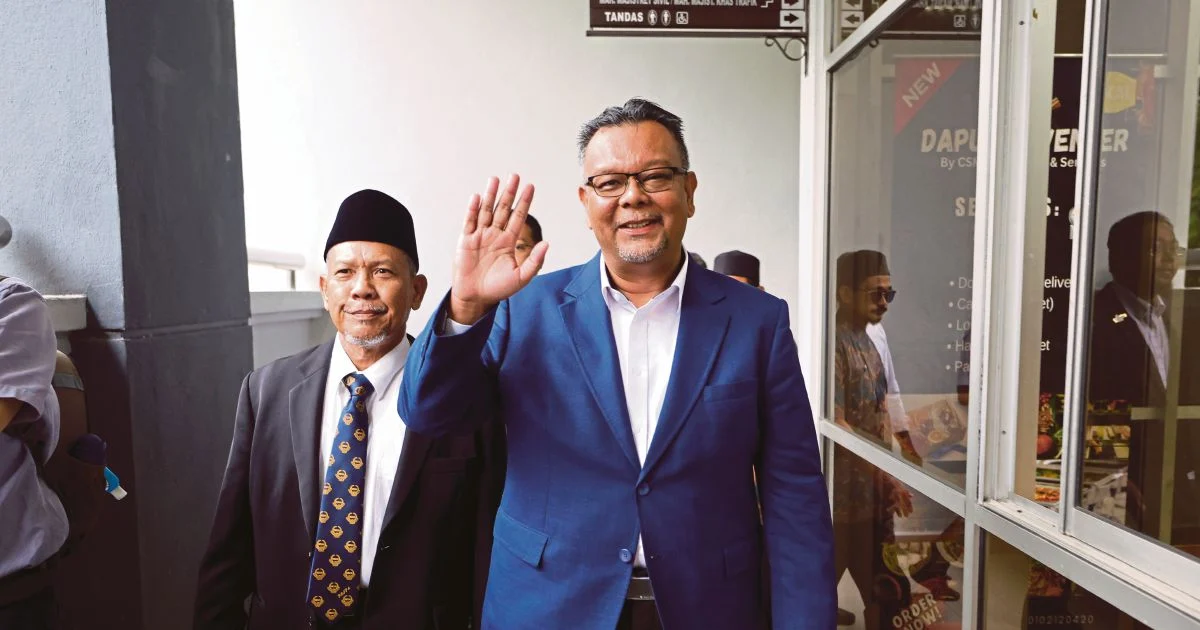
Dr Haim Hilman Abdullah, the elected assemblyman representing Jitra, entered a not guilty plea at the magistrate's court in Seremban today, confronting a charge related to statements purportedly made with the intention of triggering public alarm. The proceeding marks a significant legal development in what appears to be a politically charged investigation, with the charge under consideration reflecting concerns about inflammatory rhetoric in the Malaysian political landscape.
The nature of the specific statements in question remains a focal point, as such charges typically emerge from remarks deemed to possess the potential to disturb public order or create unnecessary anxiety within communities. The jurisdiction of Seremban magistrate's court indicates that the proceedings will be handled at the lower court level initially, though the outcome could have implications that extend beyond the immediate legal framework to touch upon broader questions regarding political speech and accountability.
Malaysia's legal system permits prosecution of statements considered to threaten public tranquility, a provision that sits at the intersection of maintaining social stability and protecting freedom of expression. Political figures, as public officials with amplified platforms and audiences, frequently find themselves under heightened scrutiny when their utterances are perceived as crossing the threshold between robust political discourse and statements that genuinely jeopardize community peace. The charge against Dr Haim Hilman represents a test of where courts draw these critical boundaries.
The Jitra constituency, located within Kedah's political landscape, has been a notable region in recent Malaysian political developments. The presence of Dr Haim Hilman in this position reflects the continued evolution of representation in the state, where demographic shifts and changing voter preferences have repeatedly reshaped the composition of legislative bodies. His representation of the constituency carries responsibilities that extend beyond introducing legislation and attending to constituent grievances—they encompass the broader obligation to contribute to constructive democratic dialogue.
The timing of the charge warrants consideration within the broader context of Malaysian politics during this period. Political temperatures across the country have shown fluctuations in recent years, with various actors employing increasingly vigorous rhetoric and occasional provocations that test the limits of acceptable political expression. Courts have found themselves increasingly called upon to adjudicate matters that sit uncomfortably between the realm of pure political opinion and legally actionable speech.
For assemblyman Dr Haim Hilman, the not guilty plea signals his intention to challenge the allegations through the formal legal process rather than seek negotiated resolution or accept guilt. This approach typically indicates either confidence in the strength of his defence or a strategic determination to contest the prosecution's narrative at trial. The court proceedings will likely involve examination of the precise language used, the context in which statements were made, and the actual or reasonable likelihood of public alarm resulting from the remarks in question.
The implications of this case extend beyond the individual involved to touch upon broader questions facing Malaysian democracy. As political competition intensifies and diverse factions struggle for influence and power, the tendency to deploy provocative language has become more pronounced across the political spectrum. Prosecutors, judges, and legislators must continually grapple with delineating the boundaries between legitimate political criticism, persuasion, and rhetoric that genuinely threatens social cohesion or public peace.
From a Southeast Asian perspective, Malaysia's handling of such cases carries relevance to neighbouring democracies wrestling with similar questions about balancing permissive speech protections against the need to prevent genuinely destabilising rhetoric. The region's diverse societies, where religious sensitivities and communal divisions remain potent political factors, necessitate careful calibration of legal frameworks governing political expression. Courts that prosecute speech too readily risk undermining democratic participation, while those that hesitate to act when rhetoric becomes genuinely inflammatory may inadvertently enable escalation toward violence or instability.
The courtroom proceedings involving Dr Haim Hilman will unfold against the backdrop of Malaysia's Constitutional guarantees regarding freedom of expression, qualified by reasonable restrictions designed to protect public order, security, and morality. The magistrate overseeing the case must weigh evidence regarding the contested statements while respecting both the accused's rights to robust political participation and the broader public interest in maintaining social harmony. Each judgment rendered in such cases contributes incrementally to the evolving jurisprudence surrounding permissible political speech.
Observers of Malaysian politics will monitor the progress of these court proceedings, recognising that verdicts in speech-related cases carry significance that transcends the immediate circumstances of the individual charged. Future political figures considering their rhetoric will potentially adjust conduct based on how courts adjudicate such matters. The case thus represents not merely a discrete legal controversy but rather a moment in the ongoing dialogue between Malaysia's legal system and its political culture regarding the appropriate scope and limits of democratic discourse within a plural society.

