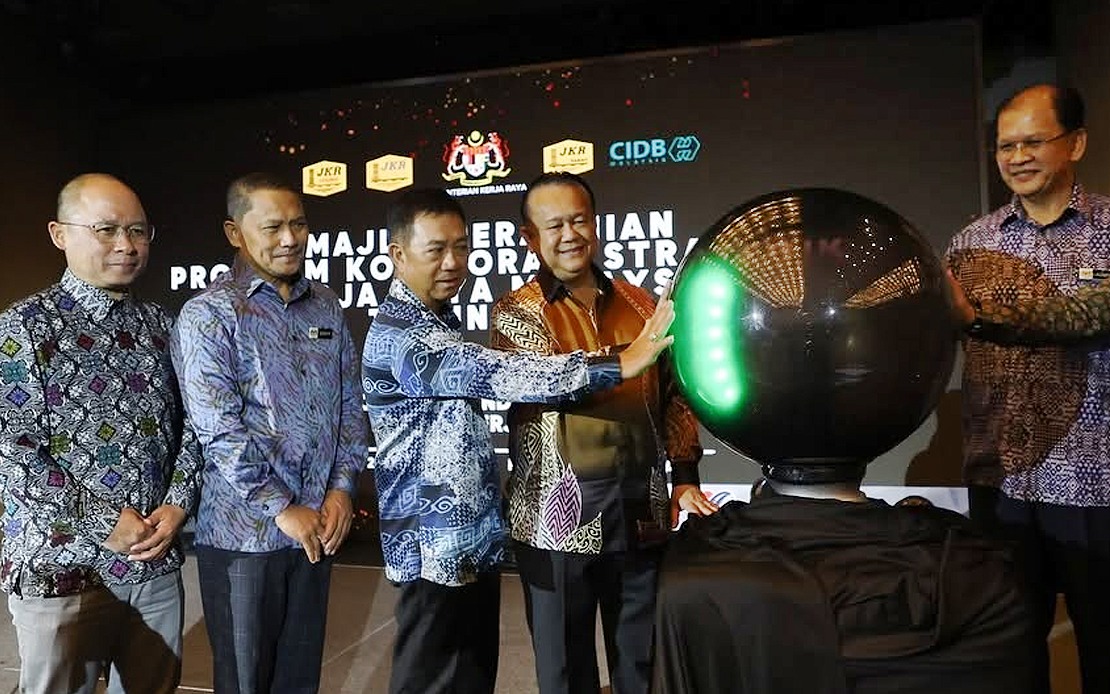
Malaysia's three principal public works agencies are intensifying their collaborative efforts to overcome longstanding challenges that have hindered infrastructure delivery and project completion timelines. Works Minister Datuk Seri Alexander Nanta Linggi underscored the necessity of unified coordination between the Malaysian Public Works Department (JKR Malaysia), JKR Sabah, and JKR Sarawak during an official engagement in Kota Kinabalu, emphasizing that this partnership represents a crucial mechanism for the nation's leading construction implementation bodies to openly discuss operational difficulties and formulate collaborative remedies.
The coordination framework has evolved significantly since its inception, though Nanta acknowledged that persistent obstacles continue to impede timely project execution. He stressed that agencies operating under the JKR umbrella remain committed to identifying and resolving impediments systematically, thereby enabling infrastructure delivery to proceed with greater operational efficiency. This acknowledgment reflects the broader recognition within Malaysia's infrastructure sector that fragmented approaches across different governmental tiers have historically contributed to project management failures.
Billions of ringgit in active construction initiatives currently depend on effective synchronization between these three entities. The portfolio encompasses several high-profile undertakings, most prominently the Pan Borneo Highway—a transformative transportation corridor spanning Sarawak and Sabah—alongside an extensive network of roads and government institutional buildings. The scale of these investments underscores why coordination deficiencies represent a significant constraint on national development progress and economic competitiveness.
Nanta articulated that fragmented coordination among implementing agencies has been a material factor undermining project timelines and execution quality. The strategic collaboration platform was specifically designed to identify systemic bottlenecks and facilitate joint problem-solving mechanisms, allowing projects to move forward without the administrative paralysis that has historically characterized multi-jurisdictional infrastructure development in Malaysia. This approach represents a shift from siloed governance toward integrated project management philosophy.
Regarding technical aspects of infrastructure design, Nanta elaborated on the methodology governing U-turn construction along the Pan Borneo Highway. He clarified that decisions on placement and frequency are not arbitrary but derive from rigorous engineering analysis examining road geometry, sightline parameters, and occupant safety considerations. This explanation carries particular importance given public concern about infrastructure quality, especially on major thoroughfares where safety implications directly affect motorist welfare across Sabah and Sarawak.
Deputy Chief Minister I and Sabah Works and Utilities Minister Datuk Seri Dr Joachim Gunsalam contextualized infrastructure investment within broader development imperatives. He positioned physical infrastructure as a foundational catalyst for economic expansion, regional competitiveness enhancement, community welfare advancement, and more responsive government service provision. This framing aligns Malaysia's infrastructure agenda with contemporary development economics emphasizing physical capital's role in catalyzing broader prosperity.
Gunsalam stipulated that infrastructure development must integrate strategic planning discipline, execution quality standards, and sustainable asset stewardship approaches. The emphasis on planning rigor acknowledges that infrastructure failures often originate in inadequate preliminary assessment rather than implementation lapses. By elevating planning standards across all three JKR entities, officials aim to prevent costly project reformulations and timeline extensions.
Governance quality represents another critical dimension of Gunsalam's vision for infrastructure delivery. He advocated for transparent decision-making processes, judicious resource allocation, and organizational cultures emphasizing continuous performance improvement. These governance principles directly address public skepticism regarding infrastructure spending, particularly important in Malaysia where major projects have previously faced corruption allegations and accountability concerns. By institutionalizing transparency and prudential resource management, officials signal commitment to ensuring public investments generate commensurate societal benefits.
The strategic collaboration program yielded several concrete institutional developments. Officials formalized a road asset data declaration involving the Works Ministry, Sabah's Works and Utilities Ministry, and Sabah's Local Government and Housing Ministry, establishing shared protocols for infrastructure inventory management and asset monitoring. This documentation agreement facilitates better visibility into Sabah's road infrastructure conditions, enabling more informed maintenance prioritization and capital planning.
Additionally, memoranda of agreement were executed enabling the Works Ministry, JKR Sabah, and JKR Sarawak to utilize state government facilities for establishing MyBIM laboratories. Building Information Modelling technology represents an advanced infrastructure management tool allowing three-dimensional visualization and lifecycle simulation of construction projects. By establishing MyBIM facilities in Sabah and Sarawak, officials are embedding sophisticated project planning capabilities into East Malaysian administrative structures, potentially transforming how complex projects like the Pan Borneo Highway are conceptualized and managed.
For Malaysian readers and Southeast Asian observers, this coordination reinforcement carries several implications. First, it demonstrates recognition that infrastructure delivery quality depends fundamentally on institutional alignment rather than merely financial resource availability. Malaysia has demonstrated capacity to mobilize substantial capital; the challenge involves synchronizing implementation across governmental layers. Second, the emphasis on technological infrastructure like MyBIM indicates that Malaysian policymakers are embracing digital-era project management tools that developed economies have adopted, potentially narrowing implementation quality gaps between developed and developing nation infrastructure sectors.
The Pan Borneo Highway serves as the most visible test of this collaborative framework's effectiveness. This 2,700-kilometre corridor represents transformative connectivity investment for Sabah and Sarawak, linking isolated communities to regional economic centers and facilitating trade across East Malaysia. Its successful completion within acceptable timeframes and cost parameters would validate the JKR collaboration model and potentially encourage similar institutional reforms across other governmental sectors confronting coordination challenges.
Ultimately, the three-agency coordination initiative reflects pragmatic recognition that Malaysia's development aspirations depend on infrastructure systems functioning reliably and delivering on-time. By institutionalizing collaborative mechanisms, establishing shared data protocols, and embedding advanced management technology, officials are constructing governance infrastructure intended to support superior physical infrastructure outcomes. The success of this institutional experiment will likely influence how subsequent large-scale developmental initiatives spanning multiple governmental jurisdictions are organized and managed across Malaysia.

