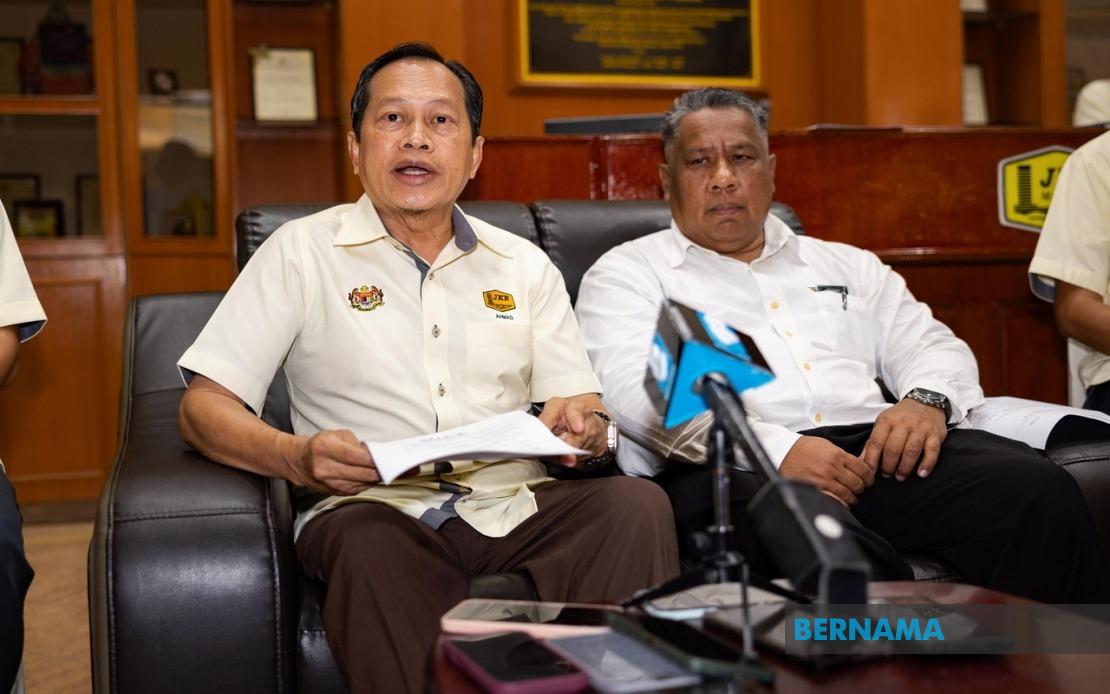
The responsibility for managing trees along federal roads rests with local authorities, although the Public Works Department (JKR) and road maintenance concessionaires stand prepared to collaborate and enhance road safety standards, according to Deputy Works Minister Datuk Seri Dr Ahmad Maslan during a visit to Manjung in Perak.
The minister's statement seeks to establish clear jurisdictional boundaries in the ongoing discussion about tree management responsibilities. His clarification directly references the provisions of Section 101(b) of the Local Government Act 1976 (Act 171), which explicitly grants local authorities the power to plant, prune, and remove trees within their administrative boundaries. This authority extends to trees situated on federal road reserves that fall within local authority jurisdictions, creating a legal framework that has sometimes caused confusion among stakeholders about who bears ultimate accountability.
Ahmad Maslan emphasized that the matter has been informed by a court decision regarding a legal opinion on tree planting control along federal road reserves. This judicial determination appears to have reinforced the view that tree management is not squarely within JKR's operational purview. The minister stressed that JKR's mandate traditionally encompasses road furniture and signage along roadsides, rather than vegetation management, a distinction that has become increasingly important given recent safety incidents on Malaysian highways.
The deputy minister's comments come in response to heightened public concern following a fatal accident on the FT68 Bentong-Kuala Lumpur Old Road in which a falling tree claimed four family members' lives. Bentong MP Young Syefura Othman had subsequently called for JKR and maintenance concession companies to strengthen partnerships with certified tree experts to conduct regular technical assessments of mature trees and unstable slopes along federal roads. This appeal highlighted frustration among elected representatives about the adequacy of current safety measures.
A significant constraint limiting JKR's intervention stems from the terms of existing concession agreements between the government and road maintenance operators. According to Ahmad Maslan, these contracts contain no provisions permitting the removal of standing trees, even those that may pose potential hazards. The only circumstance under which tree removal is permitted relates to trees that have already fallen, after which they may be cleared as debris management. This contractual restriction effectively places mature trees outside the scope of preventative maintenance work that concessionaires can undertake independently.
The distinction between JKR's responsibilities and those of local authorities carries practical implications for road safety management across Malaysia. If trees fall outside JKR's operational remit and local authorities lack resources or expertise to conduct regular arboricultural assessments, dangerous conditions could persist along federal roads. This structural gap in responsibility raises questions about whether the current administrative framework adequately protects road users from hazards posed by poorly maintained vegetation.
During his working visit to the Manjung District Engineer's Office, Ahmad Maslan received comprehensive briefings on the organizational structure and functions of various divisions overseeing infrastructure in the district. The session also covered progress reports on ongoing and planned infrastructure projects throughout Manjung, reflecting the ministry's broader agenda to strengthen technical service delivery at the district level. These site visits serve to reinforce coordination mechanisms between the Ministry of Works (KKR), Perak's JKR office, and local district engineering teams.
The minister stressed the necessity for continuous monitoring and enhanced cooperation among the Ministry of Works, state JKR branches, and district-level engineering offices. He underscored that maintaining this collaborative framework is essential to ensure all projects and maintenance activities conform to established specifications, predetermined schedules, and allocated budgets. This emphasis on coordination suggests that coordination failures may have contributed to some existing infrastructure challenges.
Ahmad Maslan articulated the ministry's overarching commitment to strengthening technical service delivery and infrastructure development implementation at the grassroots level. He framed these efforts as integral to maximizing benefits flowing to residents and businesses across the country. The KKR has pledged to intensify monitoring and coordination mechanisms spanning all levels of JKR operations to preserve public infrastructure quality and safety standards.
The remarks indicate an ongoing effort to balance institutional responsibilities while responding to public safety concerns. By reaffirming local authorities' statutory role while offering JKR's cooperative support, the deputy minister attempts to avoid the appearance of responsibility-shifting while acknowledging the complexity of modern infrastructure governance. However, the unresolved question remains whether this delineated arrangement provides sufficient impetus and mechanisms for local authorities to conduct the systematic, expert-led tree management that prevents tragedies like the Bentong road fatality.
Moving forward, the clarification of roles may necessitate clearer communication and capacity-building support for local authorities to fulfill their tree management obligations more effectively. For Malaysian road users and policymakers, the challenge lies in ensuring that jurisdictional clarity translates into improved practical outcomes for highway safety, particularly regarding the assessment and management of mature trees near major traffic corridors.

